
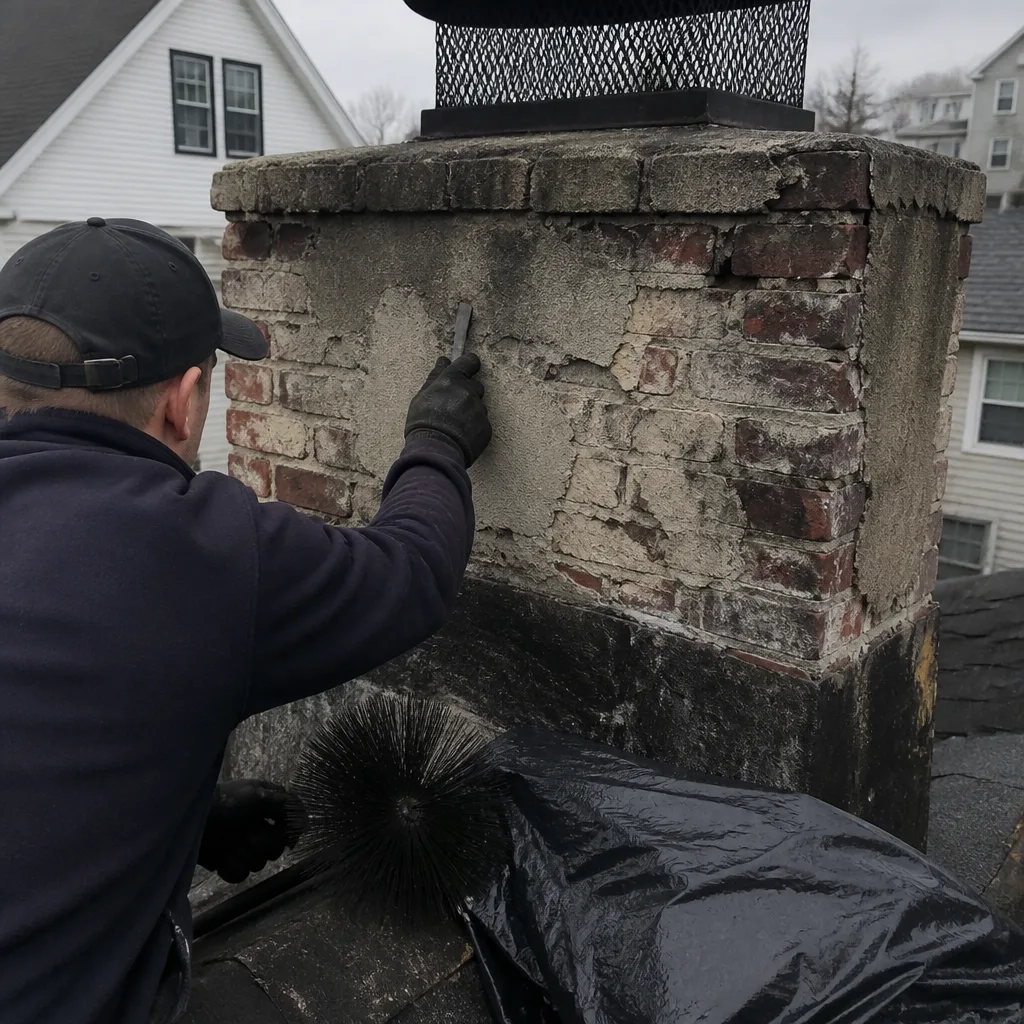
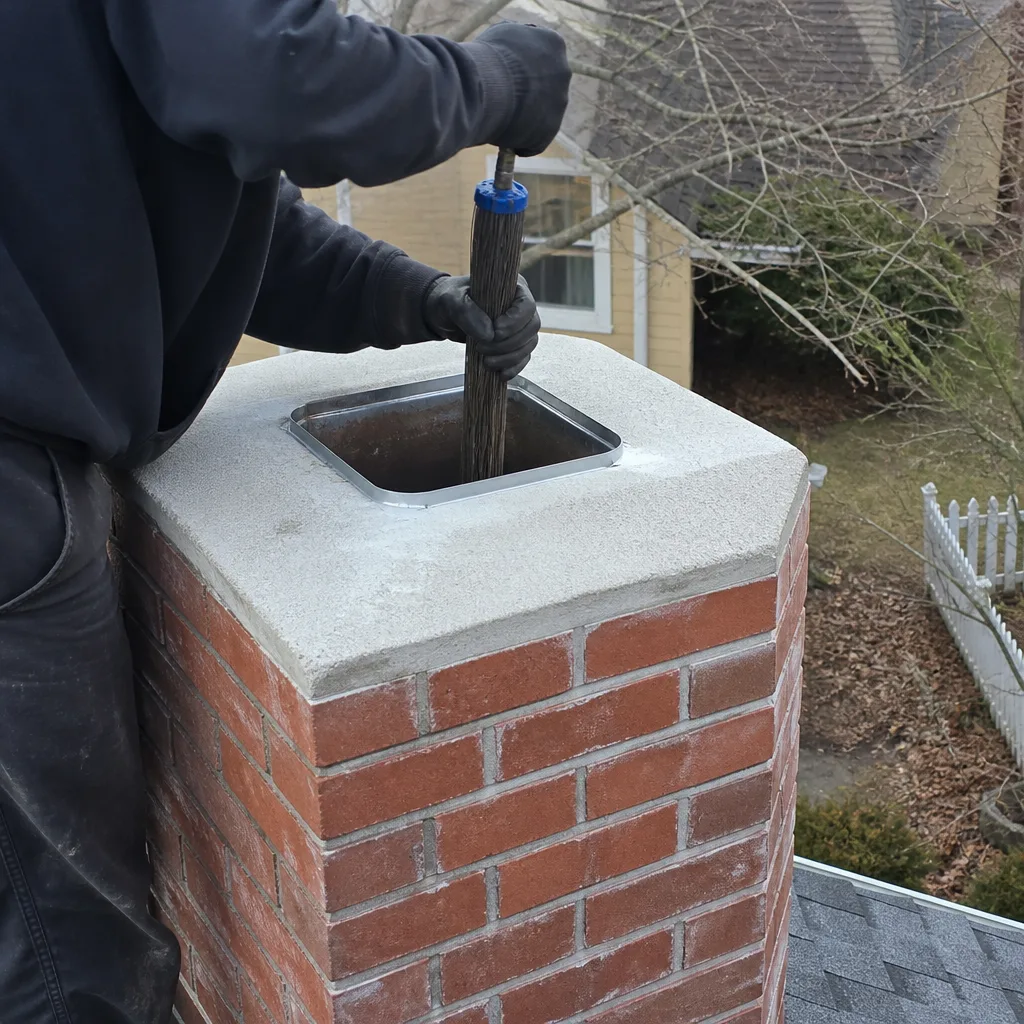
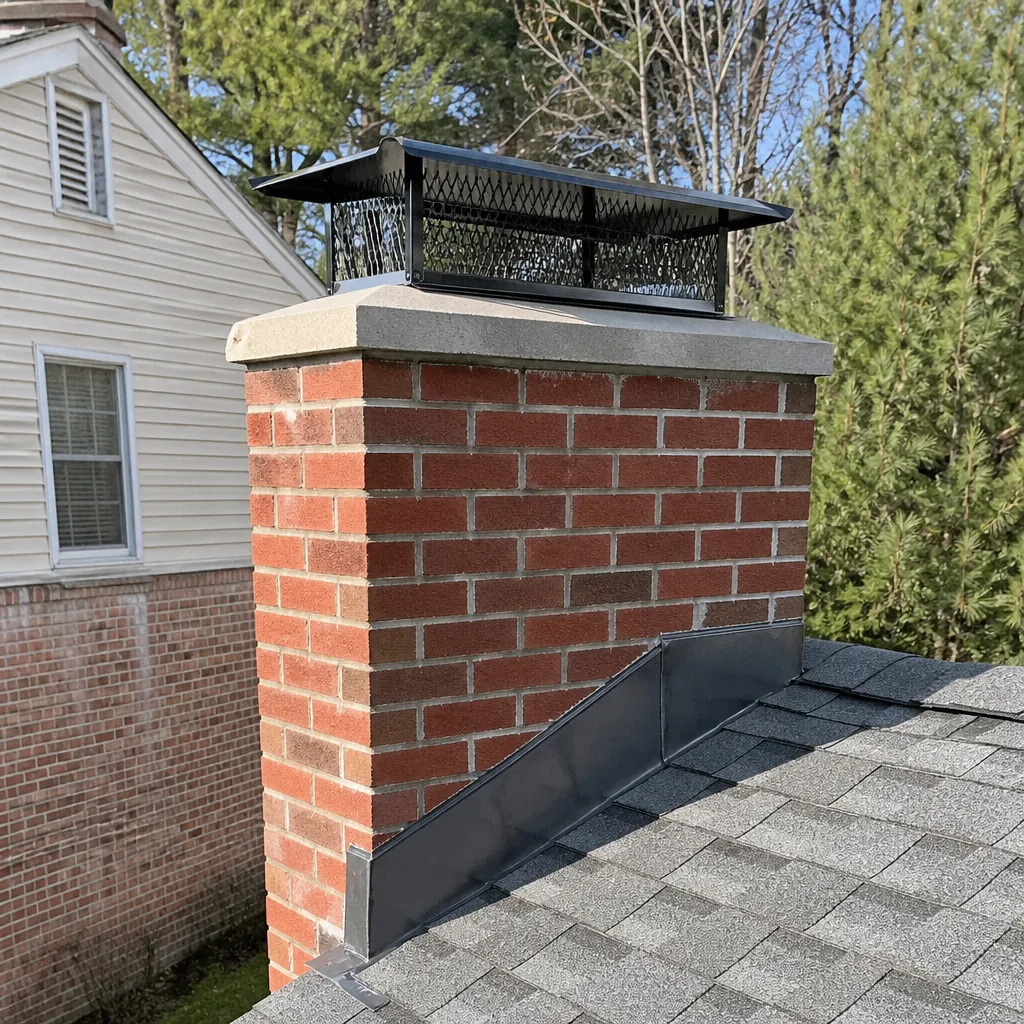
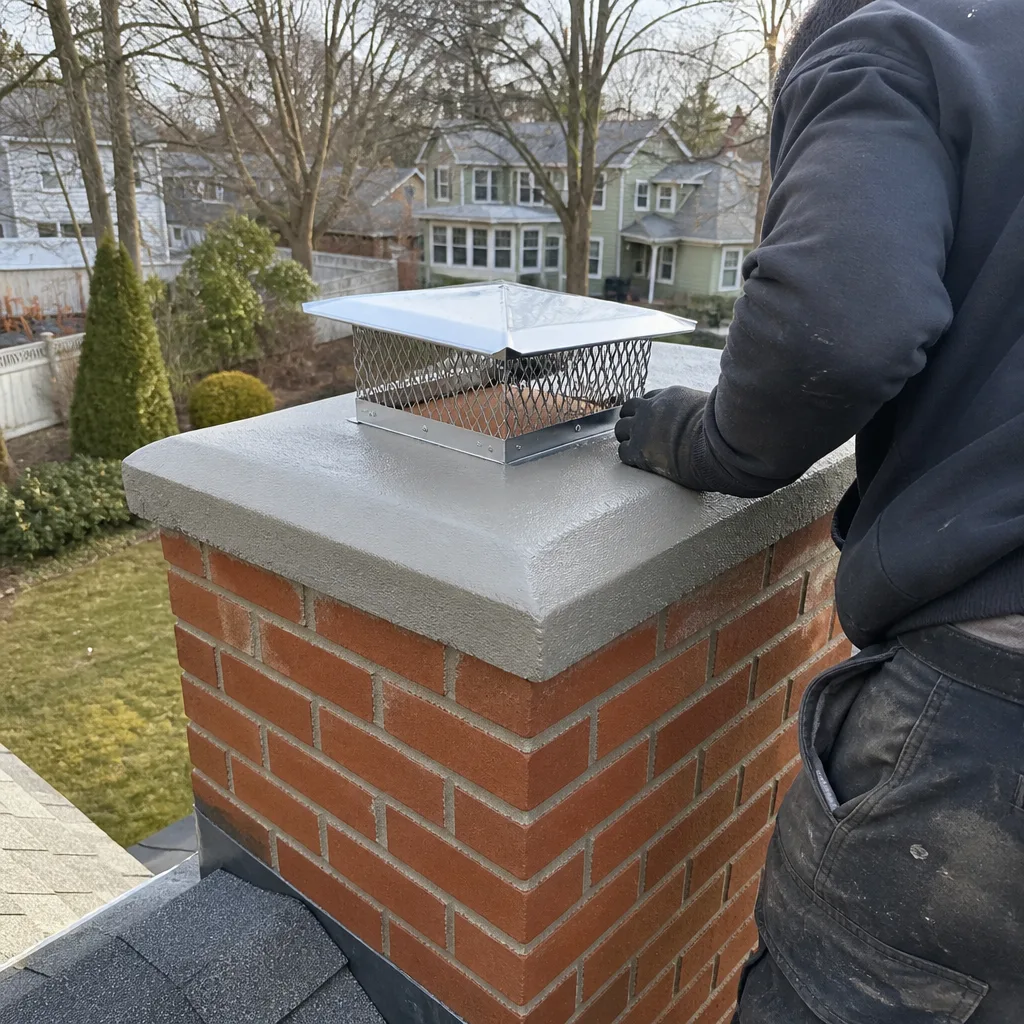
Level 1 sweep and inspection to the NFPA 211 annual standard - flue, crown, cap, and flashing checked and photographed
Chimney sweep logs do not sweep chimneys. They loosen some creosote - which then falls where a brush and vacuum still have to collect it.
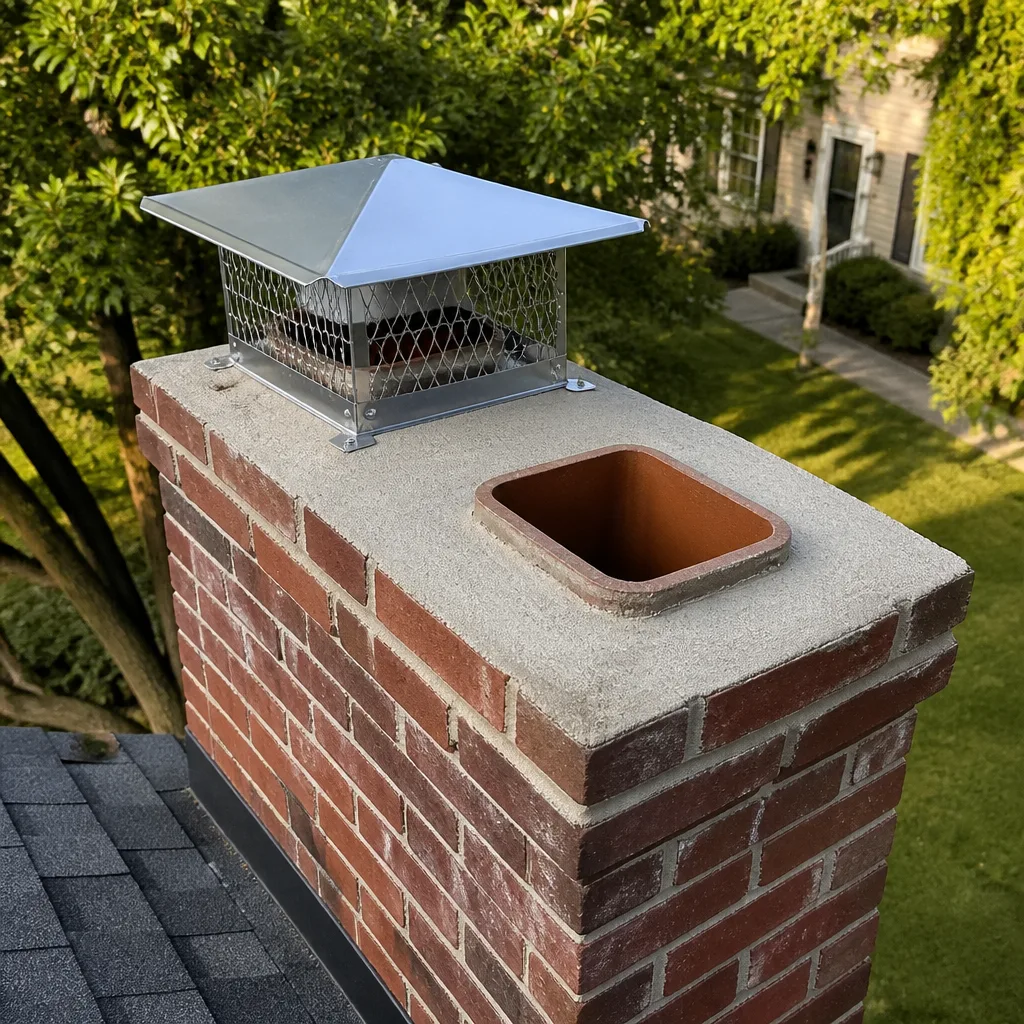
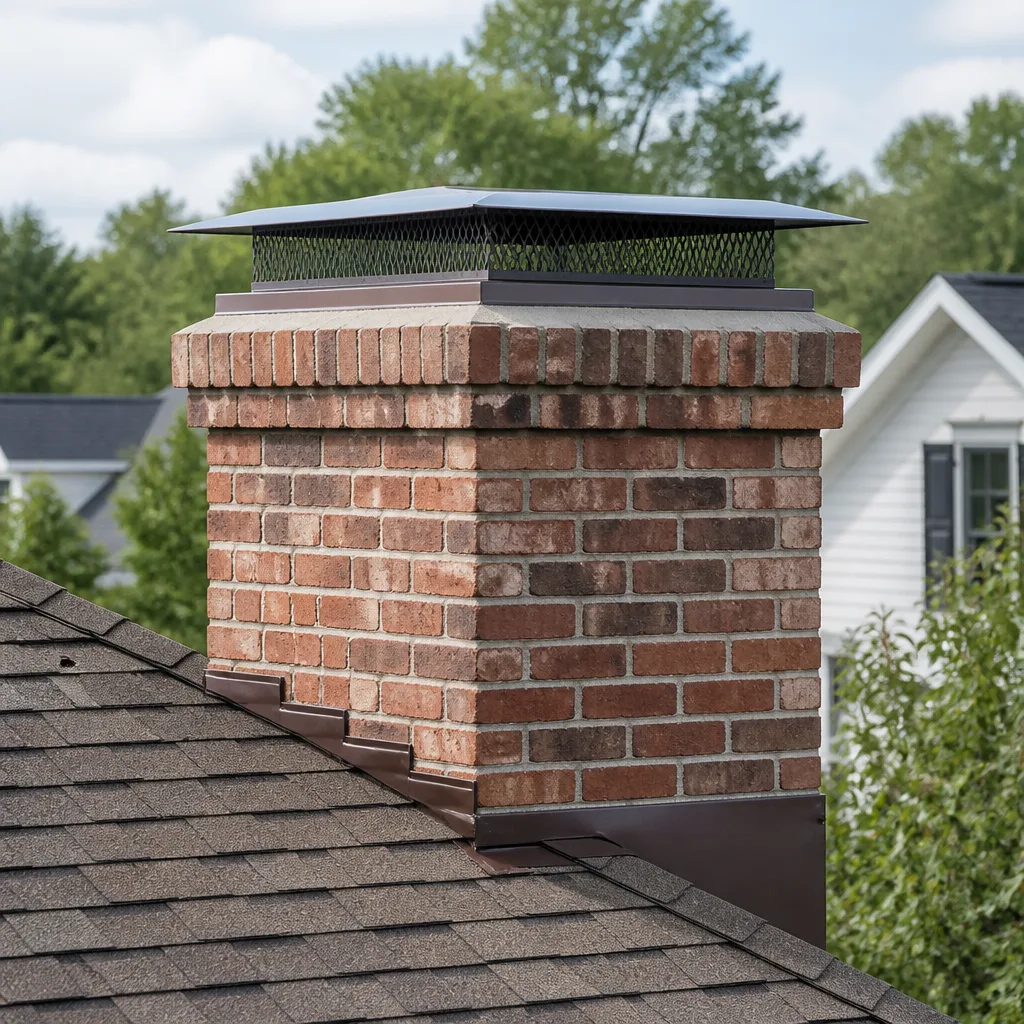
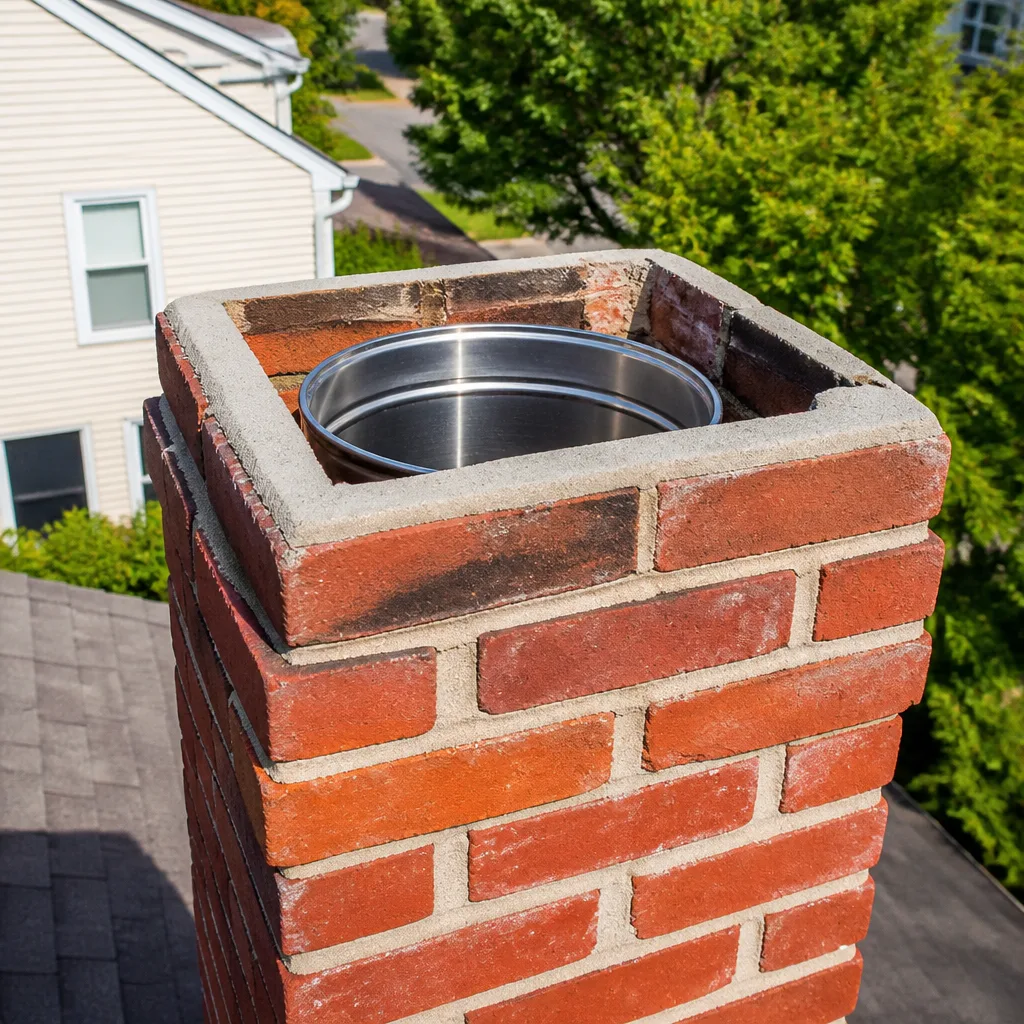
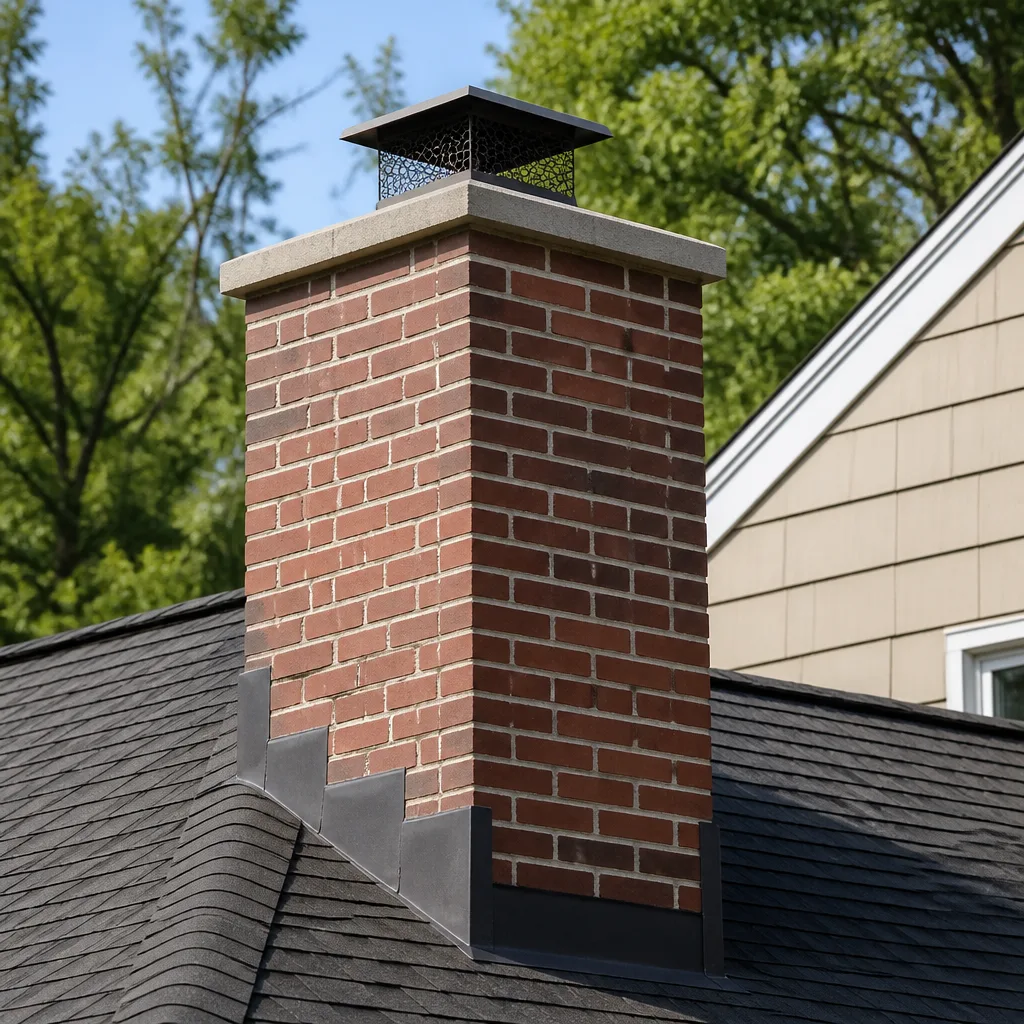
 Before
 After
After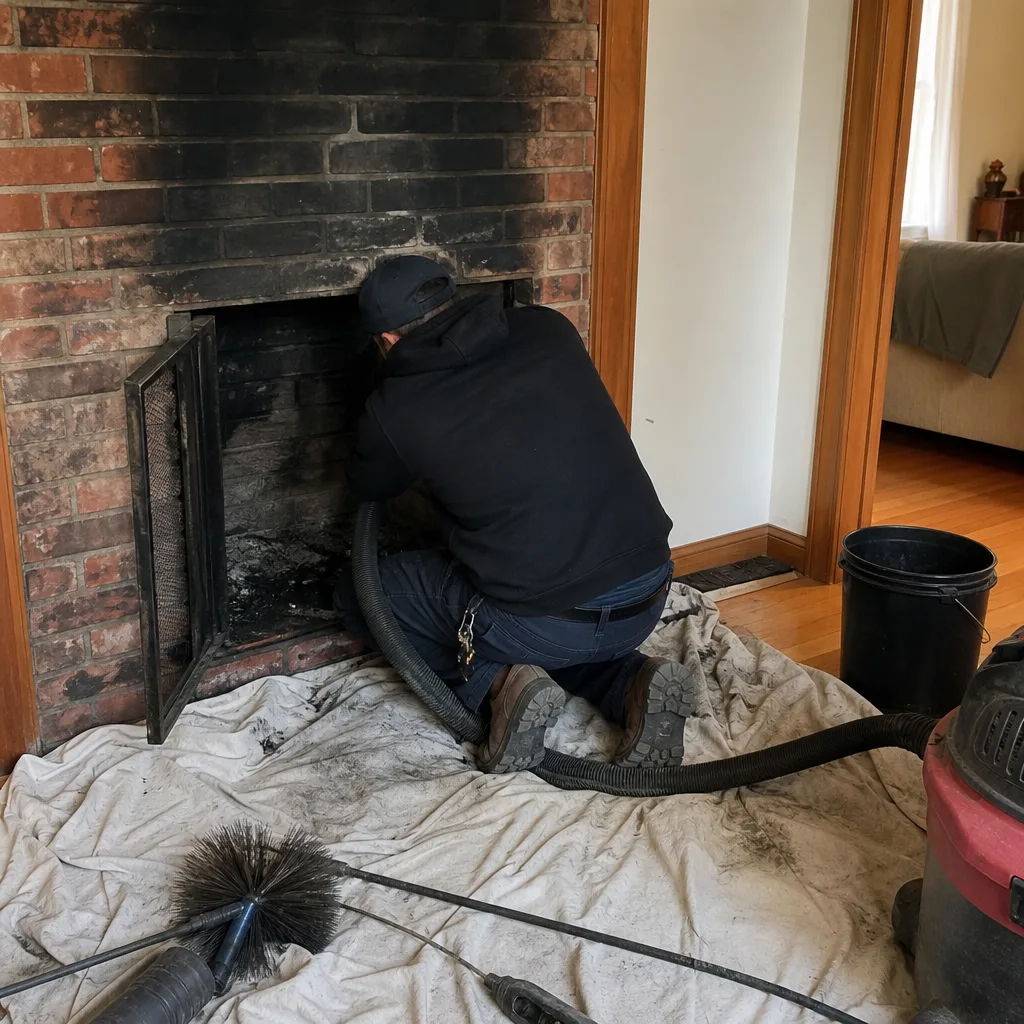 Before
 After
After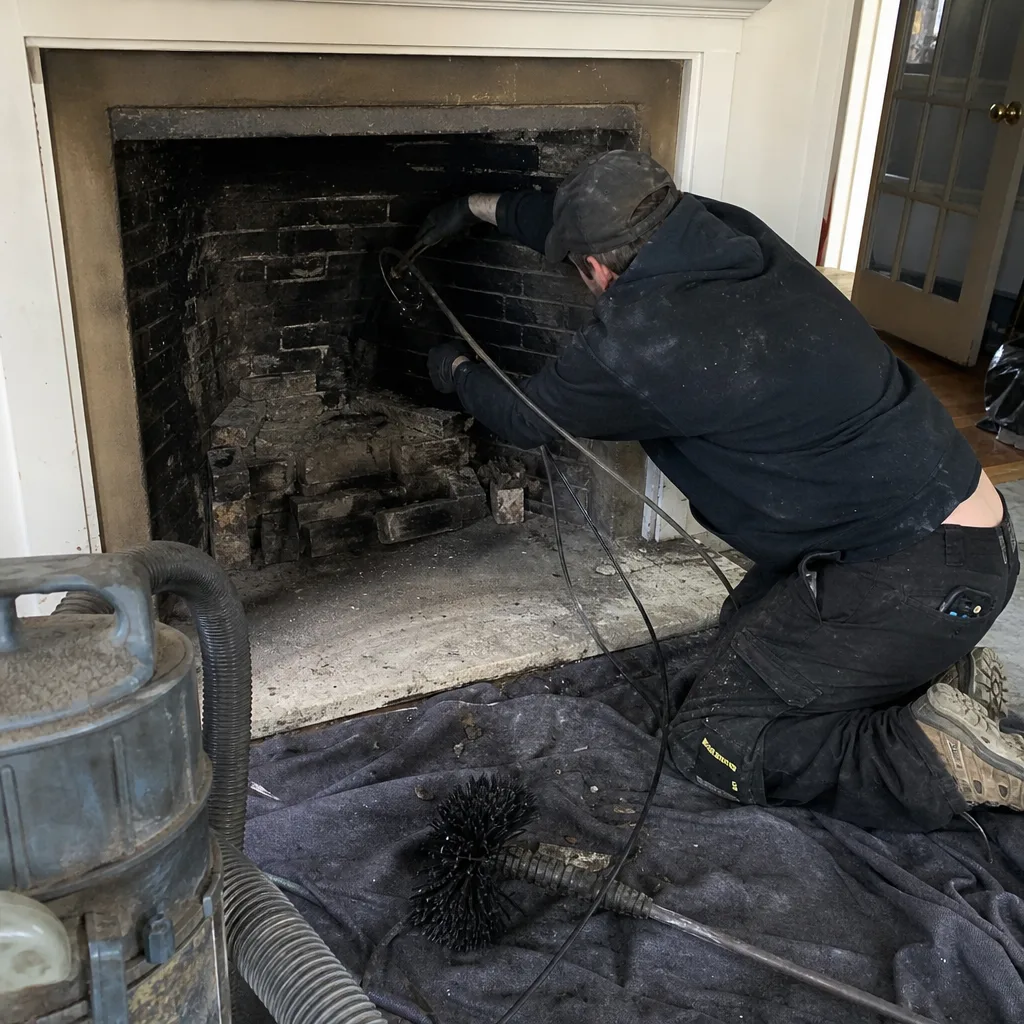 Before
 After
AfterCreosote Removal in Waltham, MA
Creosote removal in Waltham typically runs between $250 and $600 depending on how much buildup is present and which removal method the condition of your flue requires. Most visits are completed in two to four hours, and we hand you a written price before we touch anything. If you’d rather talk it through first, call us at (781) 649-9326 – a live person answers, any hour.
Creosote is the tar-like byproduct that forms when wood smoke cools against the inside of a flue liner. Every fireplace that burns wood produces it. What separates a routine cleaning from a creosote removal job is the classification: Class I deposits are flaky and brush off easily; Class II creosote is porous and tar-like, sticking to the liner wall; Class III is the kind that glazes over like lacquer and can’t be removed with brushes alone. In Waltham, where a lot of the housing stock dates to the mid-20th century and older, we see all three – sometimes in the same chimney, on the same visit.
Level Two Chimney Waltham has run camera-scan inspections and documented creosote conditions since 2009. That camera-first approach isn’t a selling point we invented; it’s the inspection standard we built the company around. Before we quote removal, we know exactly what class of creosote we’re dealing with, which liner sections carry the heaviest deposits, and what your flue looks like from the top of the firebox to the crown. That read shapes the price, the method, and the written scope you approve before anyone starts work.
This page covers the specifics: what drives Waltham homeowners to call us, what the removal process looks like step by step, what it costs, and answers to the questions we hear most. For a broader picture of what we cover on every visit, see our Chimney Cleaning & Sweep in Waltham page.
When You Need Creosote Removal
Standard annual Chimney Cleaning & Sweep services handle Class I deposits on a fireplace used regularly and responsibly. These situations call for a dedicated creosote removal visit – something more involved than a routine brush-down:
- A strong tar or smoky odor in the house, even when the fireplace isn’t in use. In Waltham’s more humid summer months, Class II and Class III creosote off-gases noticeably. If your living room smells like a campfire in July, the flue is telling you something. That odor is volatile organic compound off-gassing from heavy deposits, not just residual ash.
- Your last sweep report mentioned Class II or Class III buildup. If a technician noted heavy, porous, or glazed deposits and the recommended follow-up was chemical treatment or rotary cleaning rather than standard brushing, that work wasn’t done at the sweep – it needs its own visit.
- You bought a home in Waltham’s older neighborhoods – Piety Corner, South Side, Lakeview – and the fireplace history is unknown. We see colonials and split-levels in these areas with fireplaces that haven’t been professionally swept in five or more years. A camera scan frequently reveals Class II or Class III buildup that the previous owners didn’t know about or didn’t disclose.
- You’ve been burning unseasoned or green wood. Wet wood produces three to four times more creosote per cord than properly seasoned hardwood. If your last few winters involved wood that wasn’t fully dried, the deposits inside your flue reflect that. We can show you the camera footage – the difference in buildup is visible.
- Restricted draw or smoke backing into the room during a fire. Heavy creosote narrows the effective flue diameter, reducing draft and pushing smoke back into the living space. If you’re opening a window to compensate, that’s a symptom worth investigating, not a quirk to work around.
- A chimney fire – even a small one – has occurred. A chimney fire doesn’t always sound like a freight train. Sometimes it’s a low rumble or a stronger-than-usual draw that lasts a few minutes. Any suspected chimney fire requires a Level 2 inspection and, almost always, a thorough creosote removal before the fireplace is used again. This is not optional. High-tension flue conditions after a fire make further use genuinely dangerous, and a professional assessment is the only way to know what you’re dealing with.
Our Creosote Removal Process
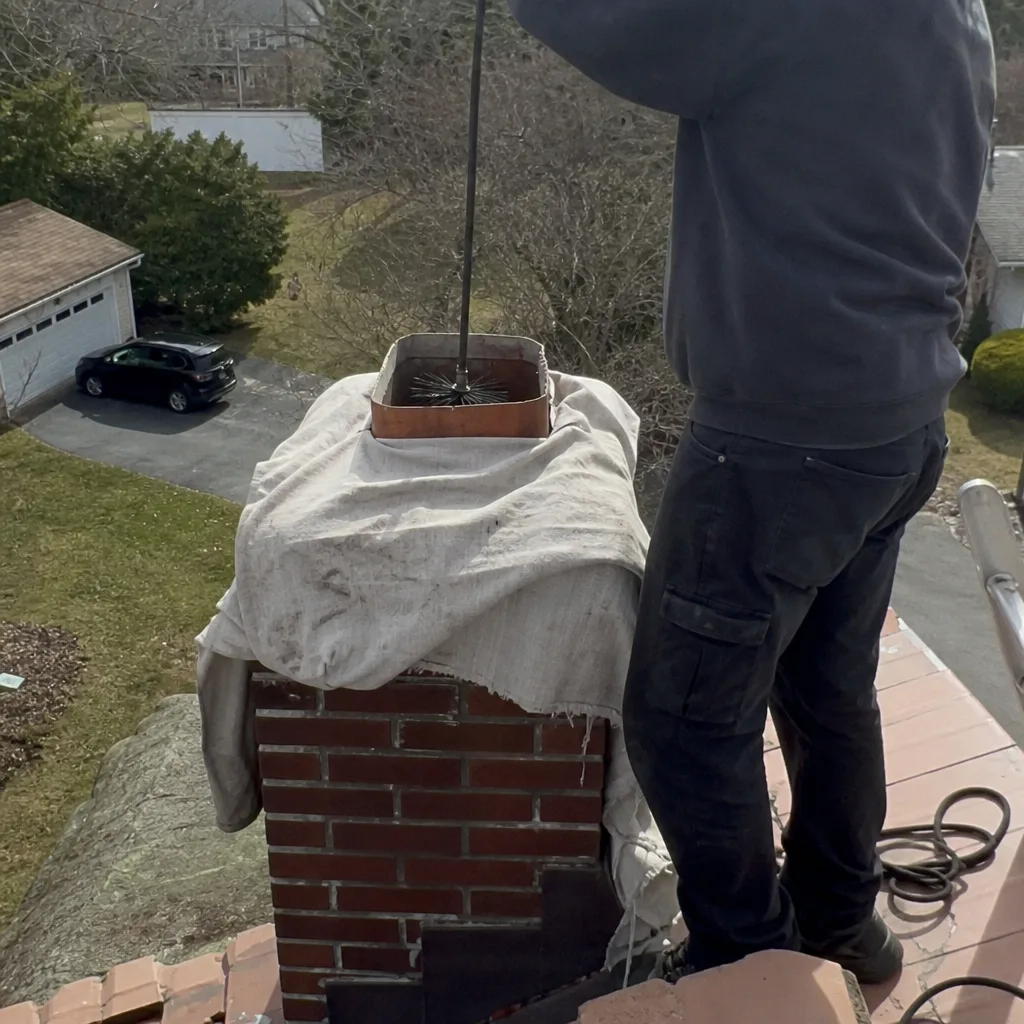
Every creosote removal job at Level Two Chimney Waltham follows the same sequence. Nothing starts until you have a written price and written scope in hand – that’s Haven Standard Clause 1, and it applies to every job, not just the complicated ones.
- Camera-Scan Inspection First. We send the camera down the flue before we set up any equipment. The footage tells us the creosote class, where the heaviest deposits sit, the liner condition (tile, metal, or cast), and whether there are any structural concerns that would affect the removal method. You see the same footage we do. Clause 4 of the Haven Standard requires a documented photo record on every visit – this is where it starts.
- Written Price and Scope Delivered. Based on what the camera shows, we write up the method, the materials involved, the time estimate, and the price. You approve it before anything else happens. If the scope changes once work is underway – because the camera sometimes still understates what’s at the top of the flue – we stop and update the quote before continuing. No surprises on the invoice.
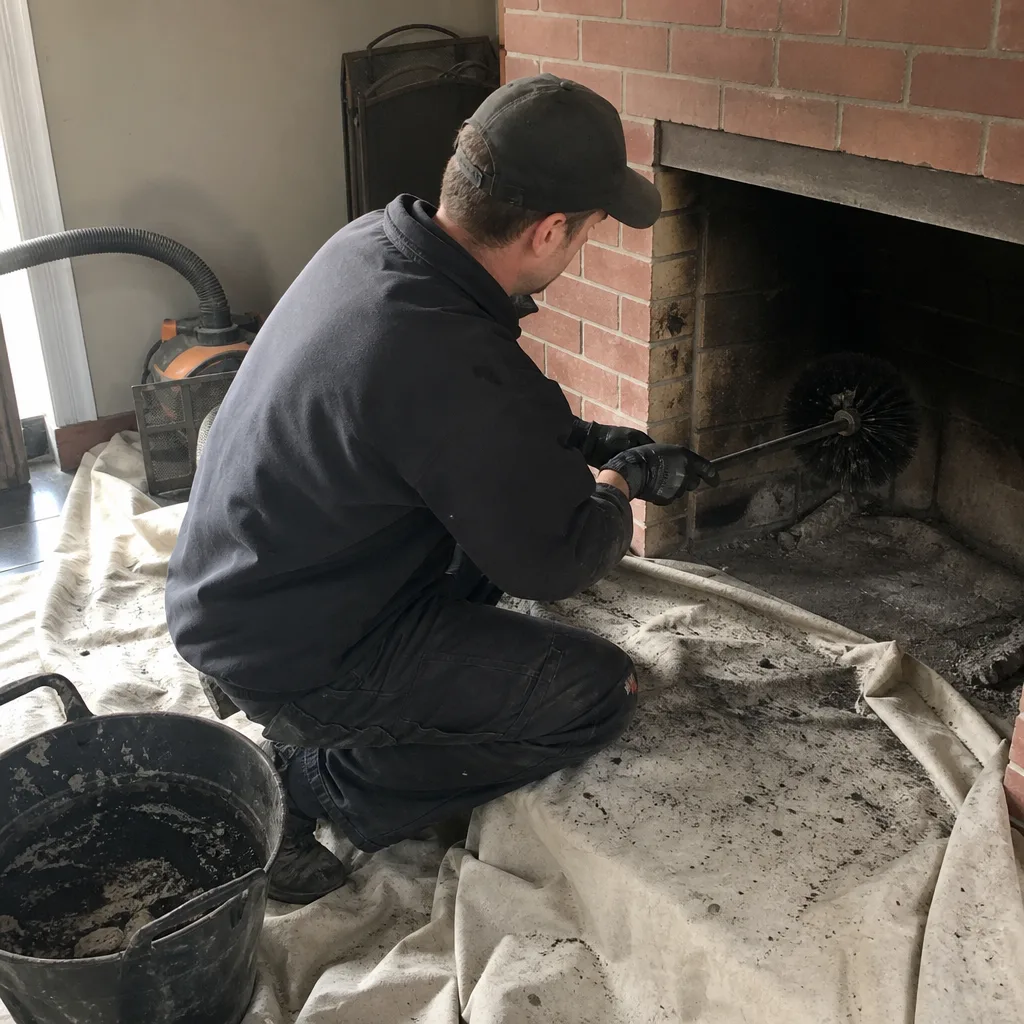
- Firebox and Interior Protection. We lay drop cloths, seal the firebox opening, and attach a HEPA-filtered vacuum to the system before brushing begins. Creosote dust is fine, clingy, and unpleasant to clean out of upholstery. We contain it at the source.
- Mechanical Removal: Rotary or Hand-Brush, Matched to the Deposit Class. Class I deposits come off with standard chimney brushes – stiff-bristled, sized to the flue. Class II buildup typically requires rotary cleaning equipment, which uses spinning flexible rods to mechanically break the porous tar layer off the liner wall. Class III glazed creosote cannot be removed mechanically alone; it requires a chemical treatment (applied in a prior visit to convert the glaze to a friable state) followed by a mechanical pass once the chemical has done its work. We use materials sourced through Haven’s buying network – including Copperfield and Gelco products – specifically because they perform consistently and we can stand behind the results.
- Debris Clearance and Smoke Chamber Inspection. Once the flue is clear, we clean debris from the smoke shelf and smoke chamber – areas where heavy creosote accumulation is common and where many companies skip detailed attention. The smoke chamber is where Class II buildup concentrates most in Waltham’s older masonry fireplaces, and it’s one of the first places we check.
- Post-Removal Camera Pass and Documented Record. We run the camera a second time after cleaning to confirm the liner walls are clear, document any liner or crown conditions that surfaced during the removal, and produce the photo record you leave with. You get written documentation of what was found, what was done, and the condition of the flue as it stands now. If follow-up repair is warranted – a cracked tile liner, a deteriorating smoke chamber – it goes in writing with a price attached. You decide what to do next.
 Before
 After
AfterCreosote Removal Pricing in Waltham
Creosote removal in Waltham costs between $250 and $600 for most residential jobs. That range covers the most common scenarios: a standard Class I or Class II removal on a single flue with accessible chimney height and a liner in serviceable condition. Class III glazed removal, which requires a two-visit chemical treatment process, runs $450 to $900 or more depending on liner length and deposit extent.
| Scenario | Typical Price Range |
|---|---|
| Class I removal (light flaky deposits, single flue) | $250 – $350 |
| Class II removal (porous tar buildup, rotary cleaning required) | $350 – $500 |
| Class III removal (glazed creosote, chemical treatment + mechanical pass) | $450 – $900+ |
| Post-chimney-fire inspection and removal | $400 – $700+ |
| Camera-scan inspection (included on every visit) | Included |
| Documented photo record (Haven Standard Clause 4) | Included |
What moves the number up:
- Flue length. A two-story colonial in Waltham’s North Side typically has a taller stack than a ranch in Lakeview. More liner surface means more time and more material.
- Class of creosote. Class III glazed deposits require a chemical application visit, a wait period, and then a mechanical removal visit. That’s two trips, and pricing reflects it.
- Liner material. Stainless steel and cast liners require different brush sizing and sometimes different chemical compatibility than clay tile. We confirm this on the camera pass before we quote.
- Smoke chamber condition. Heavy buildup in the smoke chamber adds time. If the chamber hasn’t been cleaned in several years – common in Waltham homes we visit for the first time – expect the job to run longer than a flue-only removal.
- Access. Most Waltham rooftops are workable, but steep pitches on some of the larger colonials in the Piety Corner area add time for safe equipment setup. We factor this into the written quote, not the invoice.
We don’t use “call for a quote” as a placeholder. The written price is on paper before work begins, every time, with no exceptions. If you have a written estimate from another company, bring it to us – we offer a free second opinion on any written quote.
FAQs – Creosote Removal
How often does creosote need to be removed from a Waltham chimney?
A chimney used regularly for wood burning should be inspected annually with a Level 1 Inspection, and creosote removal should happen whenever deposits reach Class II or Class III – which, for a fireplace burning two to three cords per winter, often means every one to two years. In Waltham specifically, we see faster creosote accumulation in homes where the chimney runs along an exterior wall rather than through the center of the house, because exterior flues run cooler and cool flue walls accelerate creosote formation. A camera inspection at the start of each heating season is the only way to know where your deposits stand. Call (781) 649-9326 to schedule one – the inspection is included with every visit, not billed separately.
Is Class III creosote actually dangerous, or is that overstated?
Class III glazed creosote is genuinely dangerous and not an exaggeration. It burns at temperatures exceeding 2,000°F when ignited – far beyond what most masonry chimneys are designed to sustain – and because it coats the liner in a hard shell, a chimney fire involving Class III deposits can crack tile liners, breach mortar joints, and transfer heat to combustible framing inside the wall. We see the aftermath of this in Waltham homes, occasionally in the Clematis Brook neighborhood where older masonry chimneys were built to thinner tolerances. If a camera scan shows Class III buildup in your flue, using the fireplace before removal is a serious risk. Call (781) 649-9326 and we’ll get a written scope to you before any work starts.
Can I use a chemical log to deal with creosote instead of a professional removal?
Creosote-reducing logs sold at hardware stores contain a chemical catalyst that makes Class I deposits more brittle and easier to brush away during a subsequent cleaning. They are a maintenance aid for light deposits, not a removal method for Class II or Class III buildup. We have no objection to their use between annual sweeps if your fireplace is well-maintained and deposits are consistently Class I. But they do not treat glazed creosote, they don’t substitute for a camera inspection, and they won’t tell you what’s happening in the smoke chamber or at the flue collar. If you’re relying on a chemical log because you haven’t had a professional cleaning in two or more years, that’s the point at which we’d recommend a camera scan first. Call (781) 649-9326 to book one.
What’s included in Level Two’s creosote removal service that a basic chimney sweep doesn’t cover?
A standard Fireplace Cleaning removes Class I deposits from the flue using hand brushes and clears the firebox. Our creosote removal service starts with a full camera-scan inspection (NFPA 211 Level 2 standard), includes mechanical rotary cleaning for Class II deposits or a two-visit chemical process for Class III, covers the smoke chamber and smoke shelf, and ends with a second camera pass to document the cleared liner. You leave with a written photo record of the before and after condition – not a verbal summary. Every job is backed by our 365-Day Done Right Promise: if the result isn’t right, we make it right. That’s in writing too, under the Haven Standard. Call (781) 649-9326 for an exact quote – estimates are free and always written before any work begins.
Serving Waltham and the Surrounding Area
Level Two Chimney Waltham covers all of Waltham’s residential neighborhoods – South Side, Piety Corner, Lakeview, North Waltham, Clematis Brook, and the streets running up toward the Waltham-Lexington line. We’re also the team Waltham homeowners call when they’ve had a second opinion ignored somewhere else. If you have a written estimate from another sweep company and want us to look at it, that review is free. Bring the paperwork.
Our full scope of chimney work in Waltham starts on our home page, where you’ll find the complete service list, the Haven Standard documentation, and background on how Level Two Chimney Waltham operates. For everything that happens before, during, and after a creosote removal visit – including what a full cleaning covers – see our Chimney Cleaning & Sweep in Waltham page.
To book a visit or ask a specific question about your fireplace, call (781) 649-9326. A live person answers, any time of day or night. We’ll give you a written price before anyone sets foot in your home – that’s the only way we work.
Written by Corrine Halstead, Owner at Level Two Chimney Waltham, serving Waltham.