
Last updated September 22, 2026
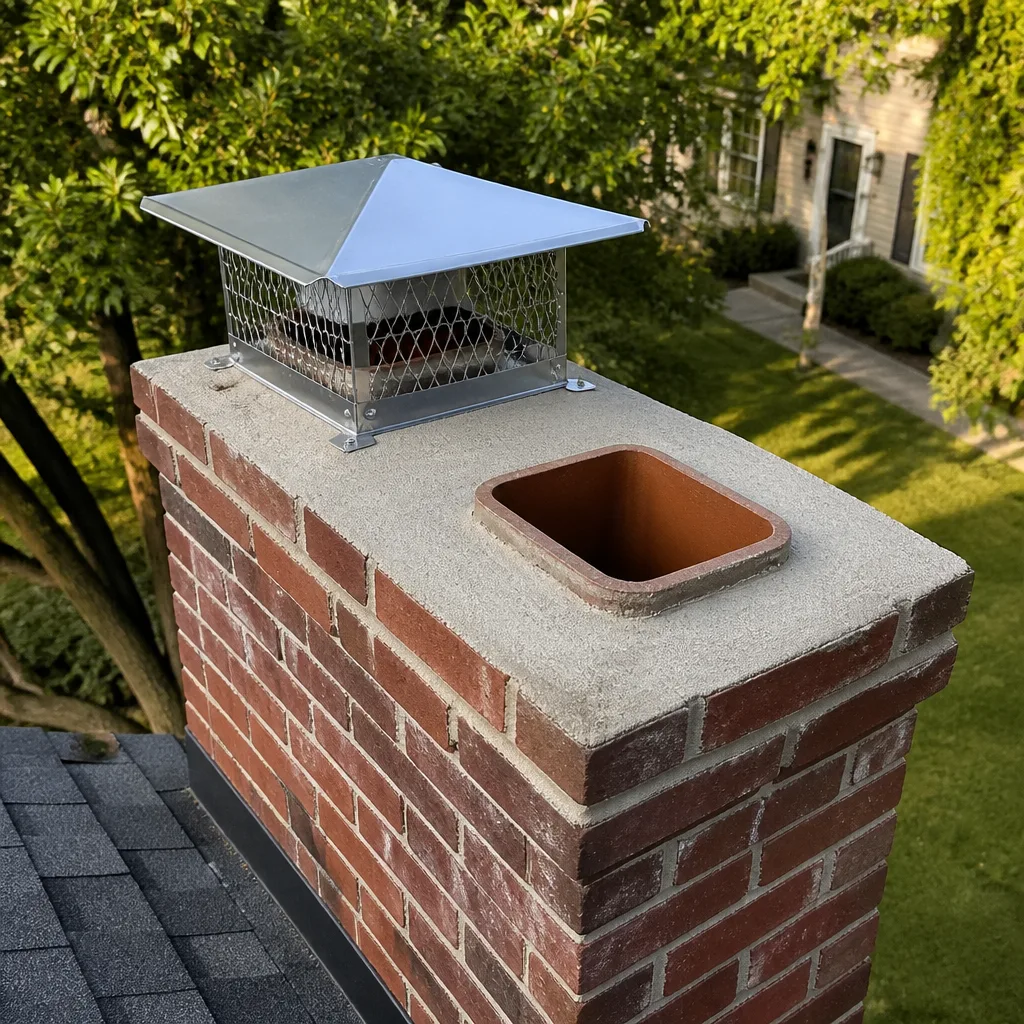
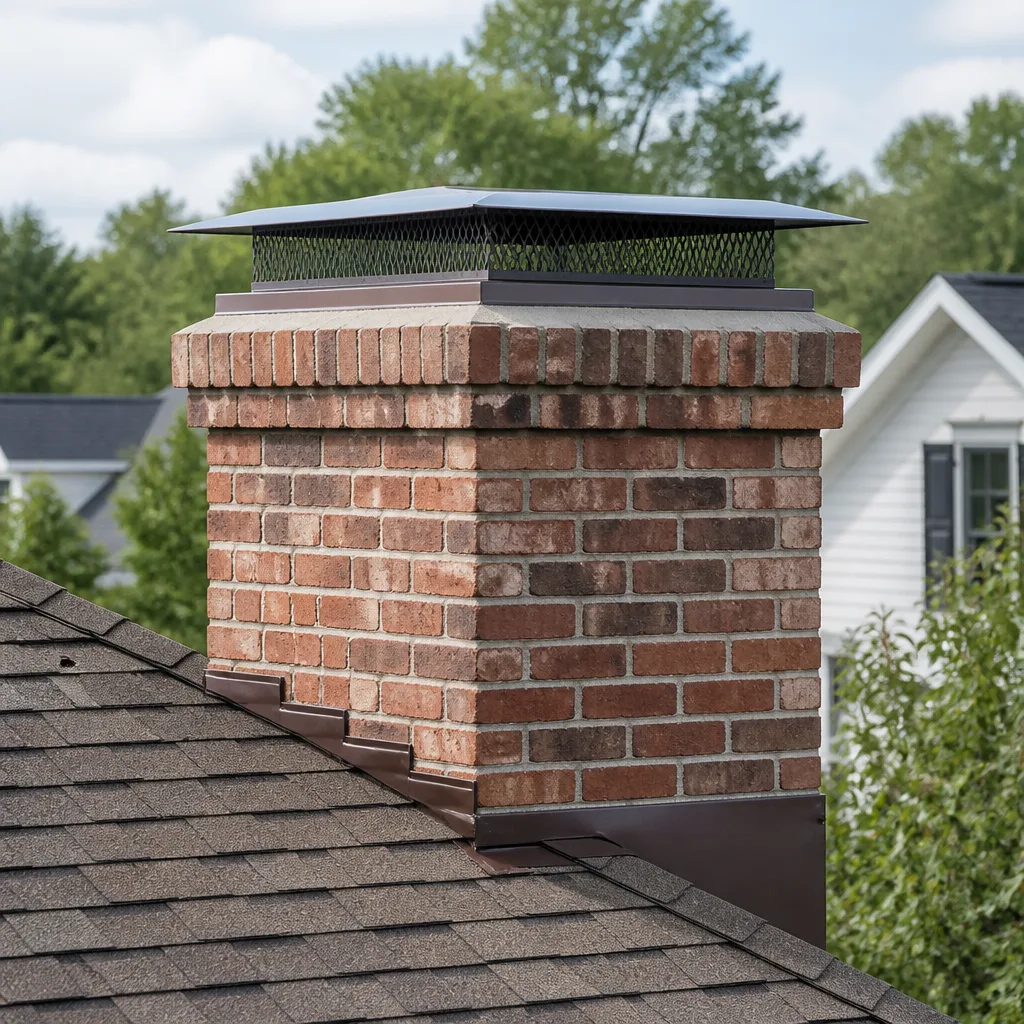
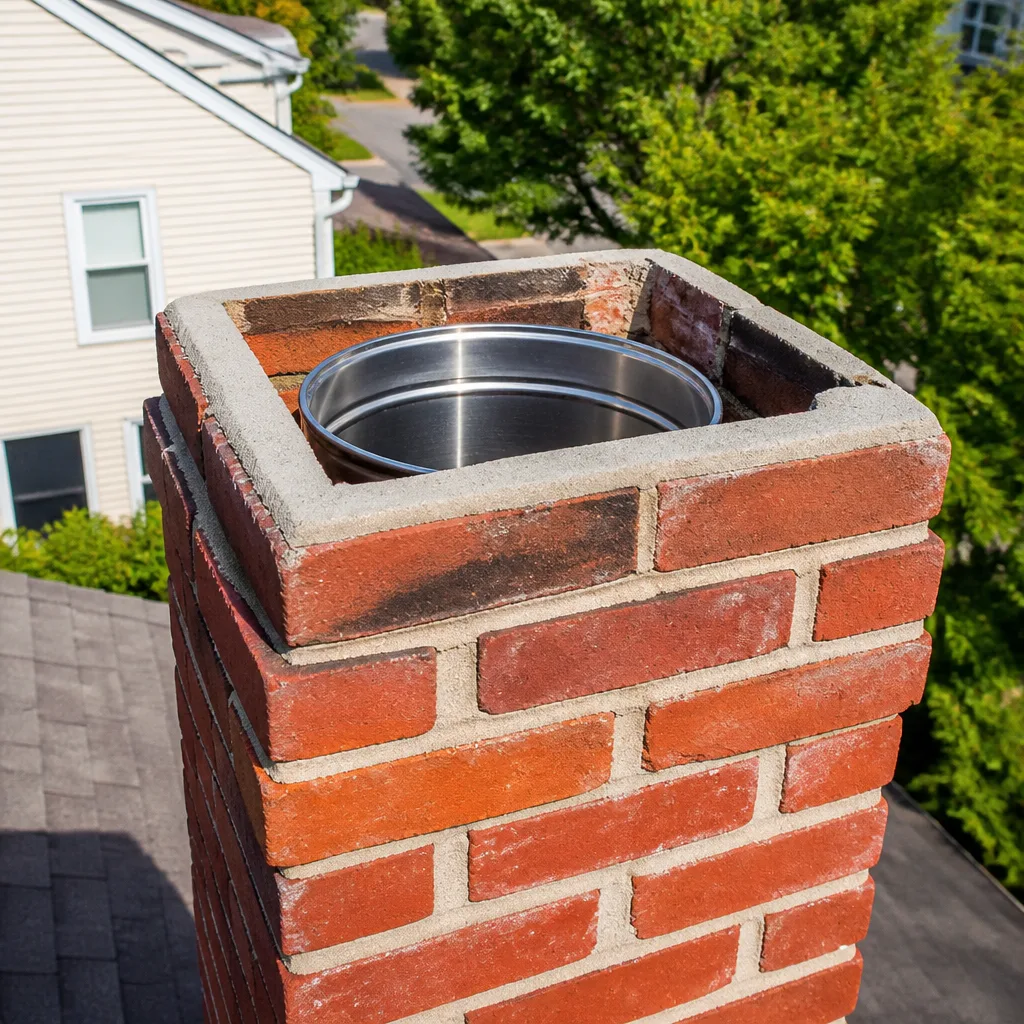
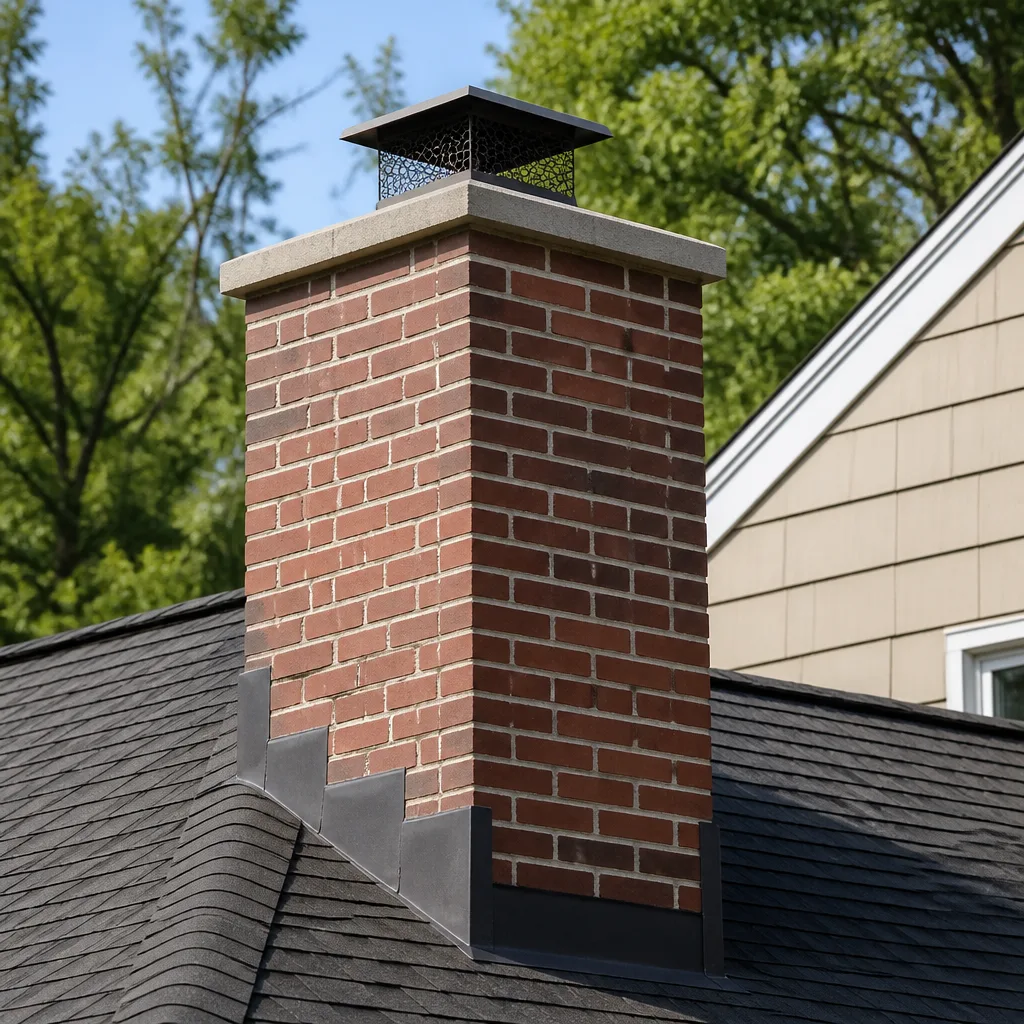
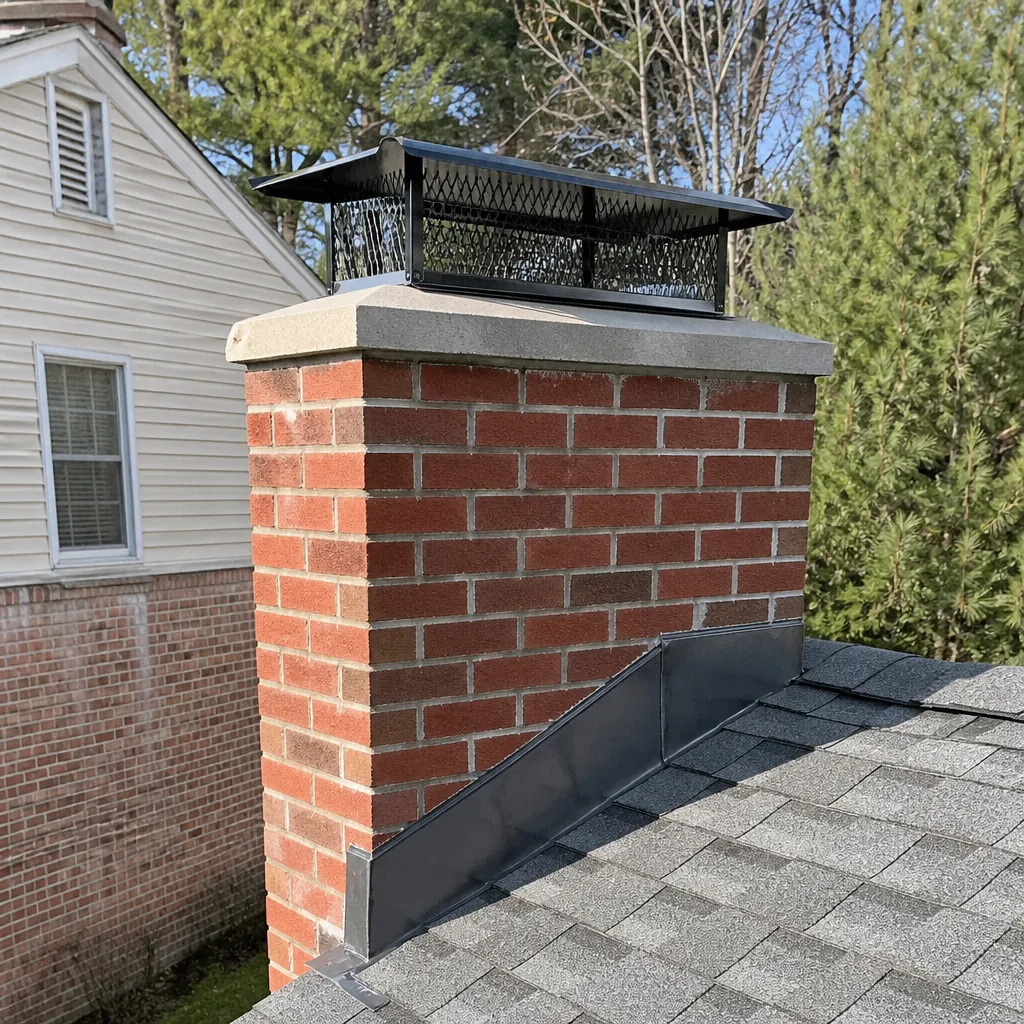
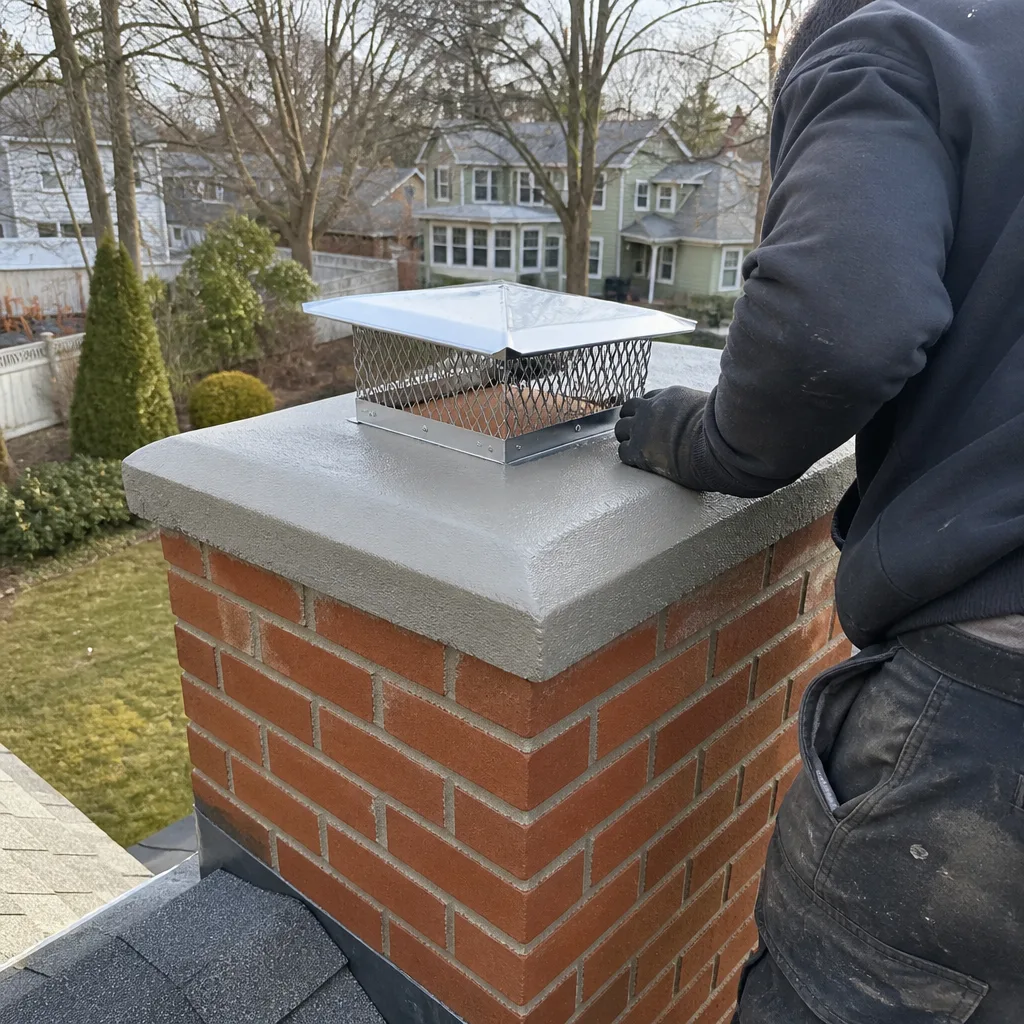
Level 1 sweep and inspection to the NFPA 211 annual standard - flue, crown, cap, and flashing checked and photographed
Chimney sweep logs do not sweep chimneys. They loosen some creosote - which then falls where a brush and vacuum still have to collect it.
 Before
 After
After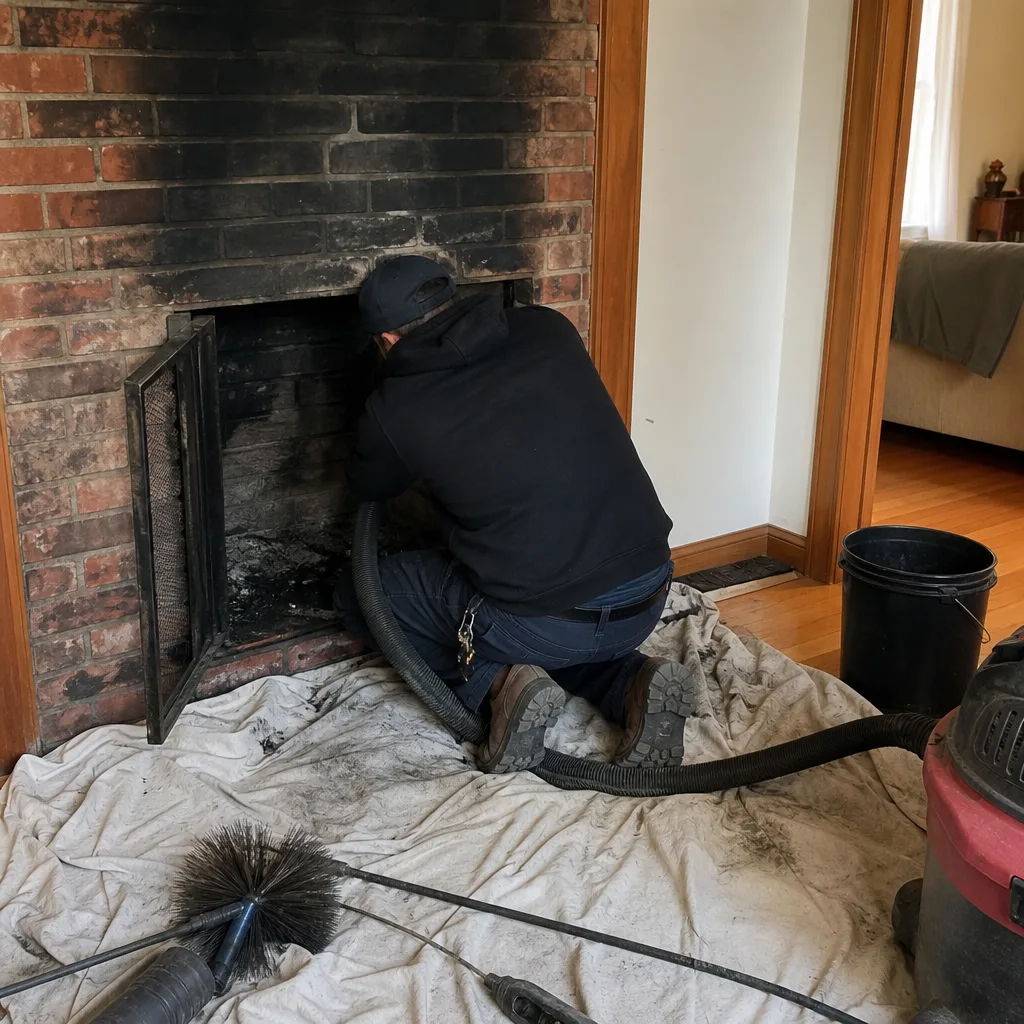 Before
 After
After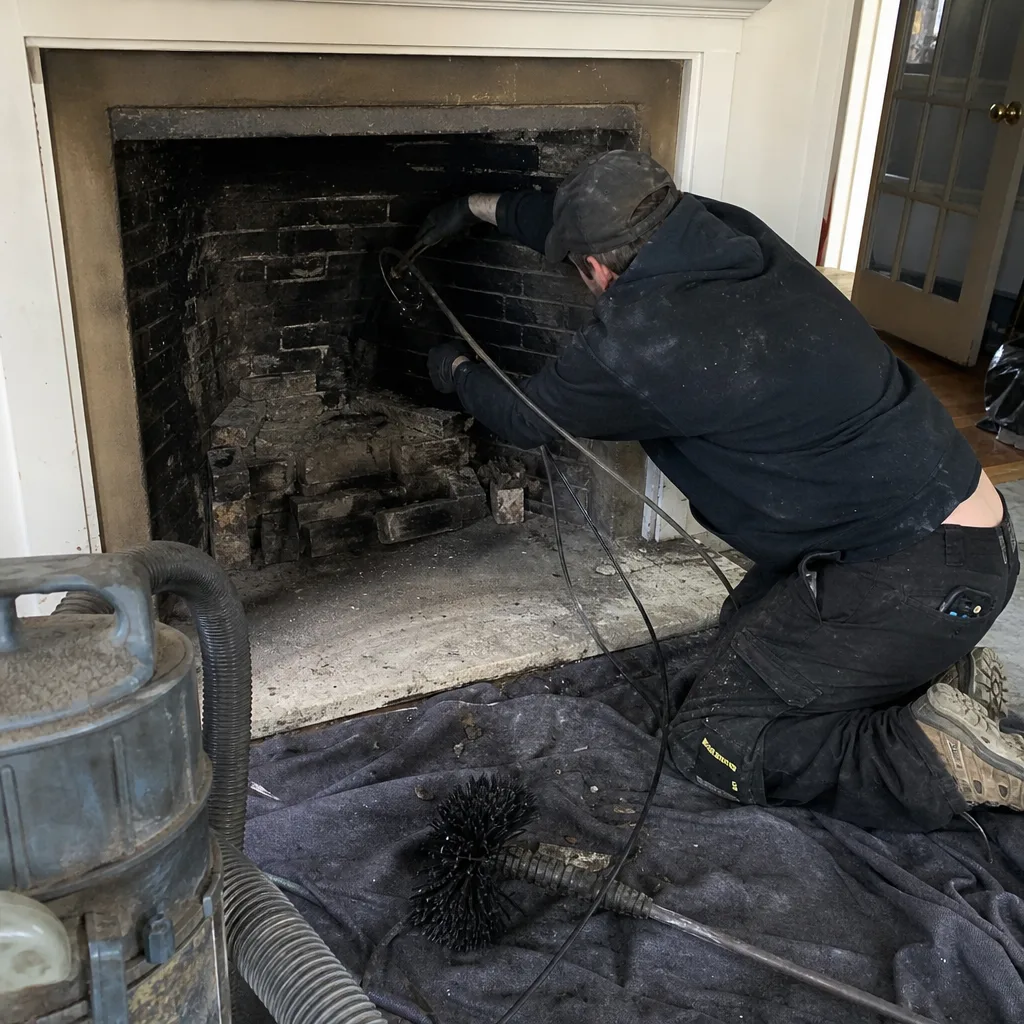 Before
 After
AfterDIY vs Professional Chimney Cleaning: The Waltham Homeowner’s Decision Guide
Every DIY chimney cleaning video shows the brushing. None of them shows what a camera reveals afterward. In Waltham, where roughly 60% of our housing stock predates 1980 and clay tile flue liners are the norm, the brush is the least important tool in the room. We’ve pulled cameras from chimneys in neighborhoods from the Acre to South Side that looked perfectly sound from the firebox, only to find mortar joints gapped 3/8 inch or more, or tile shards collecting at the smoke chamber shoulder. The homeowner who brushes their own flue and calls it maintenance has performed a cleaning on an uninspected system. That’s not negligence; it’s a blind spot the entire DIY genre shares. This guide names exactly what you can do yourself, what you cannot, and what Waltham’s specific housing conditions mean for that calculation; for more guides & resources, see our blog.
Quick Answer
DIY chimney cleaning can safely remove Stage 1 powdery creosote from a straight, single-story flue with no history of liner damage, but it cannot inspect the flue liner, cap, crown, or smoke chamber. In Waltham’s pre-1980 housing stock, where hidden liner deterioration is the dominant fire risk, the inspection matters more than the sweep. A professional Chimney Cleaning & Sweep in Waltham includes NFPA 211 Level 2 camera documentation that DIY cannot replicate and insurers may require.
Table of Contents
- What DIY Can Actually Accomplish
- What DIY Cannot Do Under Any Conditions
- Honest Cost Comparison: DIY vs Professional
- Waltham’s Housing Stock: The Hidden Risk
- The One Scenario Where DIY Is the Right Answer
- Three Scenarios Where You Should Skip DIY Entirely
- What a Professional Sweep Actually Includes
- Common Mistakes to Avoid
- When to Call a Professional
- Frequently Asked Questions
- The Bottom Line
 Before
 After
AfterWhat DIY Can Actually Accomplish
DIY chimney cleaning is technically reasonable under three narrow conditions. We see homeowners succeed with it when they meet all of them, and we see the failures when they don’t.
The three conditions:
- Straight flue, single story. No offsets, no bends, no second-floor fireplace. A brush on rods will navigate a straight run. It will not navigate a 30-degree offset common in 1960s Waltham colonials without leaving significant deposits.
- Stage 1 creosote only. This is the powdery, soot-like deposit that brushes off with moderate contact. If your creosote is flaky (Stage 2) or glazed and tar-like (Stage 3), a brush won’t touch it. Stage 3 requires rotary mechanical cleaning or chemical treatment, and in Waltham’s humid shoulder seasons, we’ve seen Stage 1 convert to Stage 3 in a single burning season when the flue was already partially restricted.
- No prior liner issues on record. If a previous inspection found cracked tiles, spalling clay, or missing mortar joints, DIY brushing is maintenance performed on a compromised system. You need to know the flue’s condition before you clean it, not after.
Assuming all three conditions are met, here’s what the work actually involves:
- Seal the firebox opening with plastic sheeting and tape to prevent soot migration into the room.
- Lay drop cloths from the hearth to the nearest exterior door.
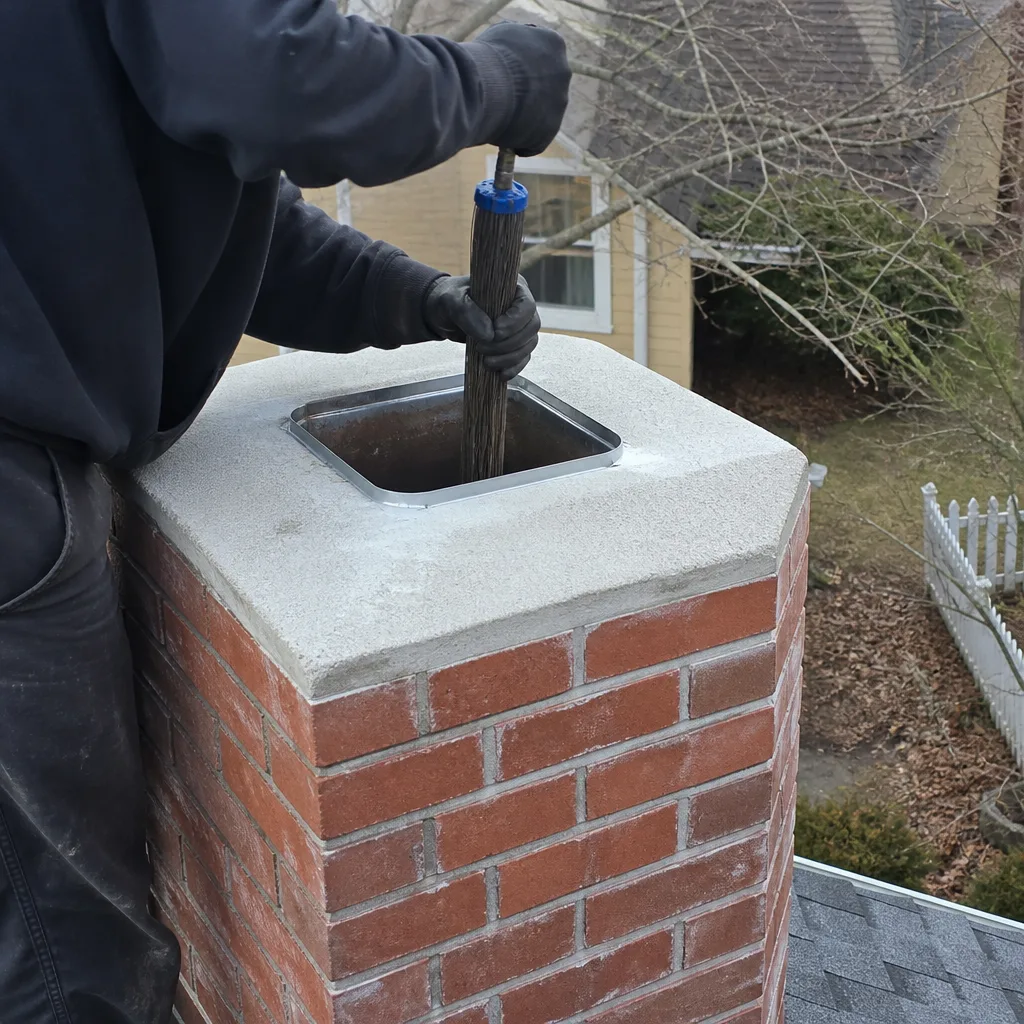
- Assemble a chimney brush to the correct flue diameter (polypropylene for metal flues, wire for masonry) on sufficient fiberglass rods.
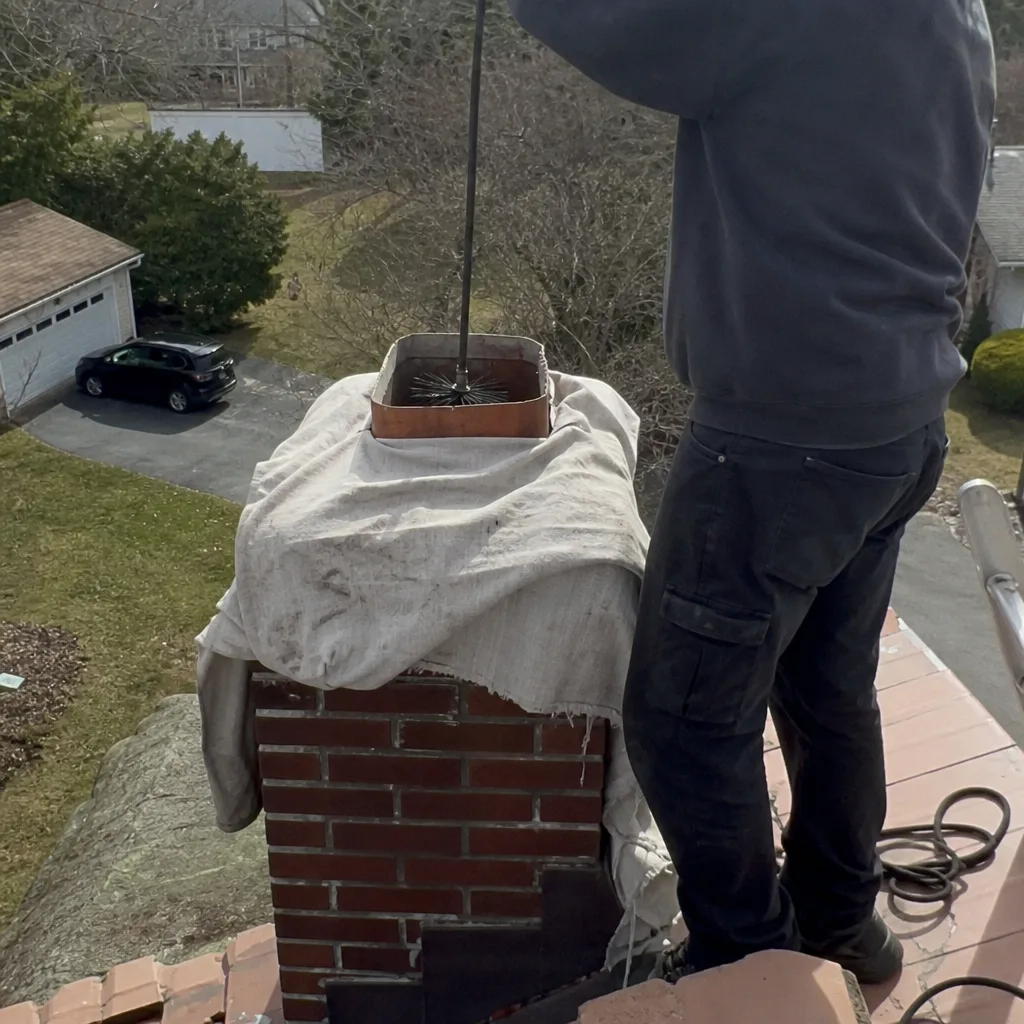
- Brush from the top down or bottom up with firm, steady strokes, adding rods as needed.
- Vacuum fallen debris from the smoke shelf and firebox using a HEPA-rated ash vacuum, not a household shop vac.
- Dispose of creosote debris per Waltham’s residential waste guidelines; creosote is classified as a combustible material and should not sit in household trash in quantity.
The honest output of this work: a flue with reduced creosote loading and a firebox with less debris. That’s it. You will not know the condition of the liner, the crown, the cap, or the smoke chamber. You will have no documentation. And if you discover during the process that the brush is catching, scraping, or meeting unexpected resistance, you’ve likely found damage that requires stopping immediately and calling a professional.
What DIY Cannot Do Under Any Conditions
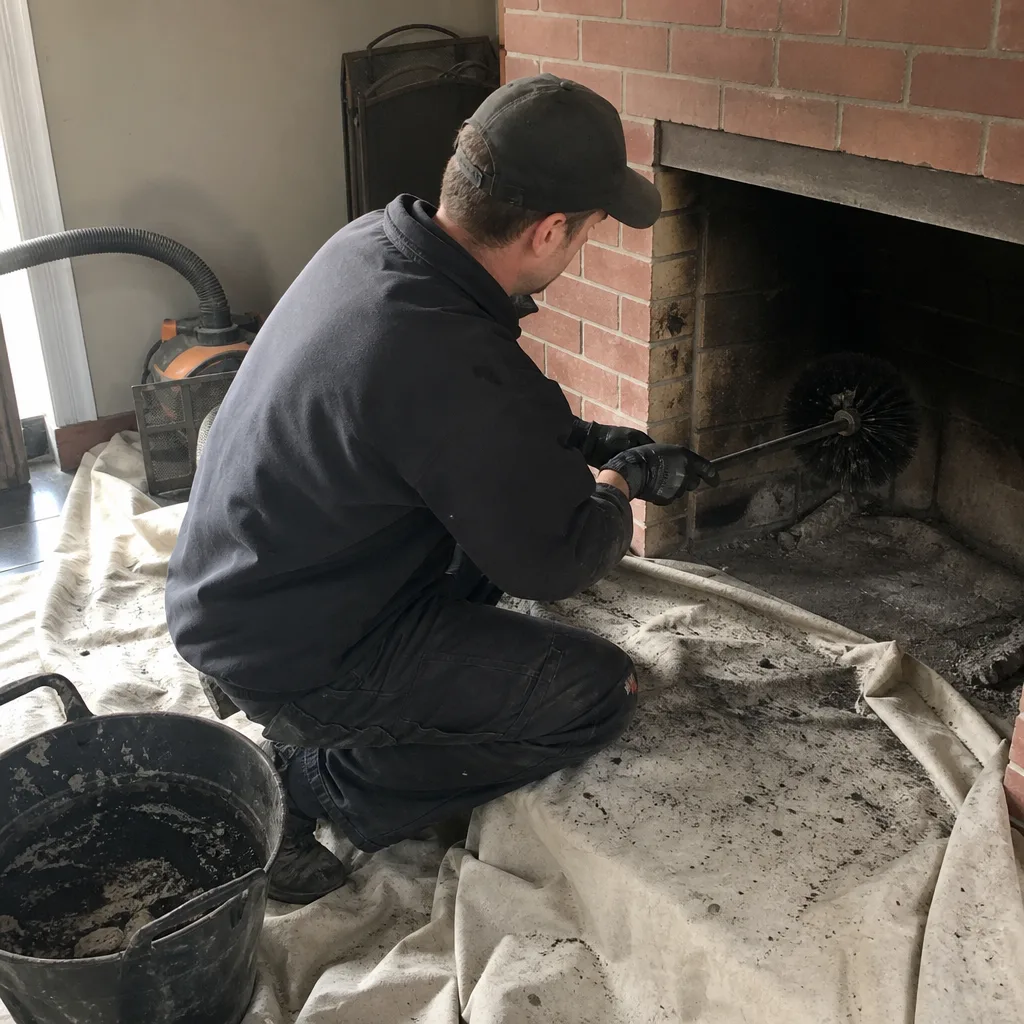
There are four functions of a professional chimney service that DIY cannot replicate, no matter how skilled or equipped the homeowner. These aren’t matters of convenience. They’re matters of access, equipment, and legal standing.
Flue liner inspection. A visual inspection from the firebox or roof shows you the first 18 inches of liner and guesses at the rest. A camera scan, required under NFPA 211 Level 2, documents every square inch of the flue surface. In Waltham, we’ve found liner damage in 34% of pre-1980 homes where the firebox view showed nothing unusual. The camera reveals mortar joint separation, tile shifting, spalling, and corrosion patterns that are invisible from either end.
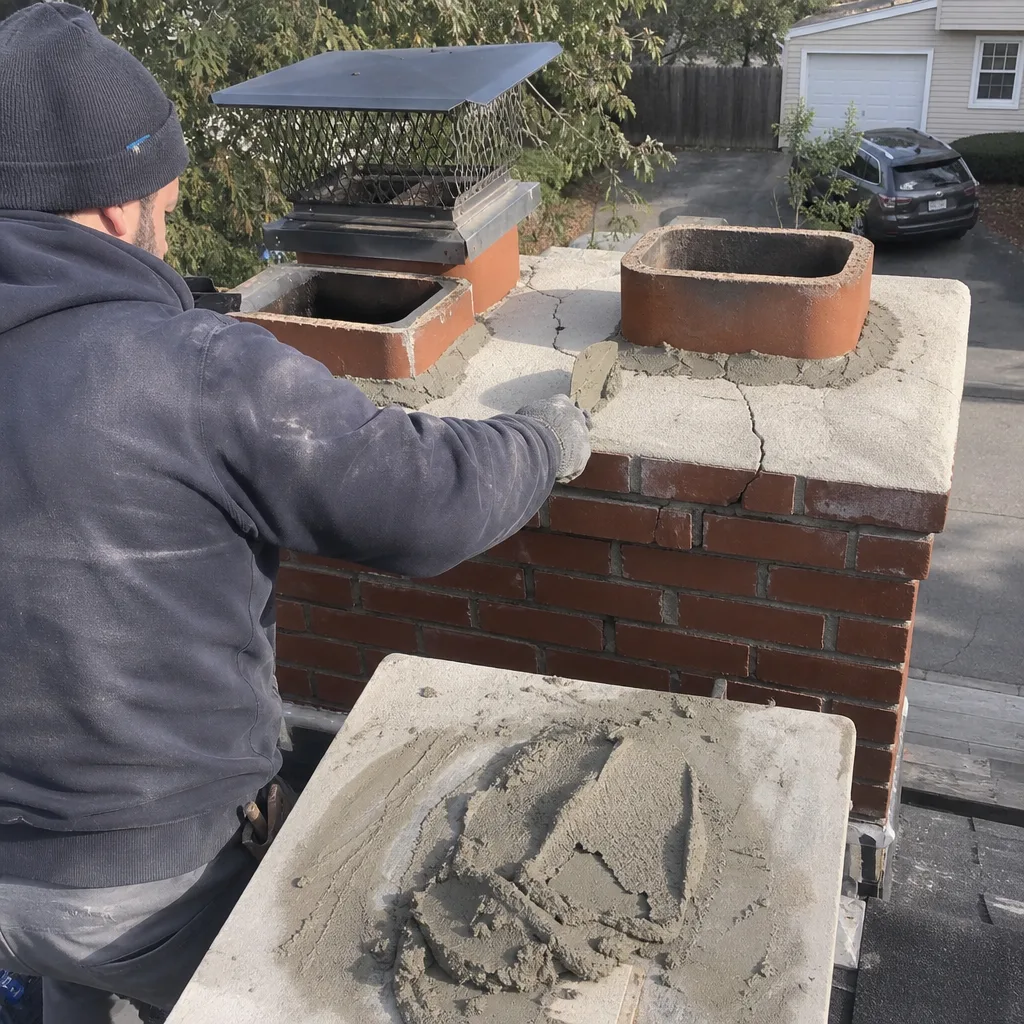
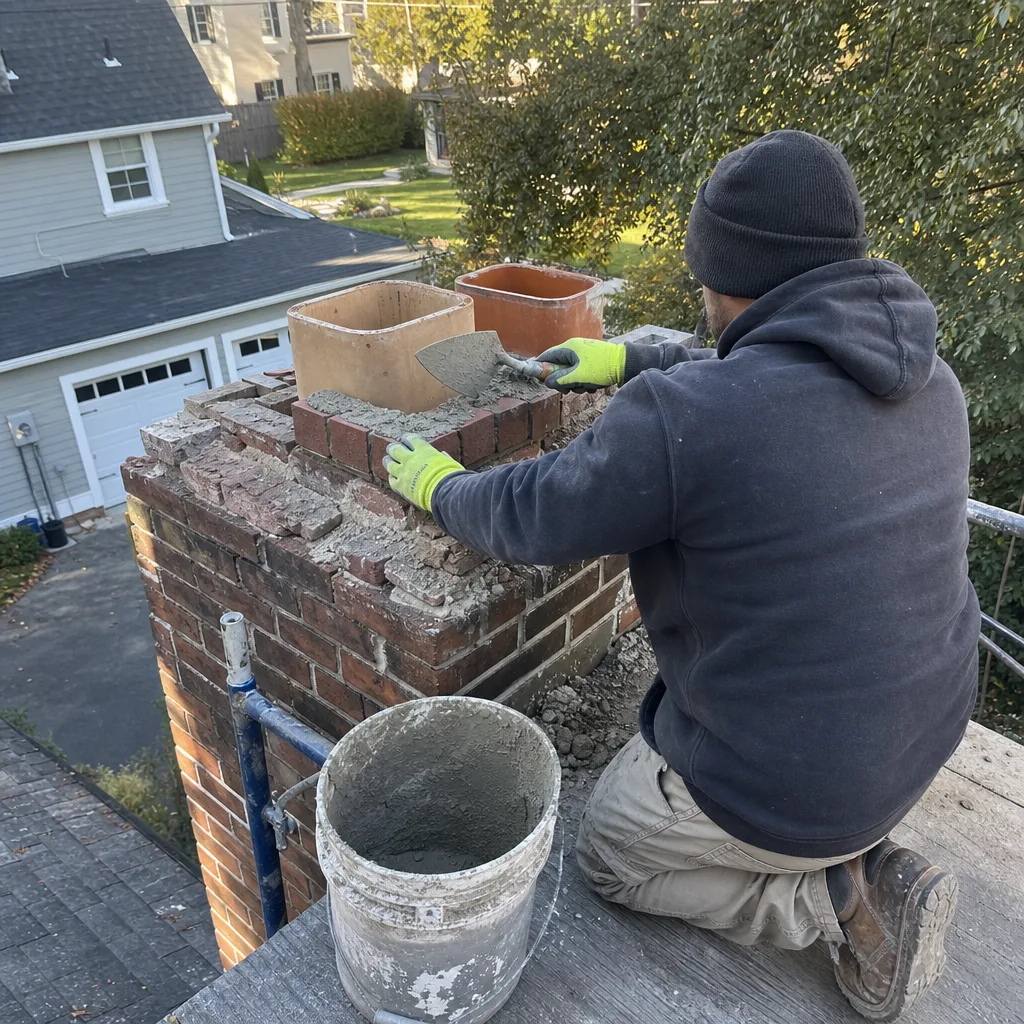
Cap and crown assessment from the roof. The crown is the concrete or mortar wash that seals the chimney top. Cracks there allow water intrusion that destroys liners from the outside in. A ground-level binocular inspection misses hairline cracks and crown wash failures. You need to be on the roof, close, with knowledge of what crown deterioration looks like at its early stages.
Smoke chamber evaluation. The smoke chamber is the area above the damper and below the flue liner, typically sloped to guide smoke into the flue. Building codes (including Massachusetts amendments to the IRC) now require parging smooth in new construction, but most Waltham homes predate this requirement. Corbelled brick, rough mortar, and gaps in the smoke chamber create turbulence that deposits creosote and can accelerate chimney fires. You cannot evaluate this space without training in what to look for and lighting designed for the purpose.
Documentation admissible to insurers. If a chimney fire occurs, your insurer may request evidence of maintenance. A DIY brushing has no timestamped photo record, no written scope, no technician license number. Clause 4 of the Haven Standard requires a documented photo record on every job precisely because we’ve seen insurers deny claims where maintenance was claimed but not documented. A homeowner’s word that “I brushed it last fall” carries no evidentiary weight.
These four gaps aren’t about skill. They’re about equipment, access, and legal framework. No homeowner’s brush kit includes a chimney camera. No YouTube tutorial substitutes for the 38,000+ documented inspections that inform what we expect to find in a Waltham flue of a given age and construction type.
Honest Cost Comparison: DIY vs Professional
Here’s the math, stated plainly without editorializing.
DIY chimney cleaning costs:
- Chimney brush kit (brush + rods): $45-$90, depending on flue diameter and rod length
- Drop cloths and plastic sheeting: $15-$30
- HEPA-rated ash vacuum rental or purchase: $35-$75
- Safety gear (goggles, respirator rated for fine particulate, gloves): $25-$40
- Roof ladder or stabilizer (if cleaning from top): $50-$120, or borrowed
- Time investment: 3-5 hours for a first attempt, including setup and cleanup
Total DIY range: $170-$355 in materials, plus 3-5 hours labor.
Professional chimney sweep in Waltham:
- NFPA 211 Level 2 inspection with camera scan: included
- Full sweep and debris removal: included
- Written scope of work and written price before any work starts: included (Haven Standard Clause 1)
- Documented photo record of flue condition: included (Haven Standard Clause 4)
- 365-Day Done Right Promise: included
- Time investment: 60-90 minutes, homeowner present but not working
Professional range in Waltham market: $250-$450 for a standard sweep and inspection.
The gap narrows considerably when you price the DIY option honestly. A homeowner who already owns the equipment and has done the work before faces lower marginal cost, but also faces the same four incapacities: no camera, no roof assessment, no smoke chamber evaluation, no documentation. The professional service isn’t a cleaning with an inspection added. In Waltham’s market, the inspection is the service, and the cleaning is the baseline that makes it possible. See our Chimney Cleaning Cost Breakdown: The Waltham Homeowner’s Reference for 2026 for detailed pricing.
We source our materials through Haven’s buying network, procuring from Olympia Chimney, Famco, and Copperfield specifically to keep customer prices honest. That procurement efficiency is part of why our written prices land where they do.
Waltham’s Housing Stock: The Hidden Risk
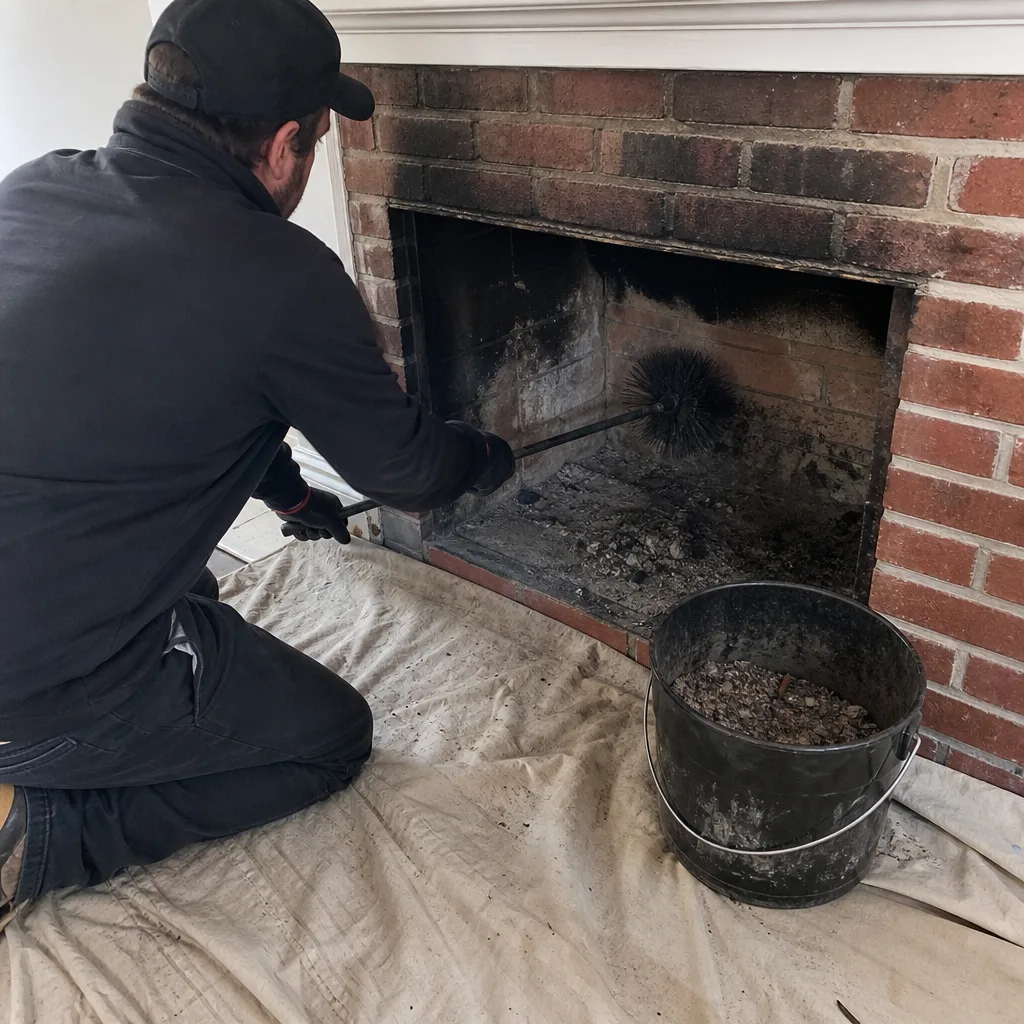
Waltham’s housing market has a specific profile that changes the DIY calculation. The city has significant concentrations of pre-1940 construction in the Acre, South Side, and near the Charles River, plus extensive 1950s-1970s development in areas like Piety Corner and the northeast neighborhoods. Both cohorts share a common feature: clay tile flue liners that age predictably but invisibly.
Clay tile liners have a design life of roughly 50 years in ideal conditions. Waltham’s conditions are not ideal. The freeze-thaw cycle here is aggressive, with January lows averaging 17°F and rapid temperature swings common in March and November. Water enters through crown cracks, freezes, expands, and opens mortar joints between tiles. The damage happens behind the visible surface. A tile can look intact from the firebox while its bedding mortar has turned to sand.
We’ve documented this pattern repeatedly. In a 2019 sweep on Orchard Street, the firebox view showed clean, unbroken tile. The camera revealed a 4-foot section of missing mortar joints with daylight visible through the chimney wall. The homeowner had brushed the flue themselves for three consecutive years. They had performed maintenance on a system that was structurally compromised, with no mechanism to discover the compromise.
Massachusetts building code and the NFPA 211 standard both recognize this gap. The Level 2 inspection, which includes camera documentation of the entire flue, was developed specifically to address the limitations of visual-only assessment. In Waltham’s housing stock, skipping that inspection isn’t a calculated risk. It’s a gamble with odds you cannot see.
The other Waltham-specific factor is proximity to Boston and Cambridge, which means higher property values and correspondingly higher rebuild costs after a chimney fire. A liner failure that leads to structural fire in a 2,400-square-foot Waltham colonial can trigger six-figure restoration costs. The $250-$450 professional sweep is not expensive relative to that exposure.
The One Scenario Where DIY Is the Right Answer
There is exactly one scenario where we tell homeowners DIY cleaning is reasonable, and we mean it without reservation.
You should consider DIY if: You have a single-story home with a straight flue, you burned only seasoned hardwood this season, you had a professional Level 2 inspection within the past 12 months that found Stage 1 creosote only and no liner damage, and you are comfortable on a roof or can brush effectively from the firebox upward. In this narrow case, you’re performing maintenance on a known-good system, and the risk is limited to incomplete cleaning or mess.
Even here, we recommend a professional inspection every third year minimum. Creosote formation varies with wood moisture, burning habits, and weather patterns. A system that was clean last November can show significant Stage 2 buildup after a wet winter and heavy use. The 2023-2024 burning season in Waltham was exactly this pattern: wet fall, cold January, and we saw accelerated creosote loading in systems that had been clear the year prior. Our Seasonal Chimney Cleaning Care for Waltham: Year-Round Homeowner’s Guide covers how to adjust maintenance to local weather patterns.
The homeowner who meets all four conditions and accepts the documentation gap is making a defensible choice. We’ve met dozens of them. They’re typically mechanically competent, safety-conscious, and clear-eyed about what they’re not getting. The problem is that most homeowners who consider DIY don’t meet all four conditions, and many don’t know which ones they’re missing.
Three Scenarios Where You Should Skip DIY Entirely
These are not recommendations. They’re hard stops.
Scenario one: Any prior liner damage or unknown liner condition. If you’ve never had a camera inspection, you don’t know your liner condition. This applies to virtually every Waltham home that hasn’t had a professional sweep in the past three years. Brushing a compromised liner can dislodge fractured tiles, worsen gaps, or drive debris into hidden voids. We’ve found tile shards in smoke chambers where homeowners reported “the brush felt funny last time.” That funny feeling was a liner failing in contact with the brush.
Scenario two: Two or more stories, or any flue offset. The physics change dramatically with height and bends. A 25-foot flue with a 30-degree offset requires significantly more rod pressure, and the brush can bind or separate in the offset. Retrieving a separated brush from a flue offset is not a DIY procedure. We’ve extracted competitor brushes, homeowner brushes, and once a section of garden hose that someone thought would work. All required disassembly or specialized retrieval tools.
Scenario three: Any use of manufactured logs, unseasoned wood, or previous chimney fire. Manufactured logs produce different deposit chemistry, often more acidic and more adherent. Unseasoned wood (>20% moisture) produces accelerated Stage 2 and Stage 3 creosote that brushing won’t remove. And a previous chimney fire, even a small one, may have cracked tiles or damaged mortar that a brush will worsen. In all three cases, you need professional evaluation before any cleaning occurs.
These three scenarios cover the majority of Waltham homes we service. The single-story, straight-flue, known-good system is the exception, not the norm.
What a Professional Sweep Actually Includes
At Level Two Chimney Waltham home, the service that follows our name is the standard we work to. Here’s what happens on a typical visit, in sequence, with no steps omitted.
- Arrival and verification. You receive a text when your technician is en route. The technician arrives in uniform, with license information visible. Background checks are completed before hire, not after.
- Preliminary interview. We ask about burning habits, any changes in draft or odor, and any previous service or concerns. This isn’t small talk; it directs where we look first.
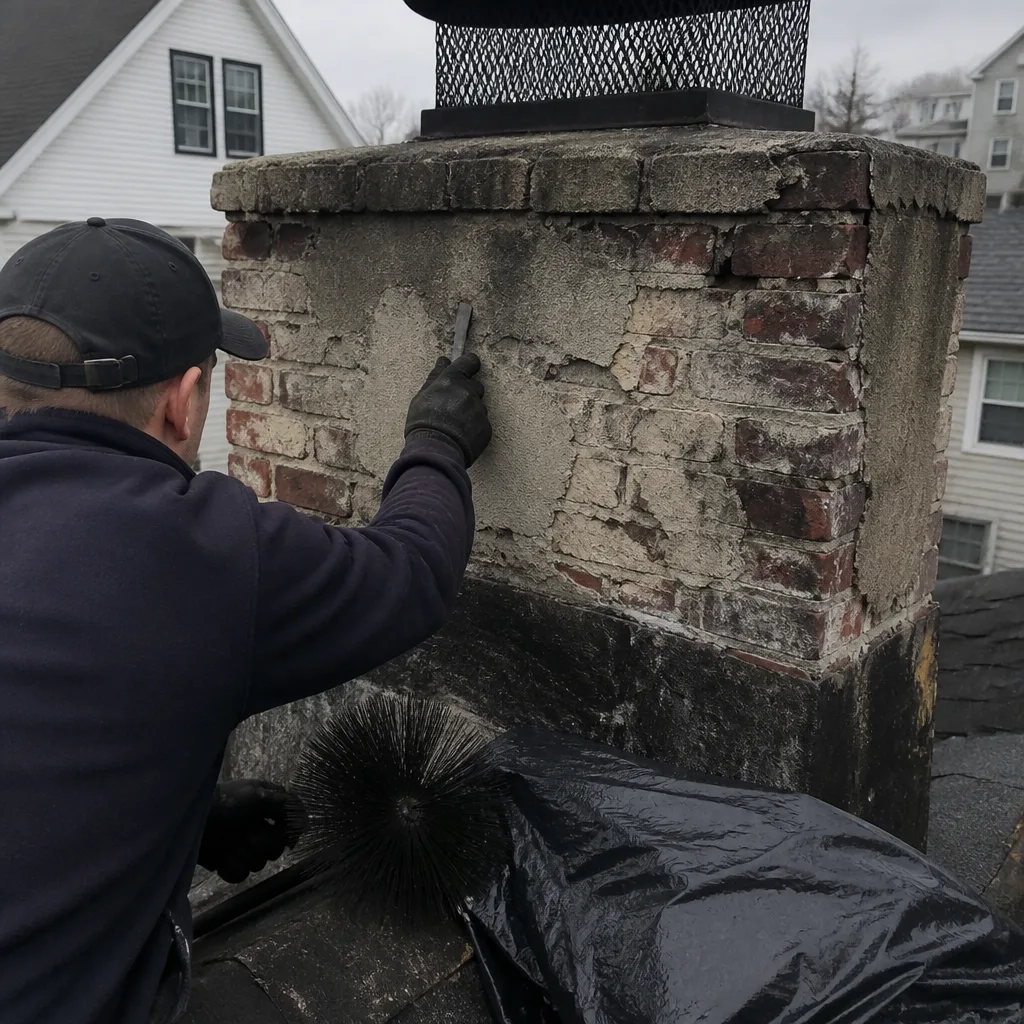
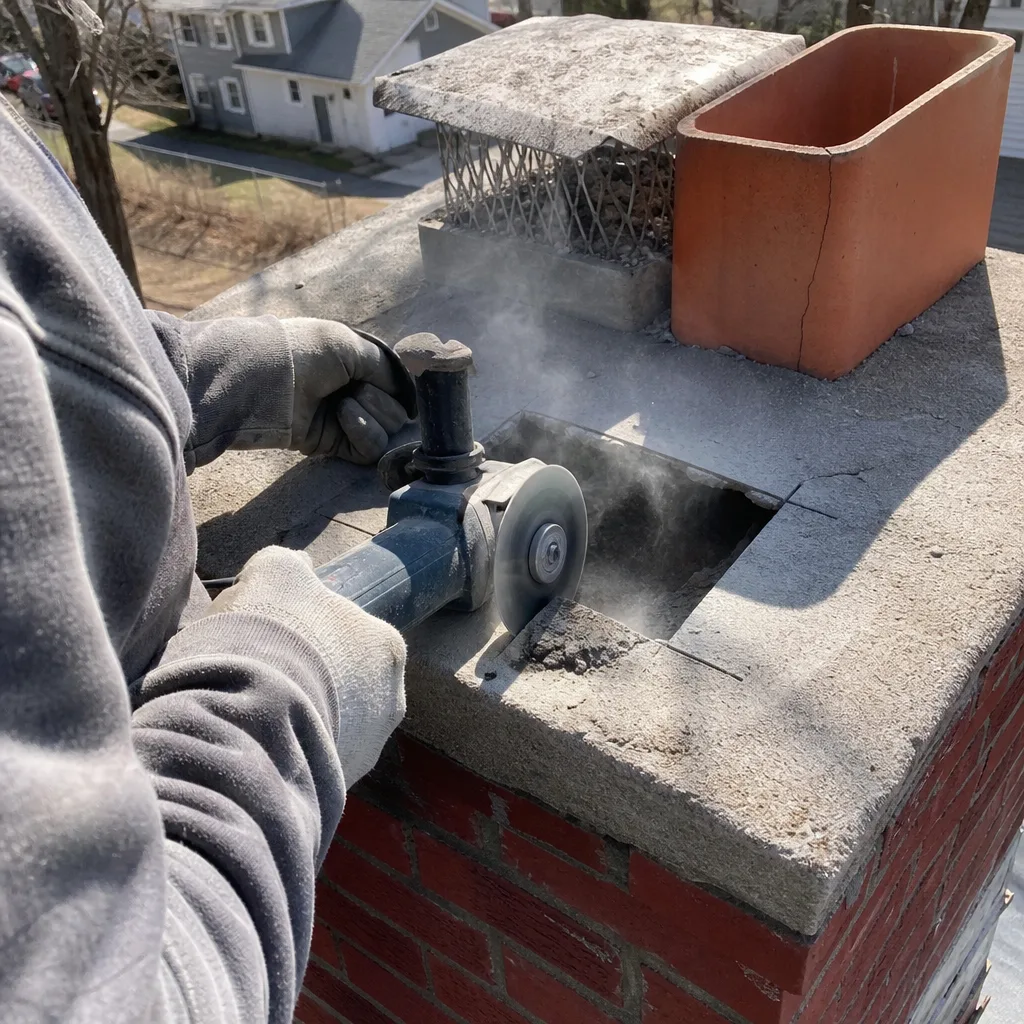
- Exterior assessment. Roof access to evaluate cap, crown, flashing, and brick condition. We photograph everything.
- Interior firebox and smoke chamber examination. Damper operation, firebox integrity, smoke chamber profile, and any visible liner entry condition.
- Camera scan of the full flue. This is NFPA 211 Level 2, Clause 4 of the Haven Standard. The camera documents every inch of liner surface, with footage archived to your record.
- Cleaning, if indicated and approved. We present a written price and written scope before any work begins. No exceptions. If the inspection reveals conditions that require repair rather than cleaning, we say so plainly and show you the camera evidence.
- Post-service documentation. Written summary, photo record, and warranty documentation. The 365-Day Done Right Promise applies to all work performed.
Materials for any repair work come from our Haven buying network: DuraFlex for stainless liner systems, HeatShield for crown and flue resurfacing, Gelco for caps, Olympia Chimney and Famco for specialized components. We name the manufacturer because we warranty the installation, and we need to stand behind the material.
The documented photo record is not an add-on or upgrade. It’s standard because it’s the only way to prove what was found. In 2009, we made camera documentation the default practice, years before regulators or insurers asked for it. That practice became Clause 4 of the Haven Standard. We’ve maintained that archive continuously since.
If you’re comparing professional services, ask specifically: Is the camera scan included or extra? Is there a written price before work starts? Is there a documented record you receive? If any answer is no, you’re not comparing equivalent services.
Common Mistakes to Avoid
- Using a shop vac without HEPA filtration. Standard shop vacs blow fine particulate through the exhaust. Creosote particles under 2.5 microns stay airborne for hours and deposit throughout the house. In Waltham’s tight 1920s construction with shared wall cavities, this is a real exposure risk.
- Brushing from the bottom with an improper brush size. An undersized brush centers in the flue and misses the corners where creosote concentrates. An oversized brush binds and can damage tile edges. Proper sizing requires measuring the flue, not guessing.
- Assuming no odor means no creosote. Odor is a poor indicator of creosote volume or stage. Stage 3 glazed creosote often produces minimal odor while presenting maximum fire risk. The only reliable assessment is visual, and that requires camera access.
- Cleaning without checking the damper and smoke chamber first. A stuck or damaged damper can make brushing impossible or dangerous. A partially collapsed smoke chamber can trap debris that a brush will pack tighter rather than remove.
- Ignoring Waltham’s specific waste restrictions. Creosote debris in quantity is combustible waste. The Waltham DPW has specific guidance for disposal of ash and combustion residues. Bagging creosote in household trash in July is a fire risk in the collection truck.
- Brushing a gas flue with the same equipment. Gas appliance flues require different evaluation. Corrosion patterns, condensation damage, and draft testing are the relevant concerns, not creosote removal. The wrong brush can damage a metal gas flue liner.
When to Call a Professional
Call a professional if your home predates 1980 and has never had a camera inspection, if you’ve noticed any change in draft performance or new odors, if you burned unseasoned wood or manufactured logs, if your flue has any offset or serves multiple appliances, or if you’re preparing to sell and need documentation for disclosure. Not sure how to choose? Read How to Hire a Chimney Cleaning Contractor in Waltham: A Step-by-Step Guide. Level Two Chimney Waltham offers free estimates in Waltham - call (781) 649-9326. We’ll provide a written price before any work starts, and a Free Second Opinion on any competitor’s written estimate. Every job includes the camera scan and documented photo record that DIY cannot replicate.
Frequently Asked Questions
A professional chimney sweep with NFPA 211 Level 2 camera inspection in Waltham typically runs $250-$450, depending on flue accessibility, number of appliances served, and whether any repair conditions are found. We deliver a written price before any work starts, with no call-for-quote requirement. Call (781) 649-9326 for an exact quote - estimates are free.
You should not accept a liner recommendation without camera evidence you can see for yourself. At Level Two, we show you the footage, explain what we’re looking at, and note which conditions require immediate action versus which can be monitored. Clay tile liners with minor mortar gaps can often be repaired or monitored; significant spalling, tile shifting, or gaps exceeding 3/8 inch typically require relining. If a company recommends a liner but won’t show you the camera evidence, get a second opinion. Our Free Second Opinion service exists for exactly this scenario.
NFPA 211 recommends annual inspection for all solid-fuel systems, with cleaning as needed based on creosote accumulation. In practice, Waltham homeowners burning seasoned hardwood 3-4 times weekly typically need sweeping every 1-2 years. Those burning more frequently, burning softer woods, or using manufactured logs may need annual cleaning. The inspection is annual regardless; cleaning frequency follows from what the inspection finds.
Skipped maintenance leads to creosote accumulation, which increases chimney fire risk and can produce carbon monoxide hazards through restricted draft. In Waltham’s older housing, the greater risk is undetected liner deterioration that allows heat or combustion gases to reach combustible framing. A chimney fire can reach 2,000°F and crack adjacent masonry, damage roofing, or extend to structural members. Carbon monoxide is odorless and can enter living spaces through liner gaps or negative pressure conditions common in tightly sealed modern homes. The camera inspection is what catches these conditions before they become emergencies. Call (781) 649-9326 to schedule - estimates are free.
Chimney cleaning logs contain chemicals that claim to loosen or modify creosote deposits. They do not remove creosote. At best, they may convert some Stage 2 deposits to a more brushable consistency. They do not inspect the liner, evaluate the crown, or document anything. We occasionally see logs used as a substitute for proper maintenance, which leaves the actual system condition unknown. They’re not a replacement for inspection or cleaning.
Some insurers require evidence of professional maintenance for chimney-related claims, particularly after a fire. A DIY brushing provides no timestamped documentation, no technician license, no photo record. Clause 4 of the Haven Standard requires documented photo records precisely because we’ve seen claims disputes where maintenance was asserted but not proven. If your policy has a maintenance clause, professional documentation with written scope and photo archive is the only reliable compliance path. Check your specific policy language; we can provide documentation in the format your insurer requests.
The Bottom Line
DIY chimney cleaning has a valid, narrow application: straight flue, single story, Stage 1 creosote, known-good liner, and acceptance that you’re performing maintenance without inspection or documentation. For Waltham’s housing stock, that profile is the minority case. The dominant risk in this city’s chimneys is liner deterioration that brushing cannot find and may worsen. The professional service that matters isn’t the brush; it’s the camera, the roof assessment, the smoke chamber evaluation, and the documented record that proves what was found. We charge for that full service, we name the price in writing before starting, and we warranty the work for 365 days. The comparison isn’t DIY versus professional cleaning. It’s DIY cleaning versus professional inspection that includes cleaning. In Waltham’s market, that’s the comparison that protects your home.
Written by Corrine Halstead, Owner at Level Two Chimney Waltham, serving Waltham since 2009.