
Last updated September 22, 2026
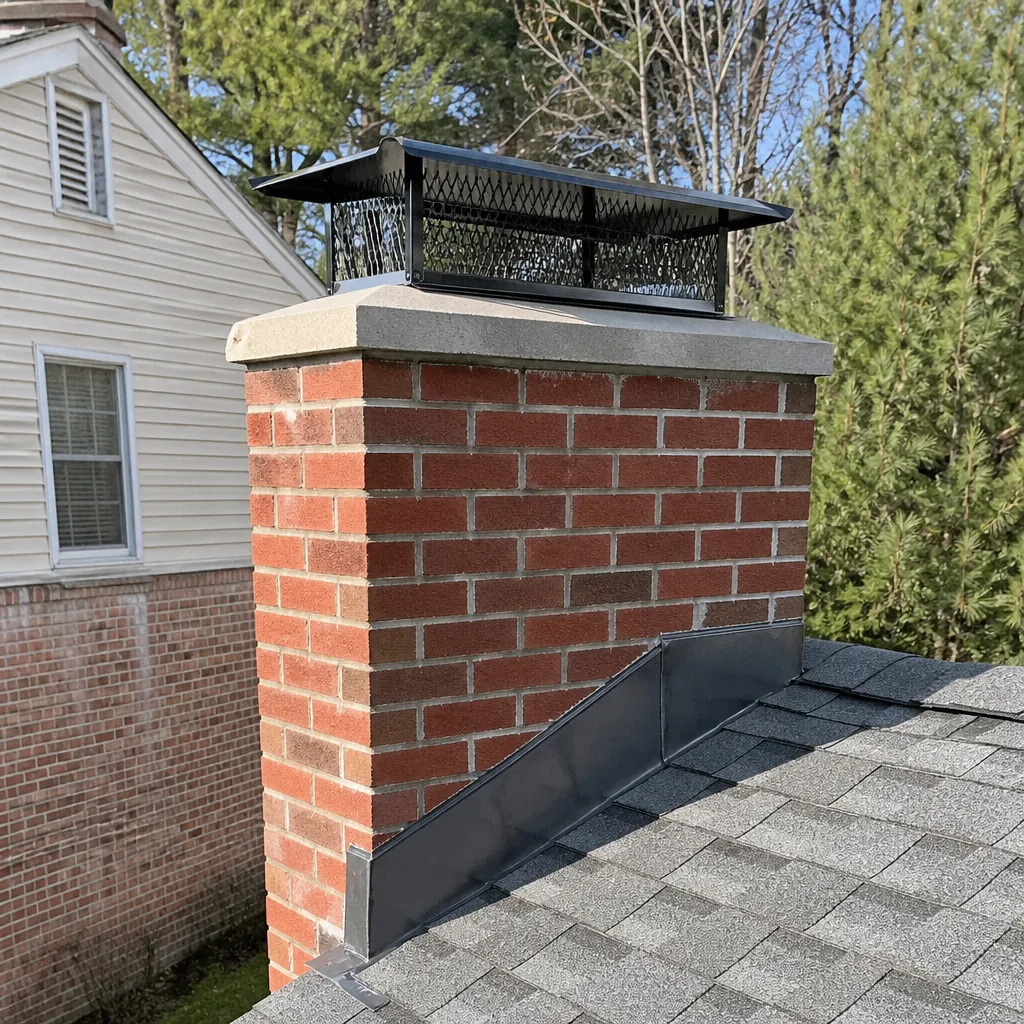
Level 1 sweep and inspection to the NFPA 211 annual standard - flue, crown, cap, and flashing checked and photographed
Chimney sweep logs do not sweep chimneys. They loosen some creosote - which then falls where a brush and vacuum still have to collect it.
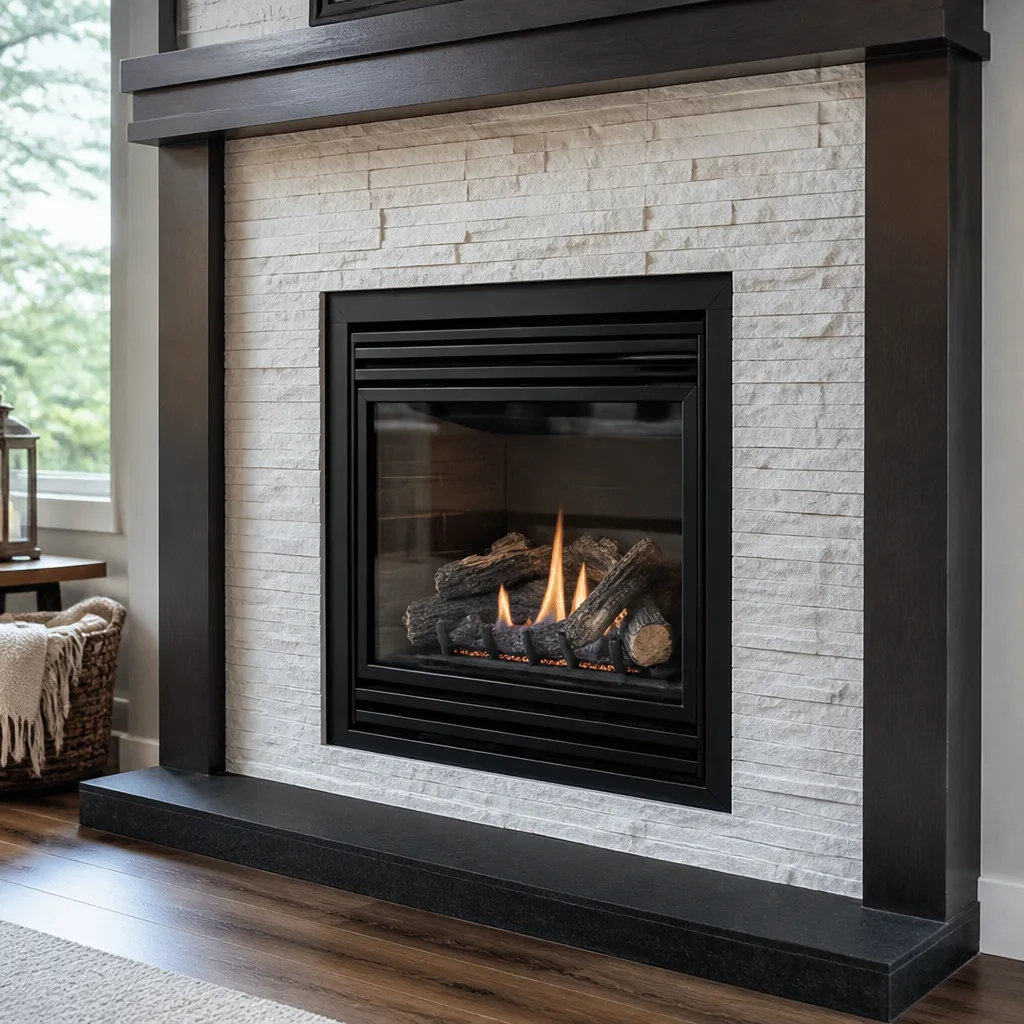
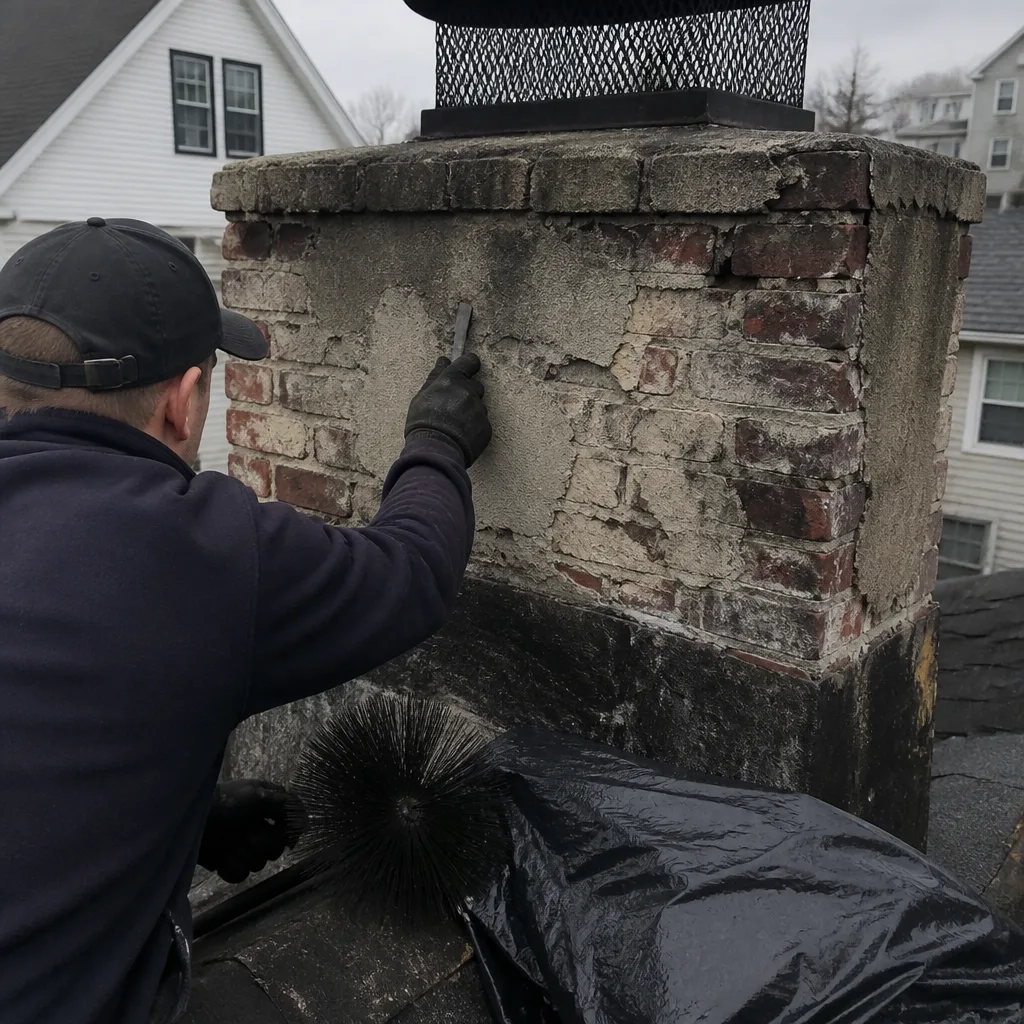 Before
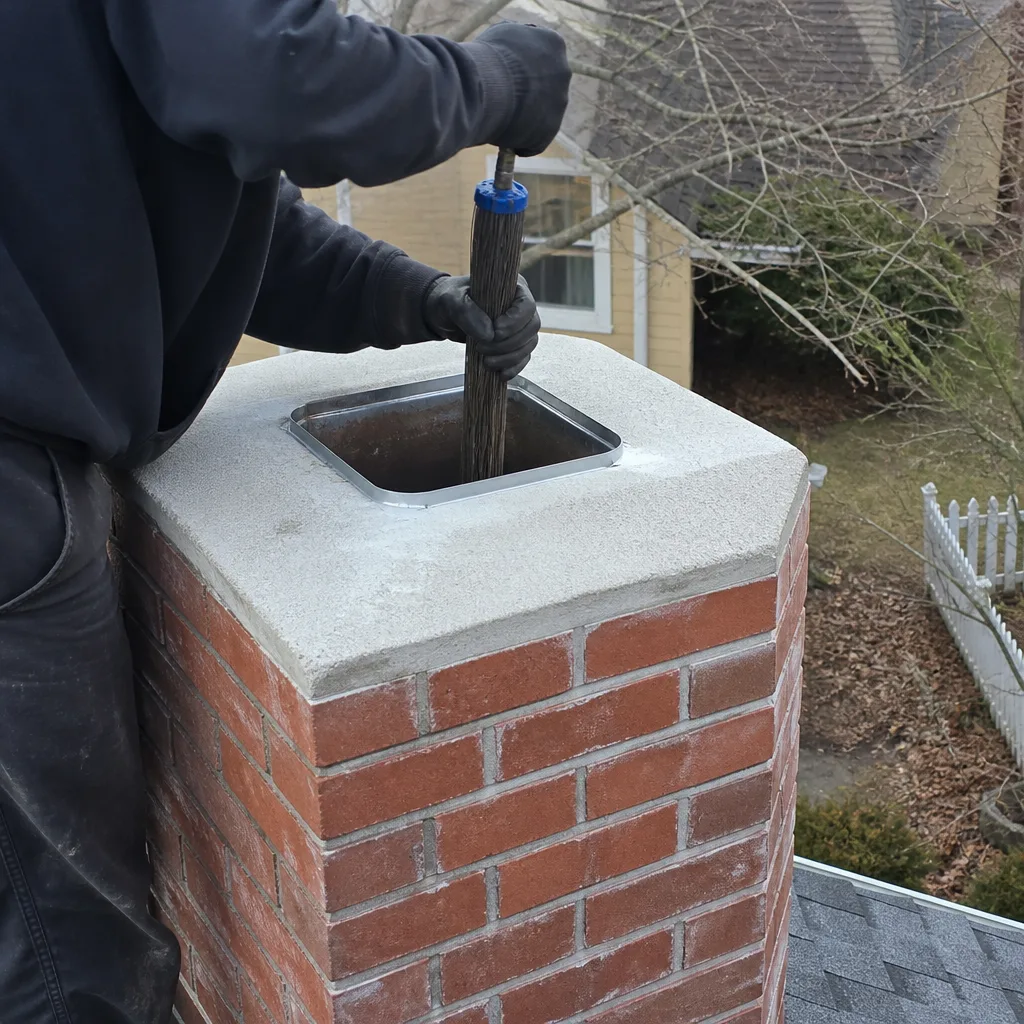 After
After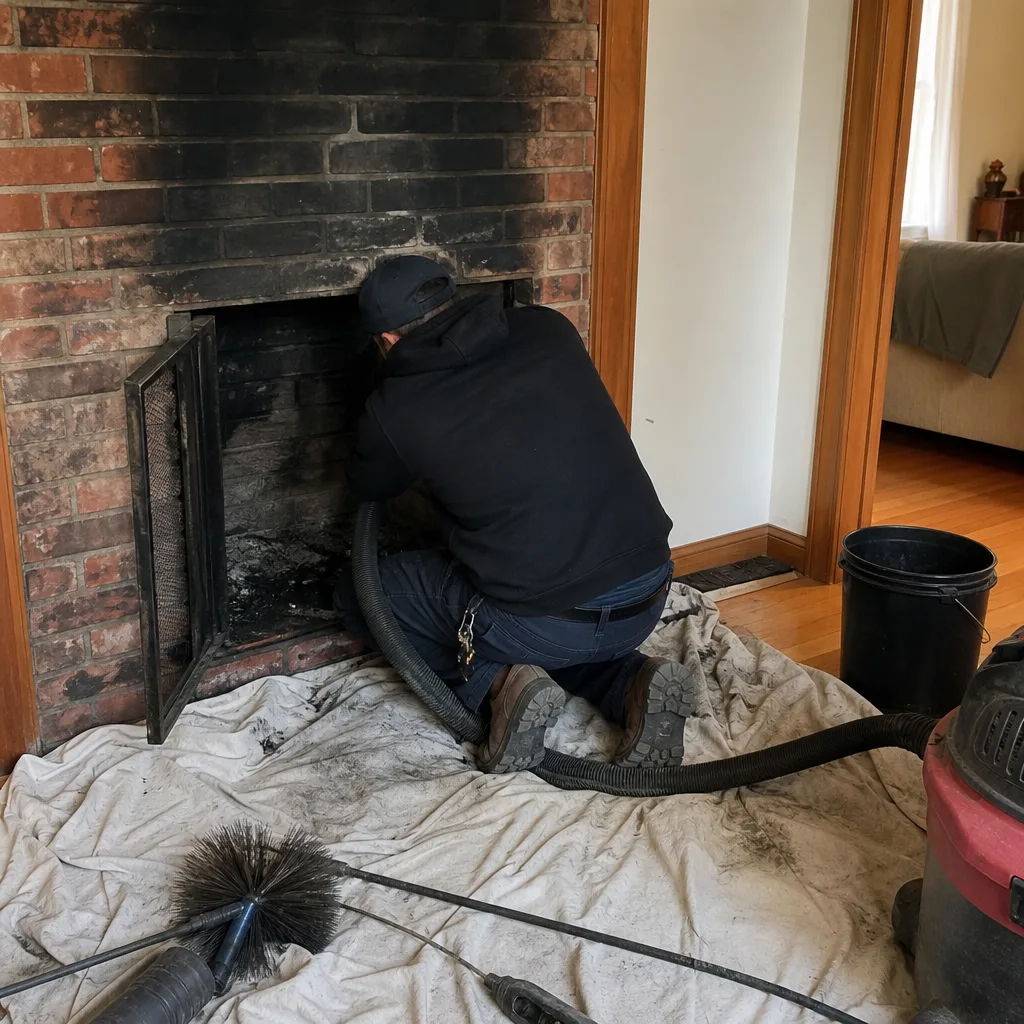 Before
 After
After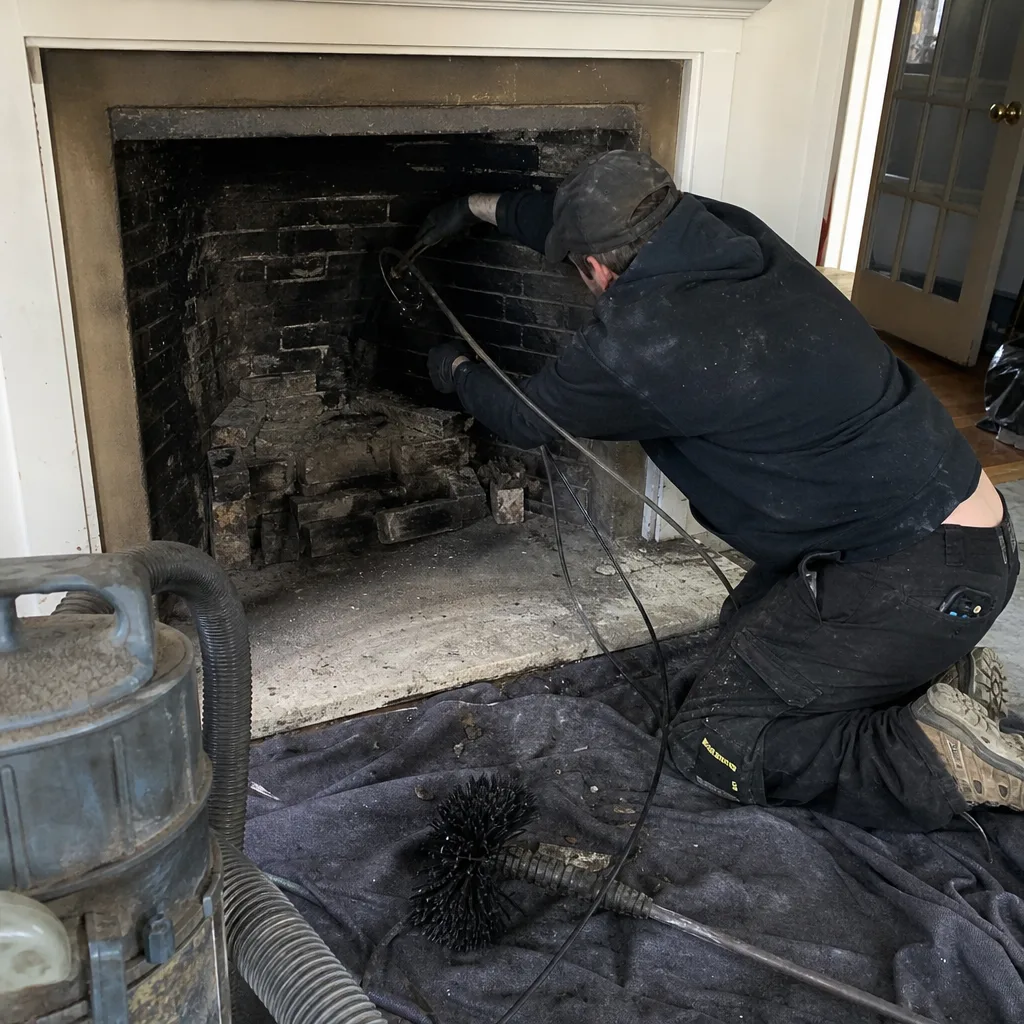 Before
 After
AfterSeasonal Chimney Cleaning Care for Waltham: Year-Round Homeowner’s Guide
Waltham averages 37 freeze-thaw cycles between November and March - more than Boston proper because of its inland elevation and colder overnight lows. That mechanical stress on chimney crowns and mortar joints creates a different failure pattern than the industry’s generic “annual cleaning” advice was designed for. One sweep in October misses three other windows when damage accumulates, moisture intrudes, or creosote stages advance. In this guide, we’ll map the actual four-window calendar Waltham homeowners need, explain what each season does to your flue, and show what skipping each window typically costs in preventable repairs - or see our Chimney Cleaning Cost Breakdown: The Waltham Homeowner’s Reference for 2026 for deeper pricing analysis.
Quick Answer
Seasonal chimney care in Waltham requires four distinct maintenance windows, not one: March for post-winter crown and mortar inspection, May for cap screen cleaning after nesting season, August for pre-season sweep and damper check, and November for mid-season creosote assessment on active wood burners. Each window addresses a separate failure condition created by Waltham’s freeze-thaw cycle, summer humidity, or shoulder-season gas restarts. A homeowner who follows this calendar typically spends $180-$340 on scheduled maintenance versus $680+ on corrective work after missed windows.
Table of Contents
- March: Post-Winter Crown and Mortar Inspection
- May: Cap Screen Cleaning After Nesting Season
- August: Pre-Season Sweep and Damper Check
- November: Mid-Season Creosote Check for Wood Burners
- September Gas Fireplace Restart Checklist
- What Skipping Each Window Actually Costs
- Common Mistakes to Avoid
- When to Call a Professional
- Frequently Asked Questions
 Before
 After
AfterMarch: Post-Winter Crown and Mortar Inspection
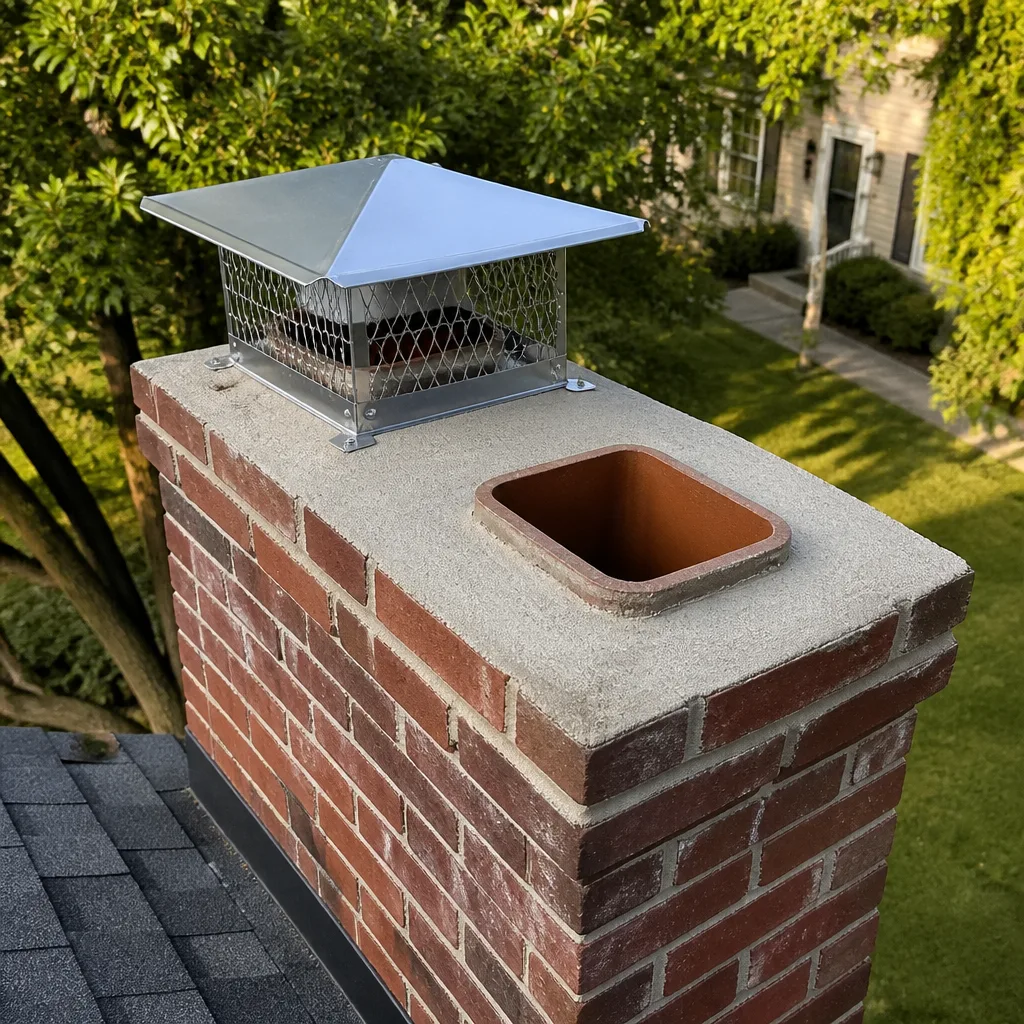
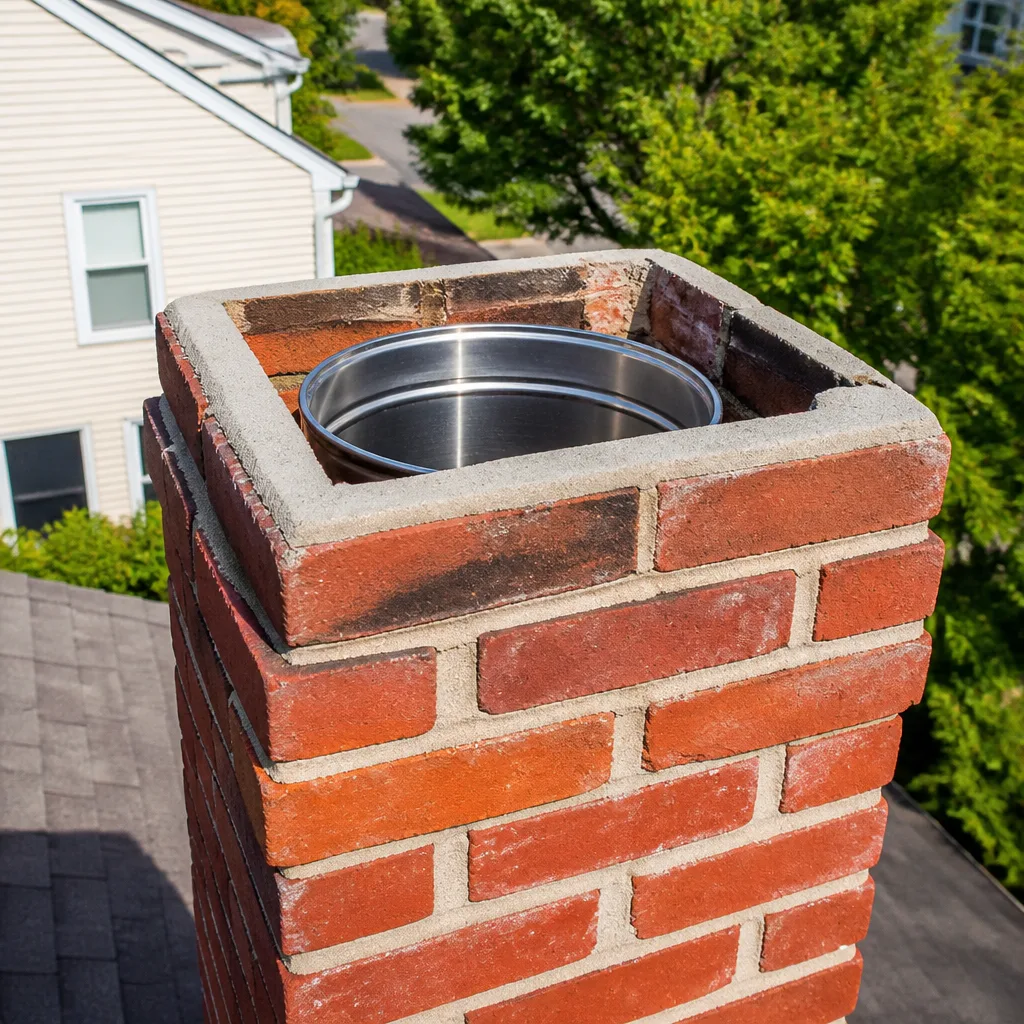
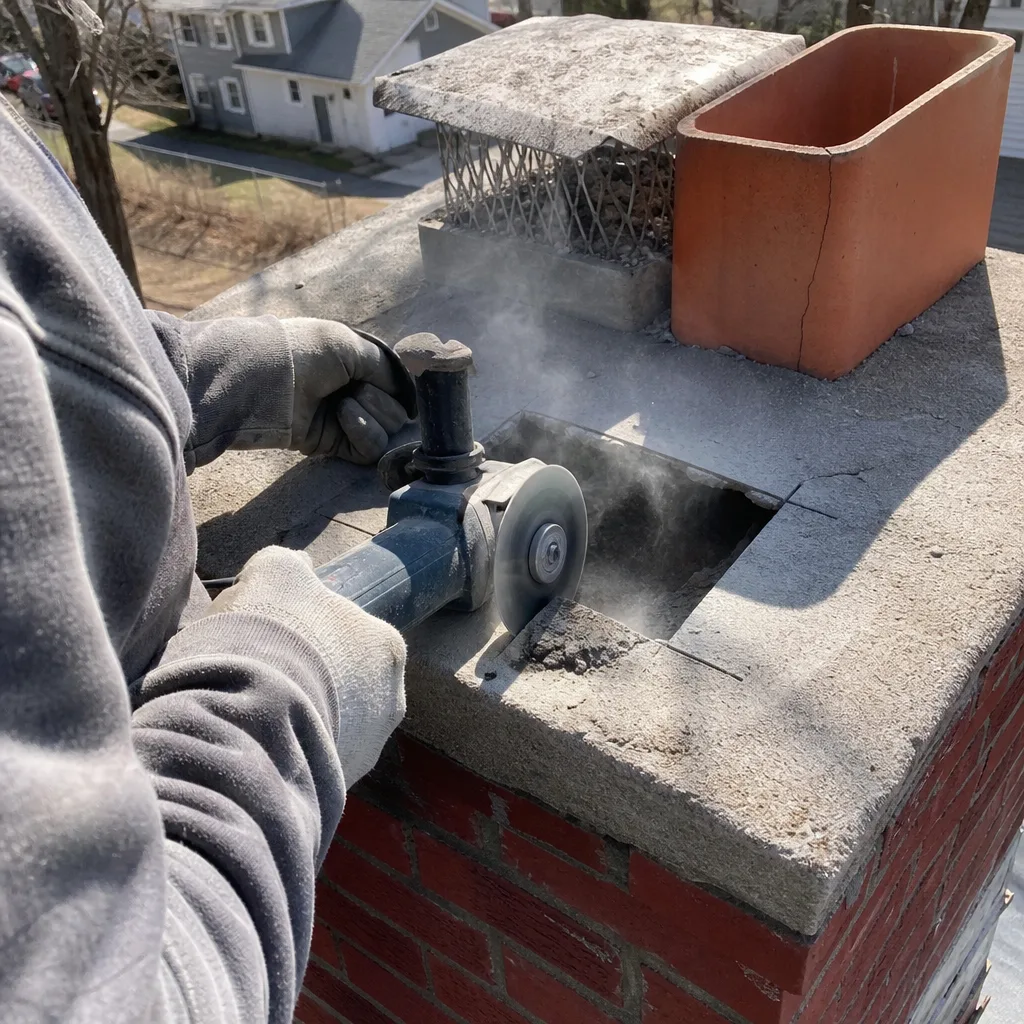
By late March, Waltham’s freeze-thaw cycle has done its worst. Water that entered hairline cracks in October expanded through 37+ freeze cycles, widening those cracks into channels. The crown - the concrete slab that seals the chimney top - is the first casualty. We’ve pulled cameras up from Waltham flues in early April and found crown pieces sitting on smoke chamber shelves in homes near Prospect Hill and the Lyman Estate.
March inspection targets three specific conditions:
- Crown cracking or spalling - Spalling means the surface is flaking off in layers, exposing aggregate. In Waltham, we see this accelerated on chimneys with southern exposure, where daytime thawing is followed by rapid overnight refreezing.
- Mortar joint degradation between bricks - Called repointing failure, this lets water migrate behind the brick face. On a camera scan, we look for efflorescence (white mineral deposits) inside the flue, which signals water is getting through the wall.
- Flue liner displacement or cracking - Clay tile liners shift when surrounding mortar loosens. A displaced liner joint creates a gap where combustion gases can enter the chimney wall, or where creosote can leak into combustible framing.
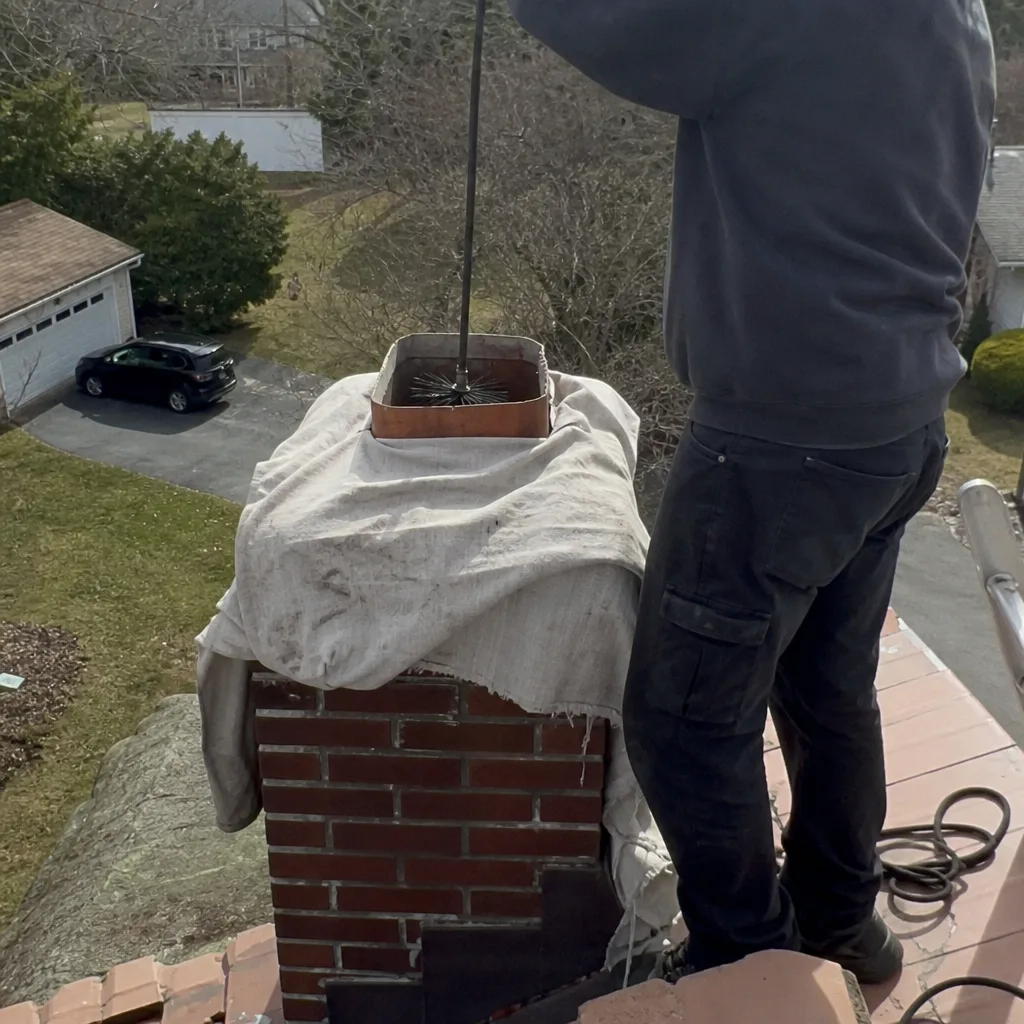
The inspection method matters. A flashlight look from the top or bottom misses crown underside damage and mid-flue liner cracks. Chimney Cleaning & Sweep in Waltham under our standard includes an NFPA 211 Level 2 camera scan - a flexible camera pushed the full length of the flue, with footage archived under Haven Standard Clause 4. We’ve maintained this documentation practice since 2009, before insurers or regulators required it.
What March work typically costs: crown sealing runs $180-$290 if caught early; partial crown rebuild is $450-$680; full crown replacement with proper overhang and drip edge is $890-$1,400. Repointing averages $18-$28 per square foot of wall surface. The March window is detection - the cheapest possible intervention point.
May: Cap Screen Cleaning After Nesting Season
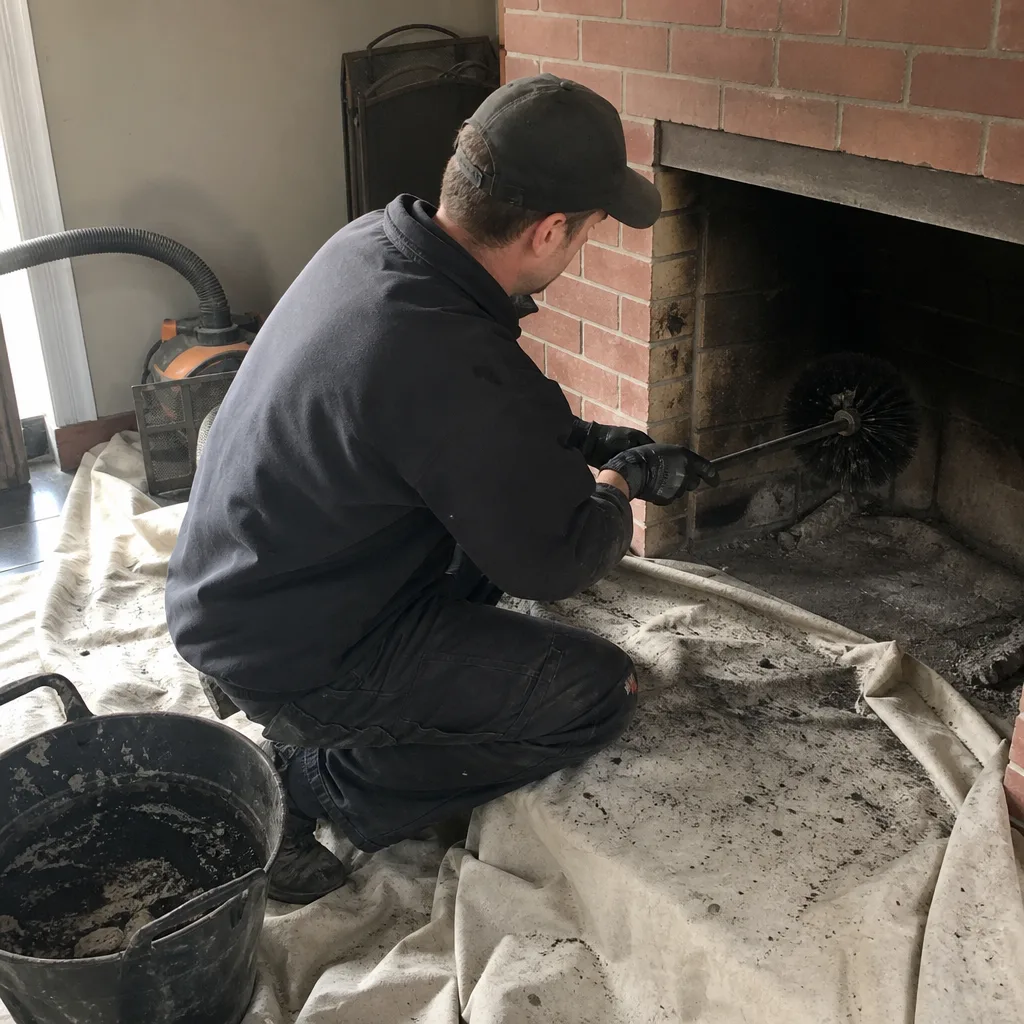
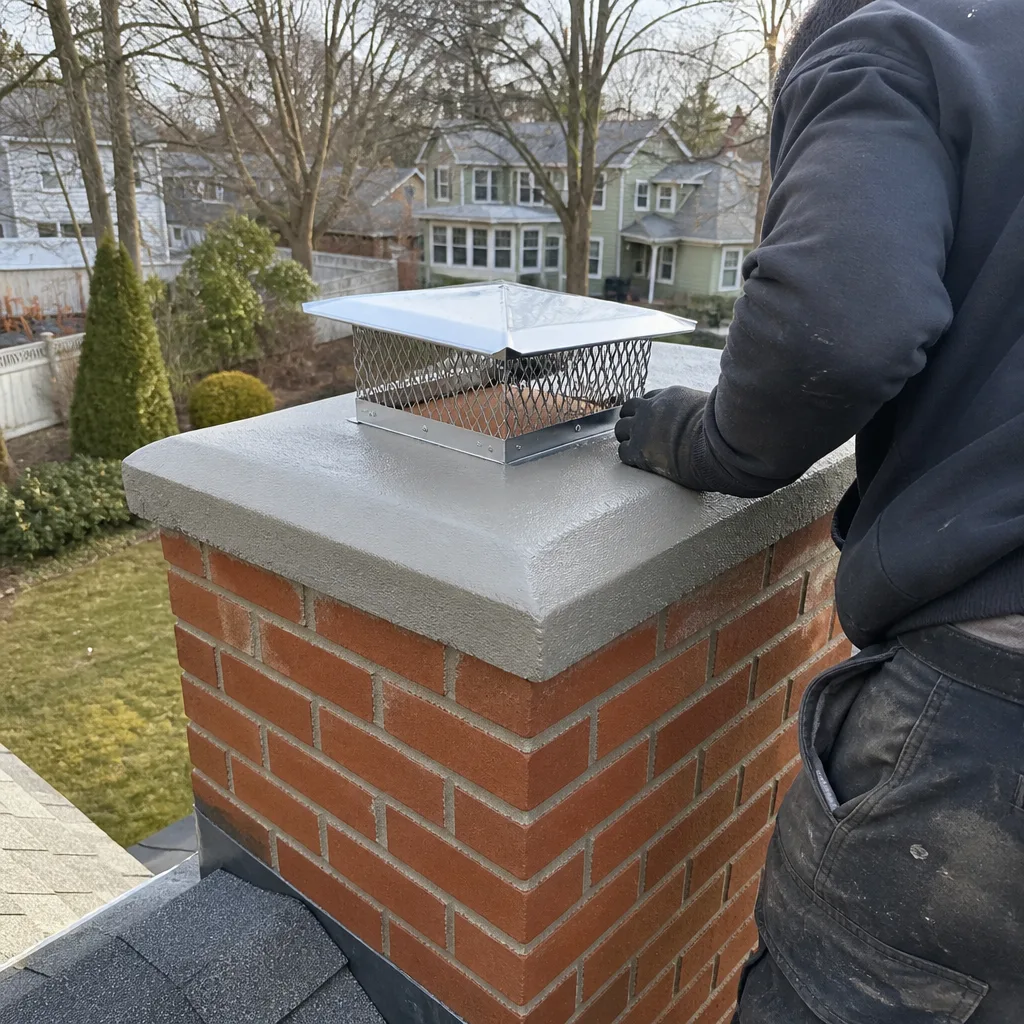
Waltham’s tree canopy is dense, especially in neighborhoods like Piety Corner, the Highlands, and along the Charles River paths. That canopy supports healthy squirrel, starling, and chimney swift populations. By May, nesting season is largely complete, and whatever debris, nesting material, or deceased juveniles have accumulated behind your cap screen need removal before summer humidity sets in.
Here’s what we find in May calls:
- Stainless steel mesh screens clogged with nesting material - Reduces draft, causing smoke backup or CO spillage. In gas units, restricted draft can prevent proper combustion gas evacuation.
- Partial nest collapse into the flue - Creates a fire hazard if the homeowner lights a late-season fire, and a decomposition odor source all summer.
- Cap displacement from animal leverage - Squirrels pry at cap edges; we’ve found caps rotated 30 degrees, exposing the flue opening to direct rain.
- Corrosion initiation on galvanized caps - Waltham’s humidity plus nesting acidity (urine, feces) accelerates rust. We source replacement caps through Famco and Olympia Chimney, with stainless mesh as standard.
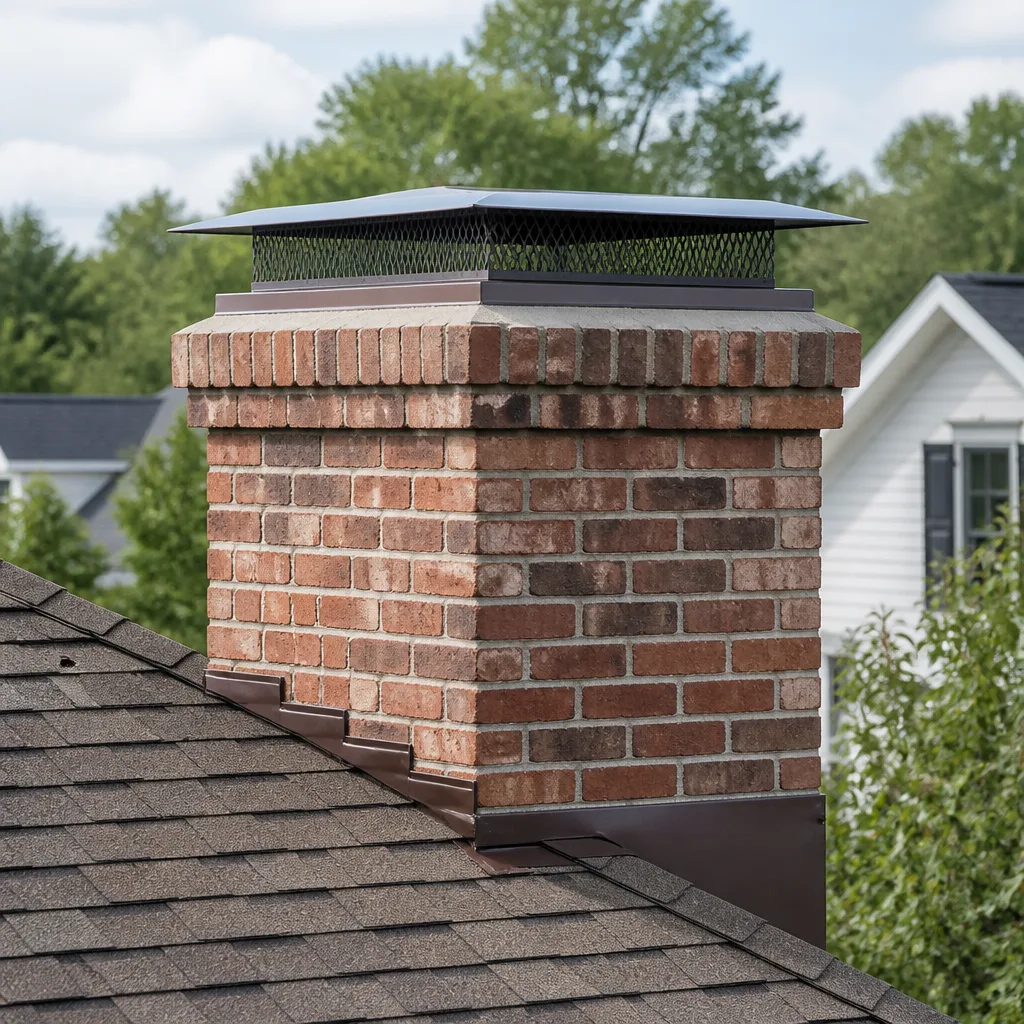
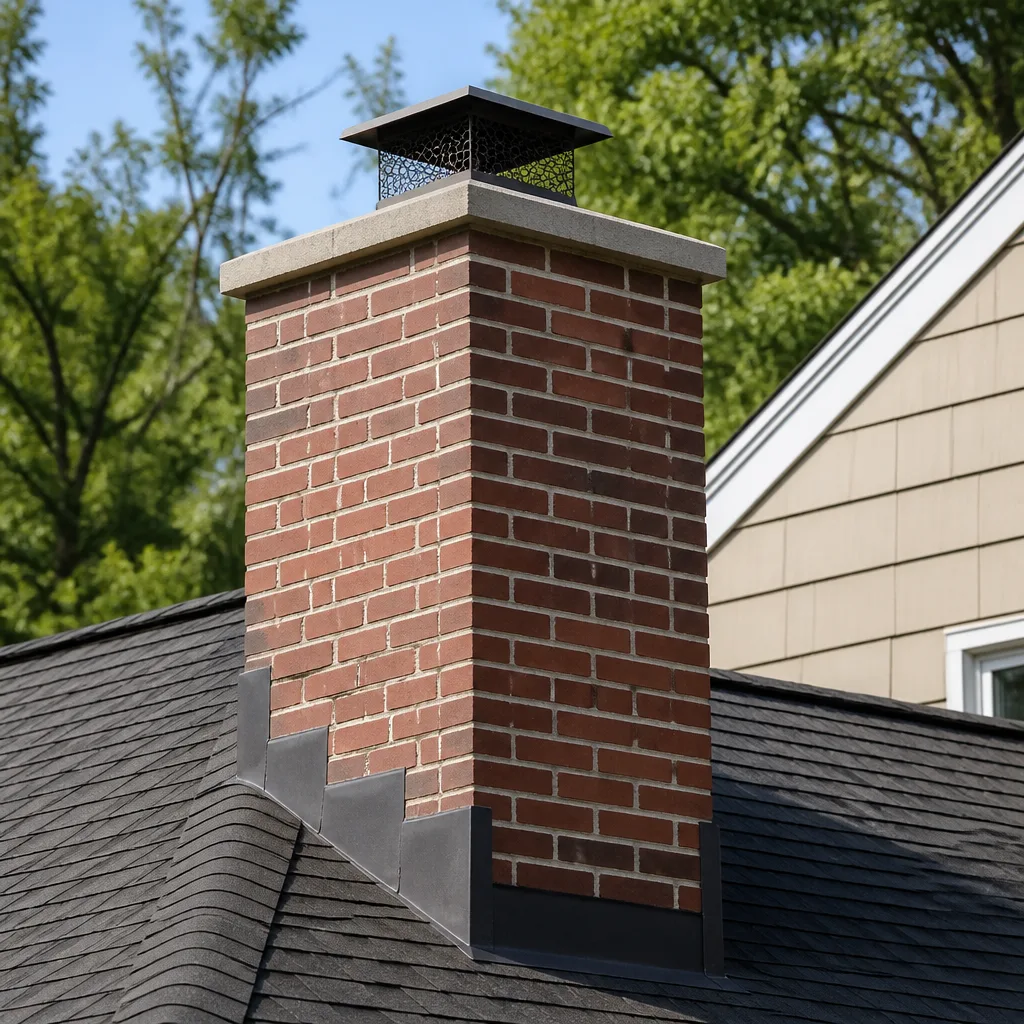
May is also the right time to verify cap specifications. A proper chimney cap extends past the crown edge with a drip break, has mesh small enough to exclude starlings (3/4 inch or less), and maintains adequate net free area for the flue’s BTU load. Many Waltham homes built between 2015 and 2020 have builder-grade caps that fail on one or more of these points.
Skipped May maintenance averages $290 in mid-summer nest removal calls, plus the cost of whatever moisture intrusion occurred while the cap was compromised. We’ve documented this across our 38,000+ inspections since 2009.
August: Pre-Season Sweep and Damper Check
August - not October - is the correct booking month for a Waltham chimney sweep. Three factors make this timing superior.
First, scheduling availability. October booking backlogs in the Boston metro mean two- to three-week waits, and first cold snaps drive emergency calls that disrupt planned maintenance. August appointments typically book within 3-5 days.
Second, moisture state. Waltham’s July-August humidity peaks around 72% average relative humidity. By late August, that humidity has fully dried any moisture that entered the flue during spring thaw. Sweeping a damp flue is less effective - residual moisture binds light creosote to liner walls. A dry flue lets the sweep brush achieve full contact.
Third, and most specific to Waltham’s climate: summer humidity can accelerate Stage 2 creosote formation in chimneys that had light deposits left after the previous season’s sweep. Stage 1 creosote (sooty, brushable) absorbs atmospheric moisture, then undergoes partial pyrolysis during the first fall fires, hardening into Stage 2 (shiny, tar-like, requiring mechanical removal). An August sweep catches this before the transformation completes.
The August service includes:
- NFPA 211 Level 2 camera inspection of the full flue length
- Mechanical sweep with poly or wire brushes sized to the liner diameter
- Smoke chamber and firebox debris removal
- Damper operation test - checking for warping, rust seizure, or misalignment
- Flue top and cap condition documentation
- Written scope, written price, and written warranty before any additional work
Our Level Two Chimney Waltham home page details the full Haven Standard protocol. Every August job receives a documented photo record under Clause 4, archived for future comparison.
Cost for August sweep and inspection: $180-$260 for a standard wood-burning fireplace flue. Gas flue inspection runs $140-$190. These are scheduled maintenance prices - not emergency rates.
November: Mid-Season Creosote Check for Wood Burners
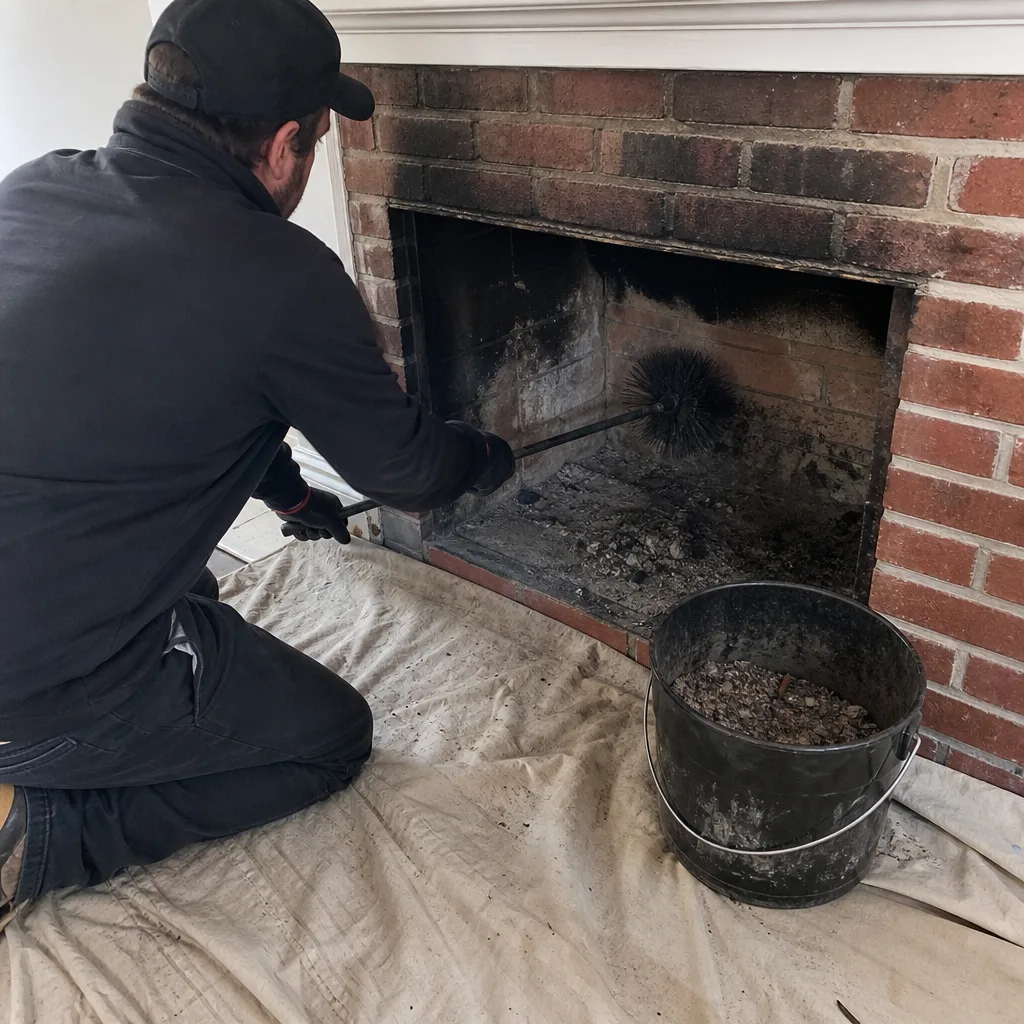
For Waltham homeowners who burn wood as primary or significant supplemental heat, one pre-season sweep is insufficient. A mid-season assessment in November catches accelerated creosote buildup before it advances to hazardous stages.
Creosote accumulation rate depends on burn practices more than calendar time. Burning unseasoned wood (moisture content above 20%), restricting air intake for overnight burns, or operating below optimal flue temperature all accelerate deposit formation. In Waltham, we see the worst November conditions in homes with outdoor woodpiles that got rained on in October - the wood goes on the fire damp, and creosote production doubles.
What we assess in November:
- Creosote stage and thickness - Stage 1 (1/8 inch or less): monitor. Stage 1 (over 1/8 inch): sweep. Stage 2: mechanical removal required. Stage 3 (glazed, hardened): rotary chain removal or chemical treatment, significantly more expensive.
- Flue liner temperature pattern - Cold spots indicate liner gaps or insulation failure, causing localized creosote condensation.
- Smoke chamber and connector pipe - The throat area above the damper is often the most restricted space; buildup here is frequently missed in top-only inspections.
Real case from our Waltham records: a homeowner near Moody Street burned four cords of mixed hardwood from November through January. Pre-season sweep showed Stage 1, 1/16 inch. November check showed Stage 2, 3/16 inch, in the smoke chamber throat. Mechanical removal cost $340. Left until spring, this would have required rotary chain treatment at $680-$890, with higher liner wear risk.
The November window is brief - ideally before Thanksgiving, when burn rates increase for the holidays. We recommend booking by October 15 for November slots.
September Gas Fireplace Restart Checklist
Waltham’s gas fireplace season restart carries specific risks that differ from wood-burning systems. The September relight is not simply flipping a switch.
During summer shutdown, the flue becomes a passive vent. In Waltham’s tree-heavy neighborhoods - Piety Corner, the Highlands, areas along Trapelo Road - we’ve found bird nests, squirrel caches, and leaf debris blocking flue terminals. A blocked gas flue doesn’t back-smoke like a wood flue; it silently vents combustion gases into the home, including carbon monoxide.
The September checklist:
- Visual inspection of the exterior terminal - Check for obstruction, corrosion, or insect nests in the vent cap. Direct-vent terminals have specific clearance requirements from grade, decks, and windows; verify nothing was built or planted too close during summer.
- Pilot assembly cleaning - Spider webs in the pilot orifice are the single most common September failure. The orifice delivers precise gas flow; any restriction causes weak or unstable flame.
- Flue draft test with manometer - Verify negative pressure sufficient to evacuate combustion products at full burner output. Waltham’s older homes, especially pre-1950s construction near Main Street and the South Side, often have negative pressure issues from kitchen exhausts, bath fans, and tight envelope retrofits.
- CO detector verification - Test function and check expiration date. Detectors have a 5-7 year sensor life; many Waltham homeowners are unaware theirs have expired.
- Main burner flame pattern inspection - Blue, stable flames with minimal yellow tipping indicate proper combustion. Wavering, yellow, or sooting flames indicate incomplete combustion requiring adjustment.
Gas flue obstructions are particularly dangerous because the fuel continues to flow regardless of venting status. A wood fire smokes into the room and gets extinguished; a gas fire continues producing CO until someone intervenes or a detector alarms. This is why we recommend professional inspection before first relight, especially for units that have sat idle since April.
Fireplace Services in Waltham includes gas system inspection, pilot cleaning, and combustion analysis as standard. We document flame appearance, CO readings at startup and steady state, and vent terminal condition in every report.
What Skipping Each Window Actually Costs
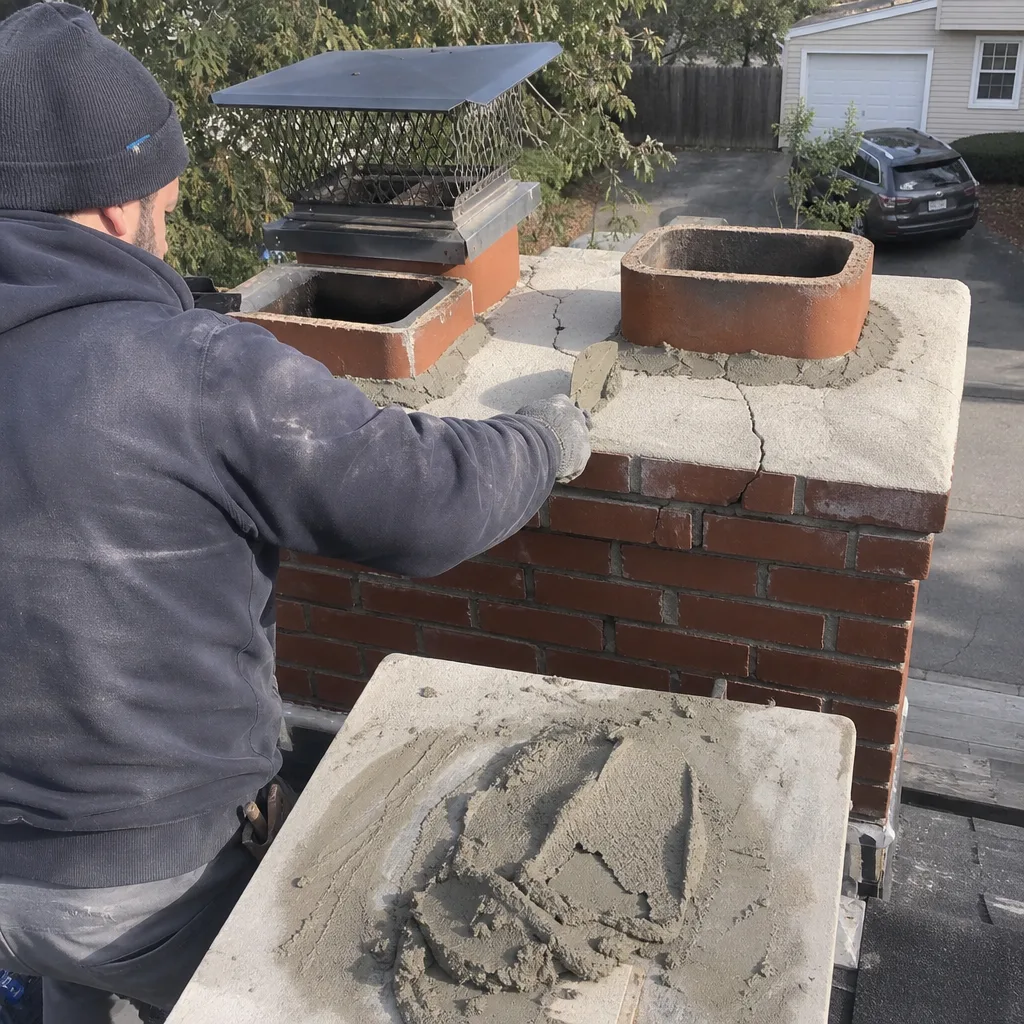
Preventive maintenance pricing versus corrective repair pricing, based on our Waltham service records:
| Skipped Window | Typical Consequence | Preventive Cost | Corrective Cost |
|---|---|---|---|
| March crown inspection | Crown failure, water intrusion, liner damage | $180-$290 (sealing) | $890-$1,400 (replacement) + liner repair |
| May cap screen cleaning | Nest obstruction, moisture entry, corrosion | $140-$190 (service call) | $290+ (emergency removal) + cap replacement |
| August pre-season sweep | Stage 2 creosote formation, damper seizure | $180-$260 (sweep) | $340-$680 (mechanical/rotary removal) |
| November mid-season check | Stage 3 glazed creosote, chimney fire risk | $180-$260 (sweep) | $680-$1,200 (rotary/chemical + liner inspection) |
| September gas restart check | Flue obstruction, CO exposure | $140-$190 (inspection) | Emergency service + potential health consequence |
These are direct service costs. Indirect costs - water damage to interior framing, insurance claims after chimney fires, health impacts from CO exposure - are not included but can exceed the repair figures by orders of magnitude.
The pattern is consistent across our 38,000+ jobs since 2009: scheduled maintenance averages one-third to one-half the cost of corrective work, and carries near-zero emergency premium or secondary damage.
Common Mistakes to Avoid
- Waiting for October to book - By October 15, Waltham sweep companies are booking into late November. Emergency calls jump 40% after the first frost. August scheduling avoids backlog and gets the driest possible flue condition.
- Assuming gas fireplaces need no flue maintenance - Gas combustion produces water vapor and corrosive condensate. The flue liner degrades; the terminal obstructs. Annual inspection is required by NFPA 211 for all fuel types.
- Buying “chimney cleaning logs” as sweep substitutes - These products may reduce light soot but do not remove Stage 2 or 3 creosote, do not inspect liner condition, and provide no documentation. We’ve found significant hidden damage behind apparently “clean” flues in homes that relied on logs.
- Ignoring the cap because “it looks fine from the ground” - Cap screens fail from the inside: mesh corrosion, animal damage to the underside, displacement from wind load. Ground inspection misses all of these.
- Using unseasoned wood because “it’s cheaper” - At 25% moisture content versus 15%, wood produces roughly twice the creosote per cord. The savings per cord are erased by the cost of additional sweeps or, worse, Stage 3 removal.
- Skipping the November check because “we just swept in August” - Burn practices matter more than time elapsed. Four cords of marginal wood can produce Stage 2 deposits in eight weeks. The November window is for active burners, not calendar compliance.
- Hiring based on lowest price without verifying inspection method - A “sweep” without camera documentation leaves you with clean flue walls and undetected liner gaps. Ask specifically: is a camera scan included? Is footage provided? Under the Haven Standard, Clause 4 requires documented photo record on every job.
When to Call a Professional
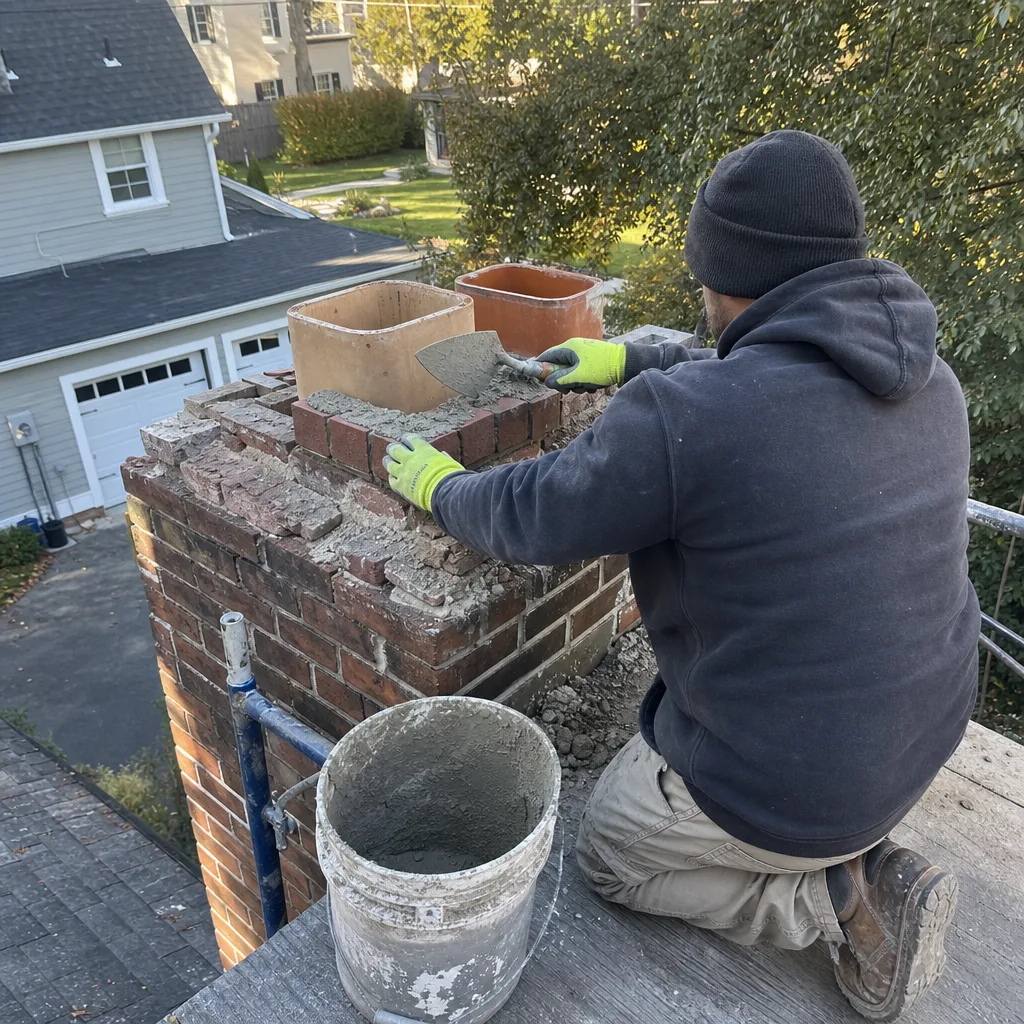
Call for inspection before any of these conditions worsen: visible crown cracks or spalling bricks; smoke backing into the room on startup; a gas pilot that won’t stay lit or burns yellow; debris visible in the flue from below; or any CO detector alarm, even if brief. These are not “wait and see” symptoms.
For Waltham homeowners following the seasonal calendar, the professional call is scheduled, not reactive. Chimney Repair in Waltham through Level Two Chimney Waltham includes free estimates, written pricing before work begins, and the 365-Day Done Right Promise. Corrine Halstead and our team have served Waltham since 2009 with background-checked, uniformed technicians and live phone support at (781) 649-9326.
Frequently Asked Questions
A standard chimney sweep and NFPA 211 Level 2 inspection in Waltham costs $180-$260 for a wood-burning fireplace flue, and $140-$190 for a gas fireplace flue inspection. Prices include the camera scan, documented photo record, and written scope - not added extras. Call (781) 649-9326 for an exact quote; estimates are free.
A sweep cannot definitively assess liner condition without a camera inspection. Visual inspection from top or bottom misses mid-flue cracks, joint gaps, and interior spalling that are only visible on camera footage. We provide the footage and explain what we found in plain terms; any liner replacement recommendation includes the specific damage documented. If you’ve received a liner replacement quote elsewhere without camera evidence, our Free Second Opinion applies.
NFPA 211 recommends annual inspection for all chimneys, and sweeping when creosote deposits exceed 1/8 inch. See our Chimney Cleaning Permits, Codes & Inspections in MA: What You Need to Know for regulatory details. For Waltham’s climate, we recommend the four-window calendar: March inspection, May cap service, August sweep, and November mid-season check for active wood burners. This addresses freeze-thaw damage, nesting season, pre-season readiness, and burn-season buildup as separate events.
Skipped maintenance leads to progressive, compounding damage. Moisture intrusion through crown cracks widens liner gaps; liner gaps expose framing to heat and combustion gases; creosote advances from brushable Stage 1 to hardened Stage 3; Stage 3 creosote ignites at lower temperatures and burns hotter, risking chimney fire or liner failure. Each skipped window typically doubles or triples the cost of correction. Call (781) 649-9326 to schedule before conditions advance.
August offers three advantages: availability (no booking backlog), flue dryness (summer humidity has evaporated spring moisture), and creosote prevention (light deposits are removed before fall fires harden them). October waits often push first burns ahead of inspection, which is when hidden damage reveals itself under stress.
Waltham follows the Massachusetts State Building Code, which adopts NFPA 211 for chimney standards. Specific to Waltham’s older housing stock, many homes in the South Side, Main Street corridor, and near the Lyman Estate were built before modern liner requirements. Renovations and liner replacements must meet current clearances to combustibles, which often requires insulation or rerouting. We verify code compliance on every repair quote and pull permits when required.
The Bottom Line
Waltham’s inland climate - 37 freeze-thaw cycles, humid summers, dense tree canopy - creates four distinct chimney maintenance windows, not one. The homeowner who treats chimney care as a single October appointment misses crown damage from winter, nesting obstructions from spring, pre-season creosote hardening from humidity, and mid-season buildup from active burning. Each missed window has a documented cost multiplier. The alternative is a scheduled calendar: March, May, August, November, with specific tasks at each point, documented by camera inspection, and priced in writing before work begins. That’s the standard we’ve operated under since 2009, across 38,000+ Waltham and metro Boston chimneys.
Ready to schedule your seasonal maintenance? Call Level Two Chimney Waltham at (781) 649-9326 for a free estimate. Written price before work starts, documented photo record on every job, and the 365-Day Done Right Promise - Haven Standard Clauses 1 and 4, in force since our founding.
Written by Corrine Halstead, Owner at Level Two Chimney Waltham, serving Waltham since 2009.