
Last updated September 22, 2026
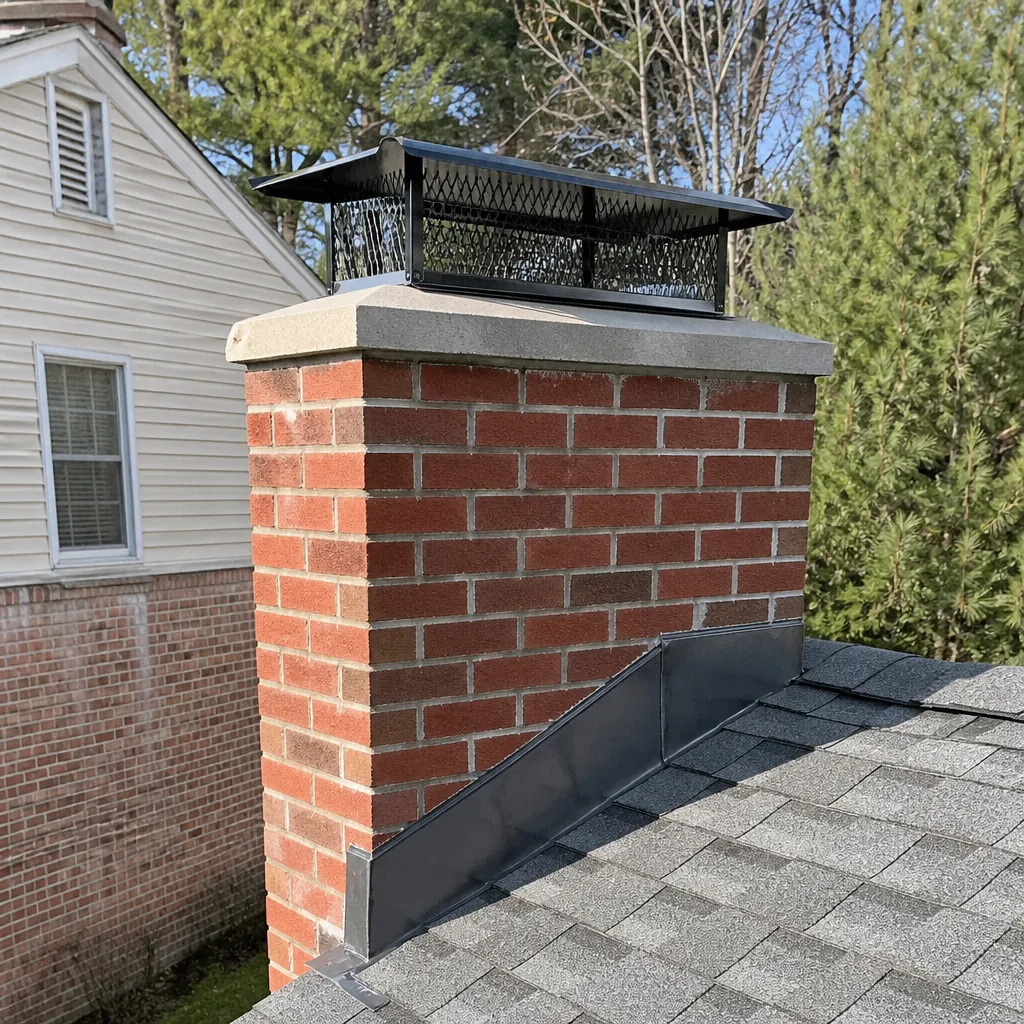
Level 1 sweep and inspection to the NFPA 211 annual standard - flue, crown, cap, and flashing checked and photographed
Chimney sweep logs do not sweep chimneys. They loosen some creosote - which then falls where a brush and vacuum still have to collect it.
 Before
 After
After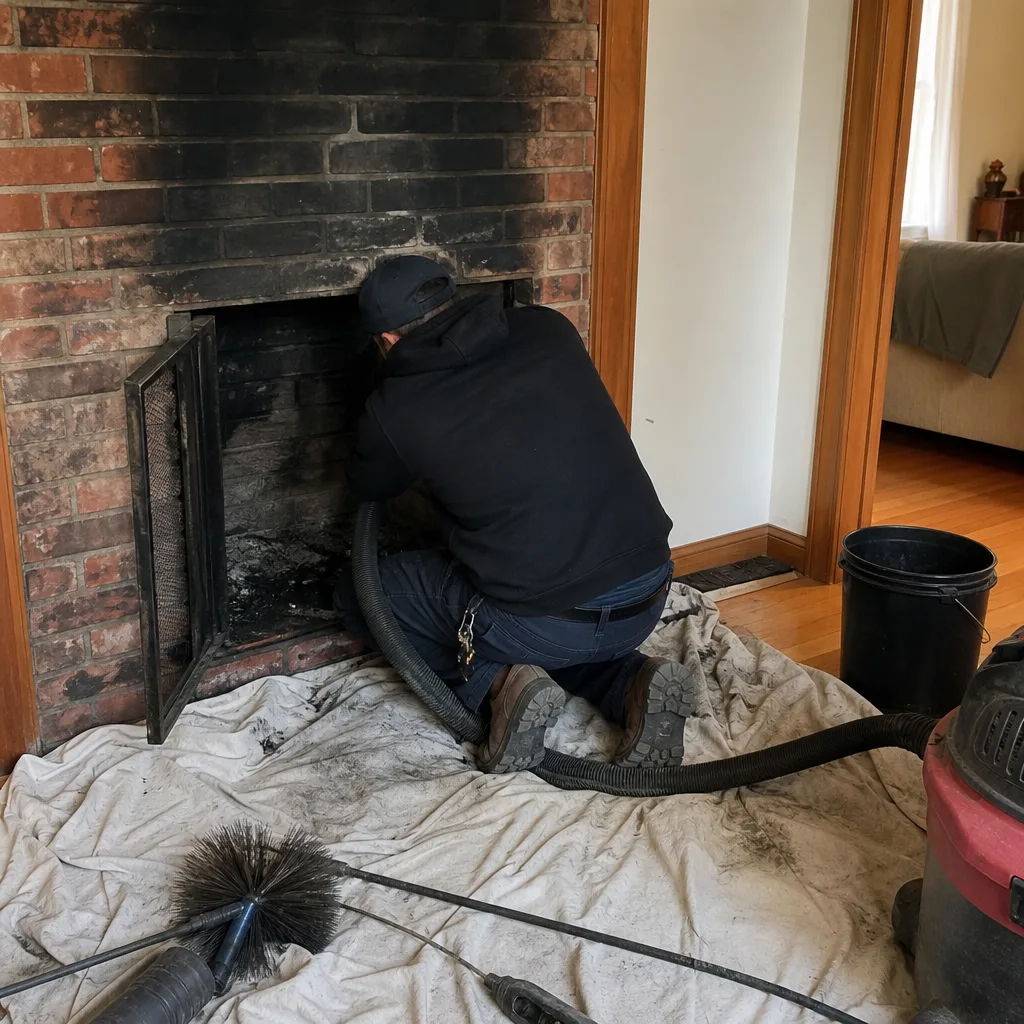 Before
 After
After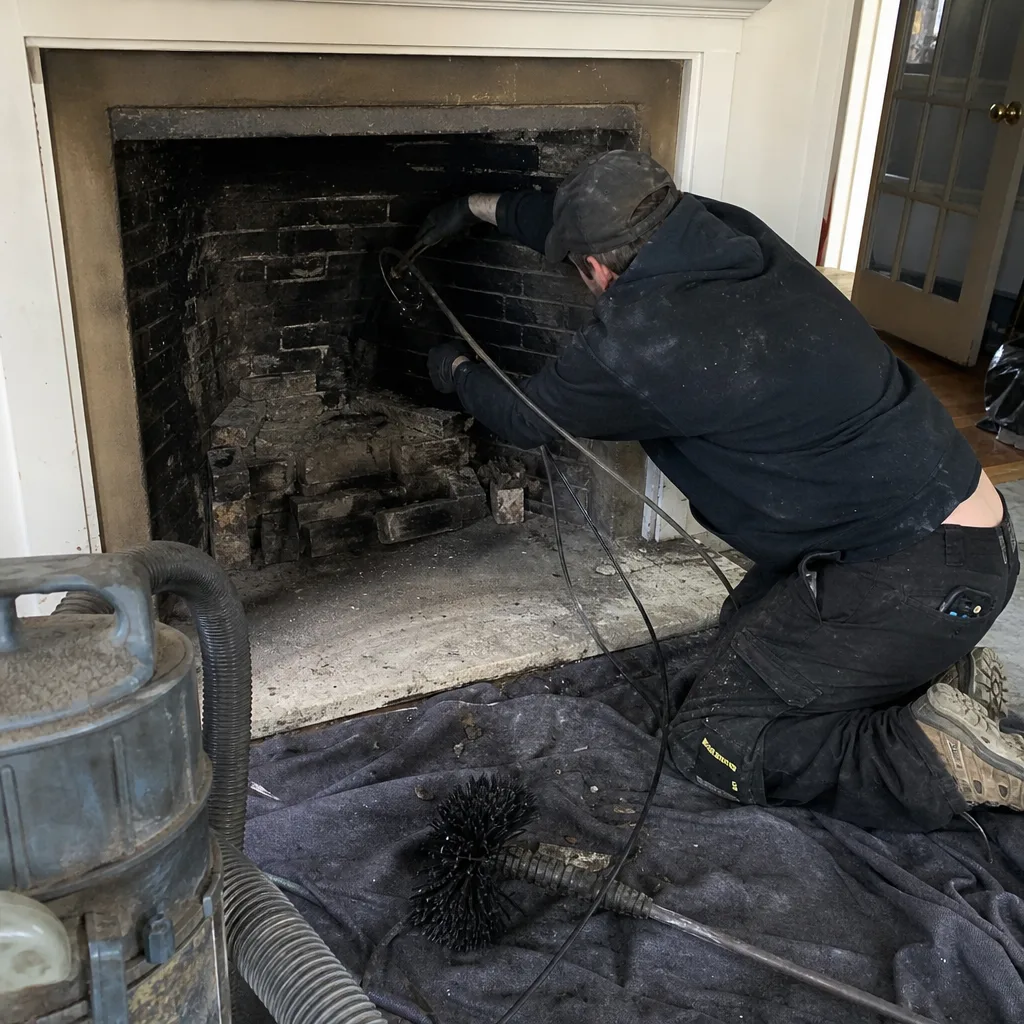 Before
 After
AfterChimney Cleaning & Sweep Maintenance Checklist for Waltham Homeowners
Here’s what most online chimney checklists get wrong: they tell you to grab a flashlight and inspect your own flue. That advice can cost you thousands, or worse. In our work across Waltham since 2009, we’ve found that the single most overlooked item on every DIY checklist is the damper throat seal. When that gasket fails, heated air escapes straight up the chimney 24 hours a day. We regularly meet Waltham homeowners who’ve lost an average of $340 per heating season before they notice the draft. This guide draws a hard line between what you can verify safely from your living room, what a technician assesses from the roof, and what only a camera inside the flue can confirm, as outlined in our Complete Guide to Chimney Cleaning in Waltham. You’ll walk away with a three-lane checklist, specific measurement thresholds, and the five documentation items your Massachusetts insurer actually requires.
Quick Answer
A proper chimney maintenance checklist for Waltham homeowners divides tasks into three categories: visual checks you perform at the firebox (damper seal, ash buildup, firebrick condition), exterior assessments a Chimney Cleaning & Sweep professional conducts at the cap and crown (mortar recession, spalling, flashing integrity), and internal flue conditions only a camera scan can verify (creosote thickness, liner cracks, smoke chamber integrity). Creosote deposits exceeding 1/8 inch require cleaning; mortar joint recession beyond 1/4 inch triggers tuckpointing evaluation.
Table of Contents
- Lane One: What You Can Verify From the Firebox
- Lane Two: What a Sweep Assesses at the Cap and Crown
- Lane Three: What Only a Camera Confirms Inside the Flue
- Waltham-Specific Masonry Concerns: Highlands and South Side
- The Five Items Your Massachusetts Insurance Documentation Needs
- Done vs. Documented: Why the Distinction Matters
- A Realistic Maintenance Schedule for Waltham Homes
- What Chimney Maintenance Costs in Waltham
 Before
 After
AfterLane One: What You Can Verify From the Firebox
These checks require no ladder, no roof access, and no special tools. Perform them monthly during burning season and again at shutdown in spring.
The Damper Throat Seal
Open your damper fully, then close it. Look for a continuous gasket or metal-to-metal seal around the entire perimeter. Hold a lit incense stick or thin candle near the closed damper. A steady pull of smoke toward the flue indicates a failed seal. In Waltham’s older housing stock, particularly the pre-war homes near Main Street and the South Side, we’ve replaced damper seals that were original to 1920s construction. The gasket material hardens, cracks, or falls out entirely. Replacement is straightforward, but only if you catch it before the metal frame corrodes from constant exposure to flue gases.
Firebrick and Refractory Panel Condition
Examine the firebox walls for cracks wider than a nickel, spalling (surface flaking), or missing chunks. A hairline crack in refractory cement is normal; a crack you can fit a pencil into allows heat to reach combustible framing. In our experience across Waltham, homes built during the 1960s and 1970s with prefabricated metal fireplaces show panel degradation faster than masonry fireboxes. The factory panels are replaceable, but only with listed replacements from the original manufacturer or approved equivalents. Generic “universal” panels violate NFPA 211 and void your homeowner’s insurance coverage for fire damage.
Ash Bed Depth and Debris
Maintain 1 to 2 inches of ash on the firebox floor during active use. It insulates the fire and promotes complete combustion. Remove excess when depth exceeds 2 inches, and always remove all ash at season end. Check for bird nests, leaves, or other debris in the firebox throat. Waltham’s mature tree canopy, especially in the Highlands and near the Charles River, sends leaves and twigs down uncapped flues every autumn.
Hearth Extension and Clearance
Verify your hearth extension projects at least 16 inches in front of the fireplace opening and 8 inches beyond each side. For fireplaces with openings exceeding 6 square feet, the front projection increases to 20 inches. These dimensions come straight from NFPA 211 and Massachusetts building code. We’ve inspected Waltham homes where homeowners removed original hearths during renovations and never replaced them, creating a direct code violation and insurance exposure.
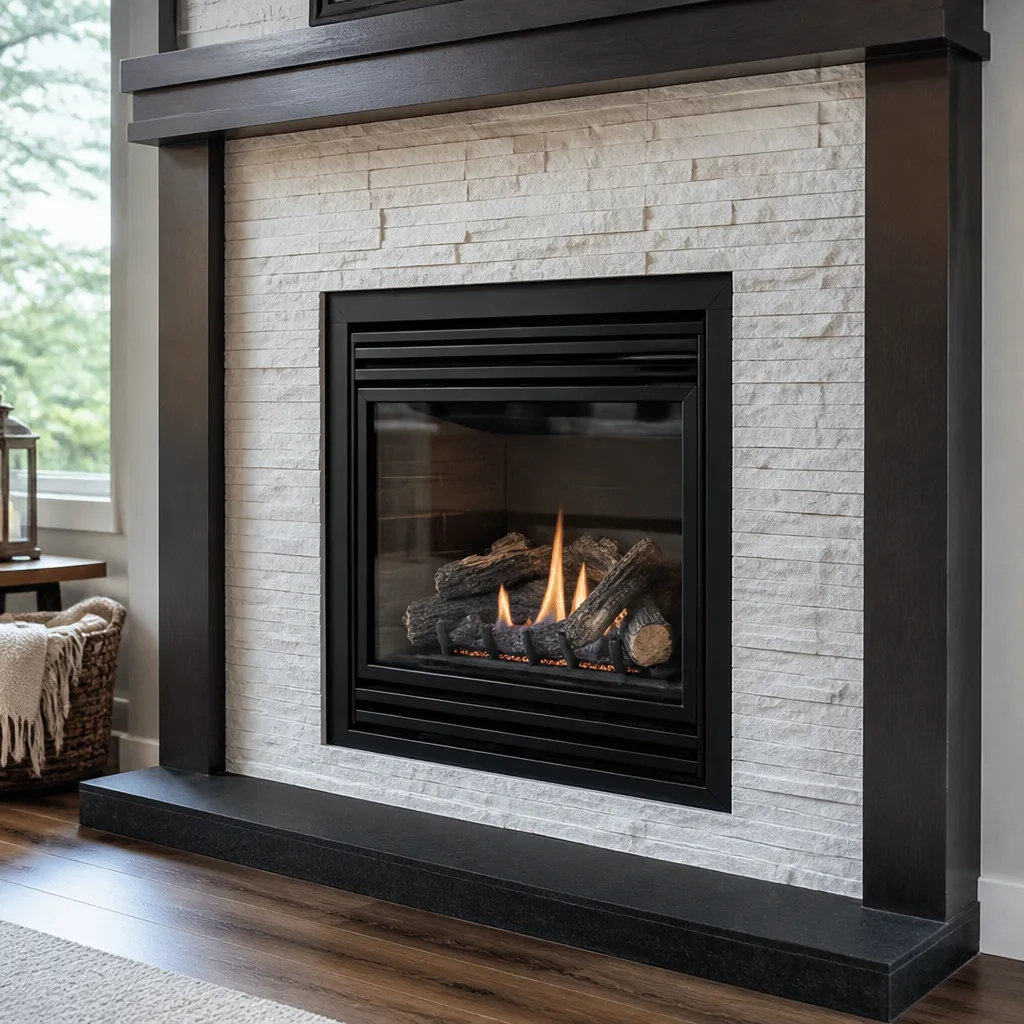
Gas Log Set Connections (If Applicable)
Never attempt to service gas connections yourself. What you can do: verify the shutoff valve operates smoothly, check that the pilot assembly isn’t clogged with dust or pet hair, and confirm the remote receiver has fresh batteries. Any gas odor requires immediate evacuation and a call to the fire department, followed by a licensed gas technician.
Lane Two: What a Sweep Assesses at the Cap and Crown
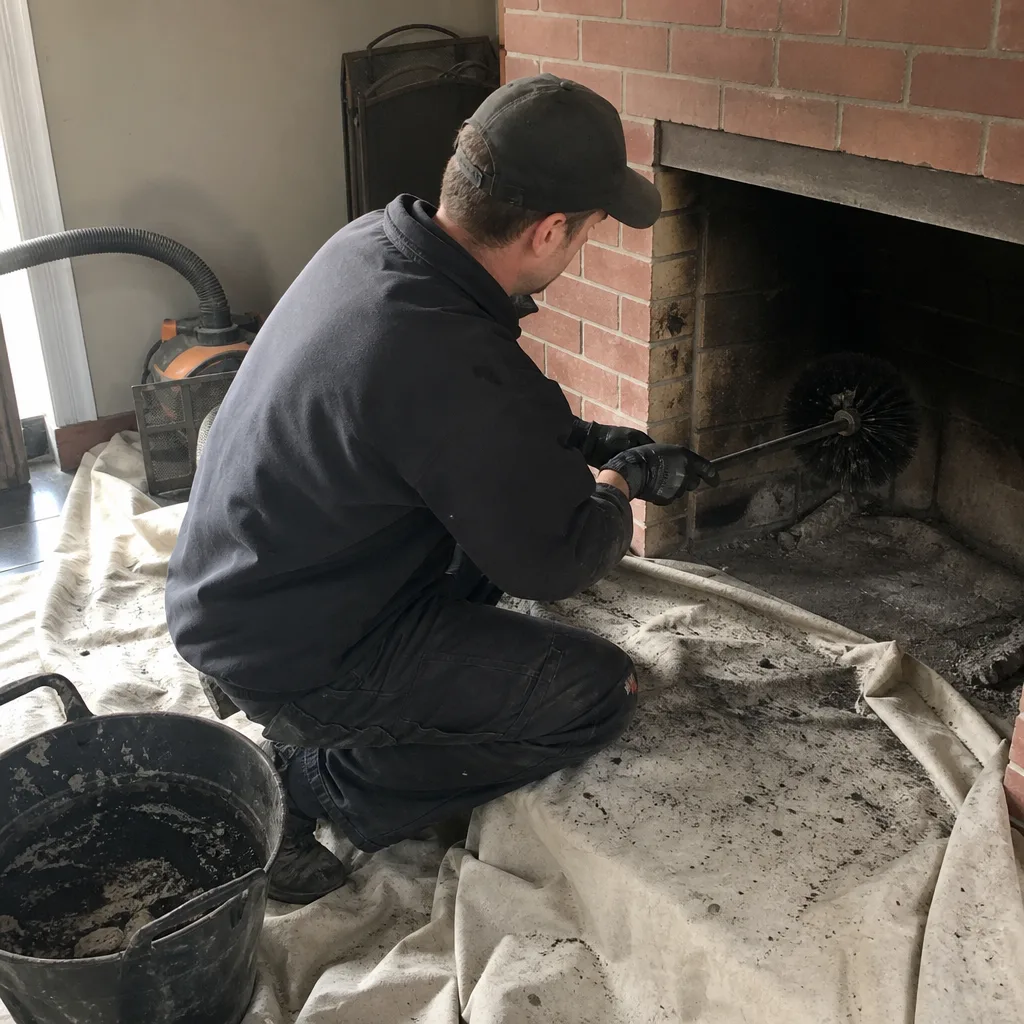
These items require roof access, proper fall protection, and the trained eye of someone who has seen hundreds of Waltham chimneys. Do not attempt these inspections yourself. Steep pitches, slate roofs common in the Highlands, and ice dams in January make this genuinely hazardous work.
Crown Integrity and Slope
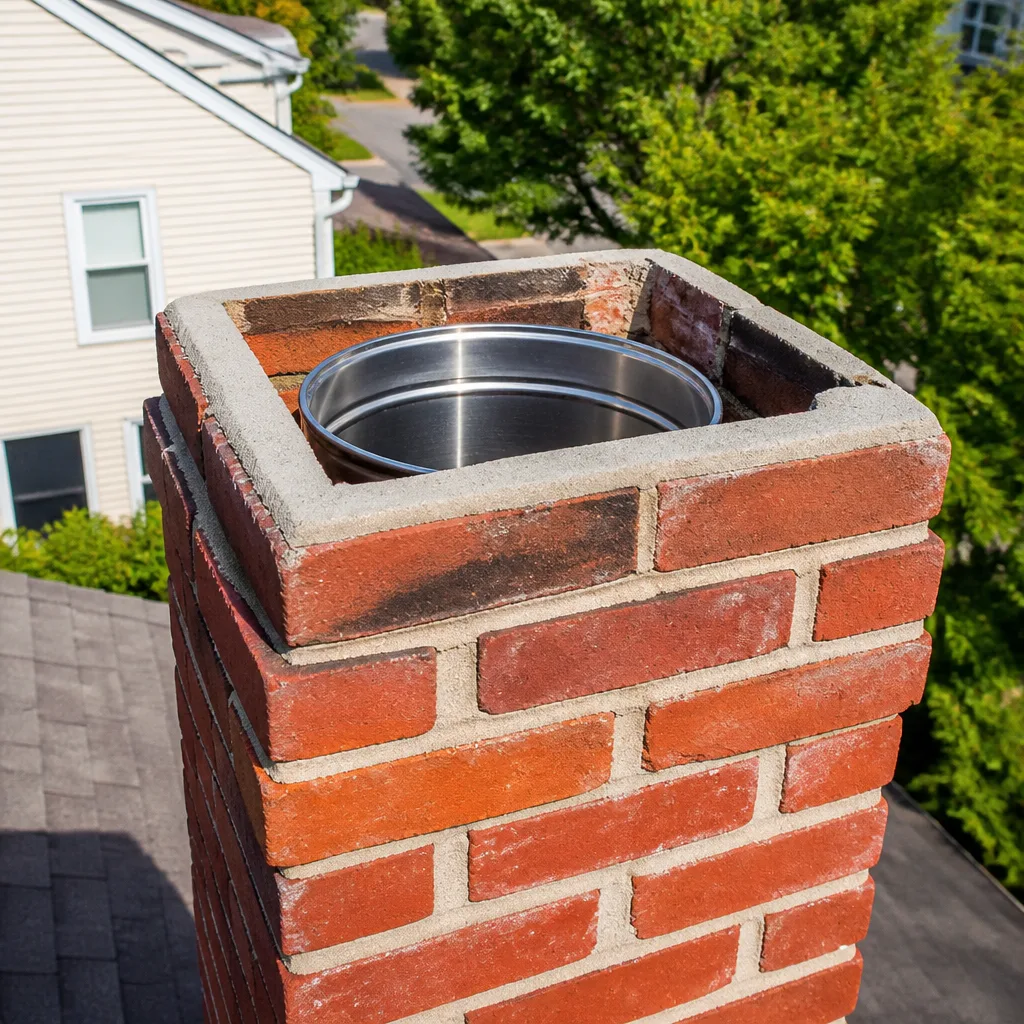
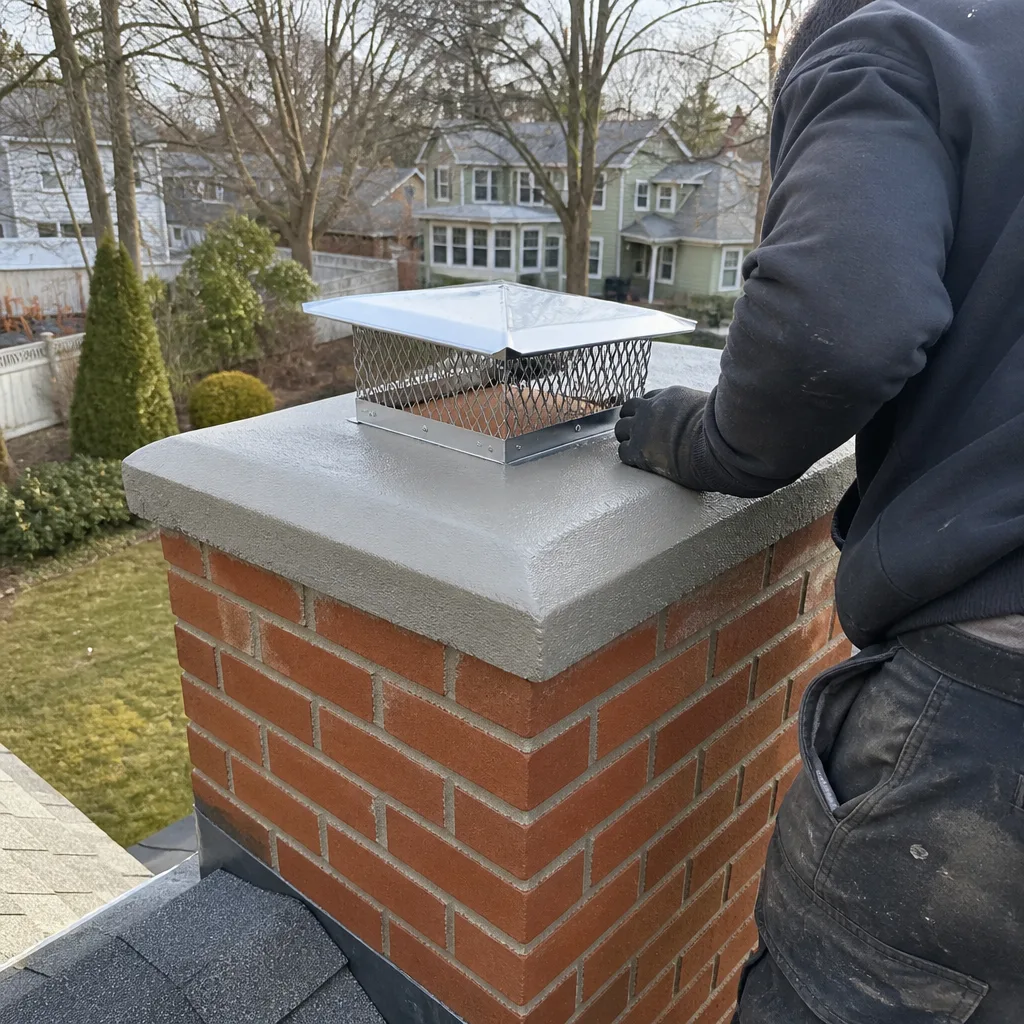
The concrete crown at the top of a masonry chimney must slope away from the flue at minimum 1/4 inch per foot to shed water. A flat crown pools water, and in Waltham’s freeze-thaw climate, that water expands and cracks the concrete within two to three winters. We document crown condition with photos from four angles. Hairline cracks get sealed with a flexible crown coat product. Cracks wider than 1/8 inch or spalling deeper than 1/2 inch require crown rebuild or pour. The materials we specify for crown work include Gelco crown seal products and Olympia Chimney components, sourced through our Haven buying network to keep pricing transparent.
Flashing and Counterflashing
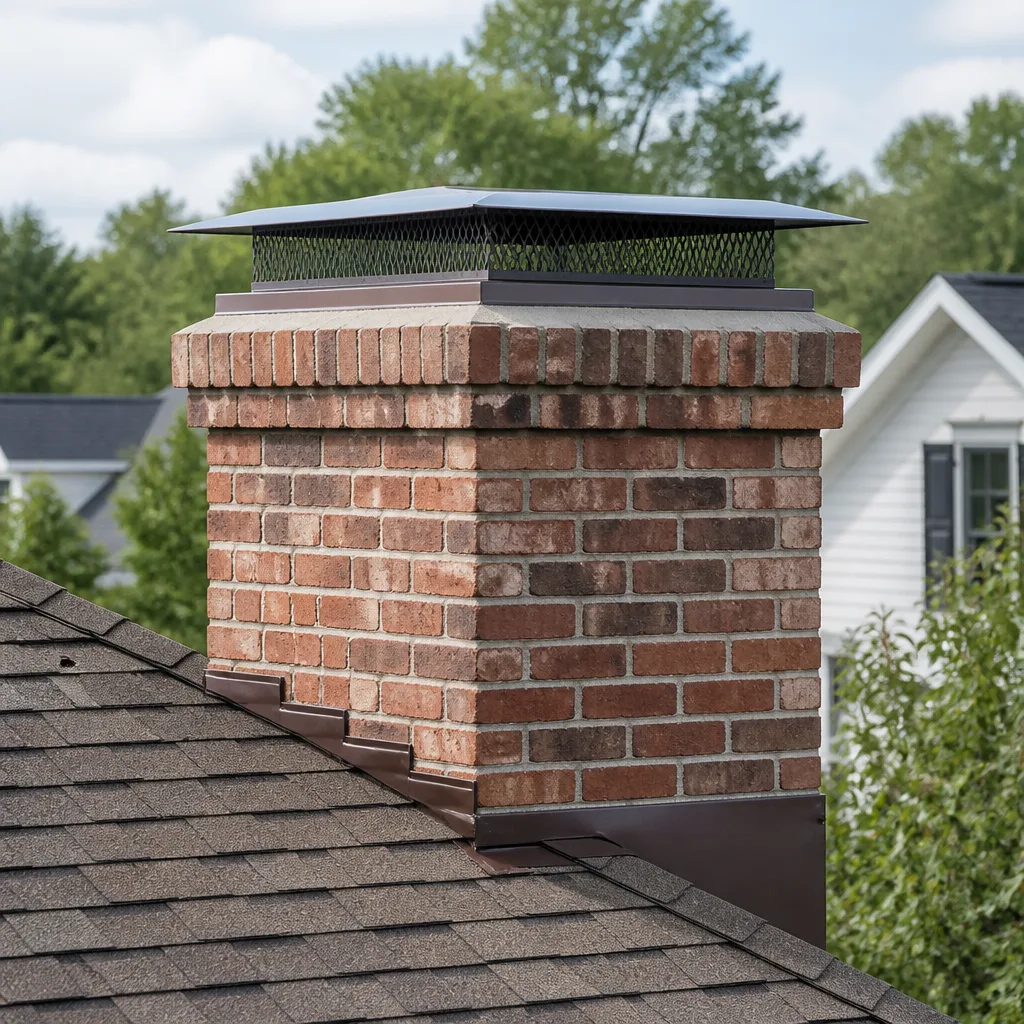
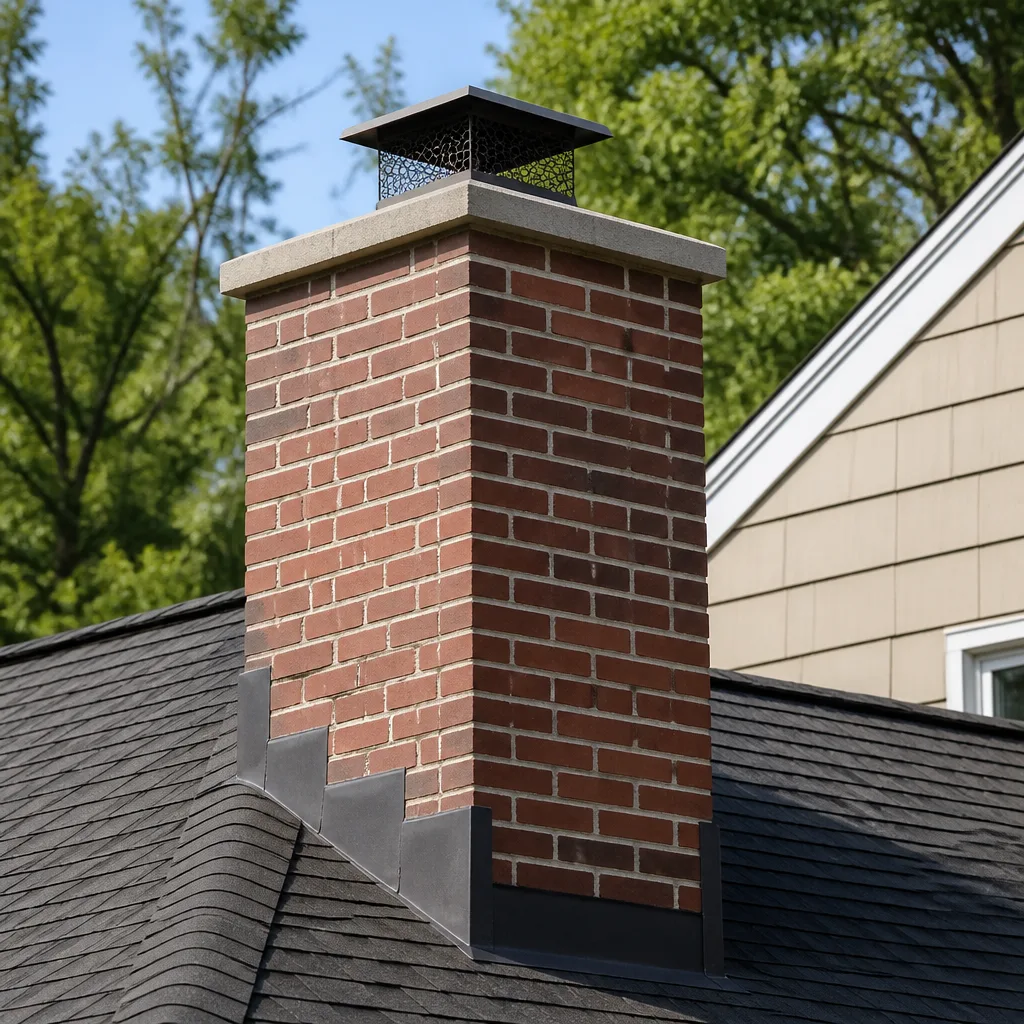
Step flashing where the chimney meets the roof plane is the single most common leak point we find in Waltham. The 2015-to-2025 homebuyer cohort often inherits “repaired” flashing that was simply caulked over. Proper flashing requires removal of shingles or siding courses, installation of new step and counterflashing in compatible metals, and reinstallation of the finish materials. Caulk is a temporary patch, not a repair. We note the metal type (aluminum, copper, galvanized steel) and its condition in our written report.
Cap, Screen, and Spark Arrestor
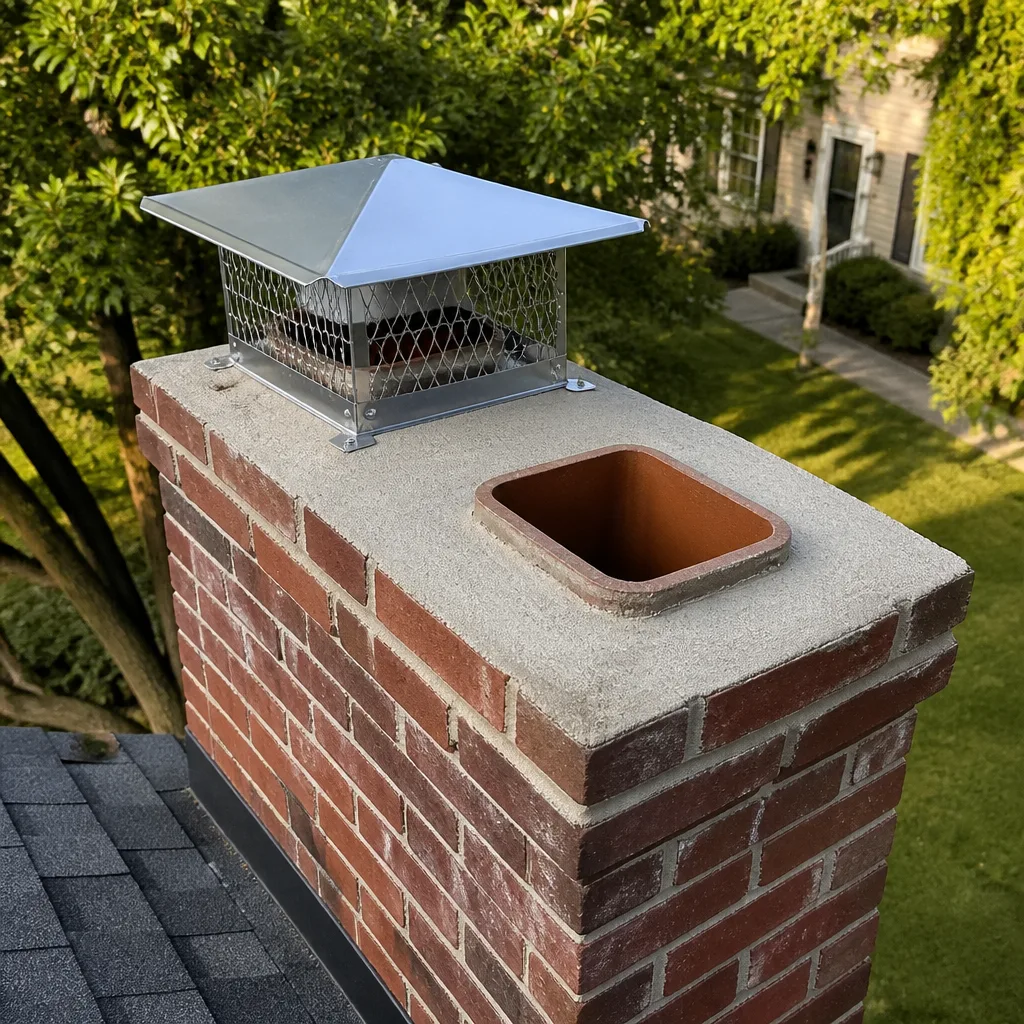
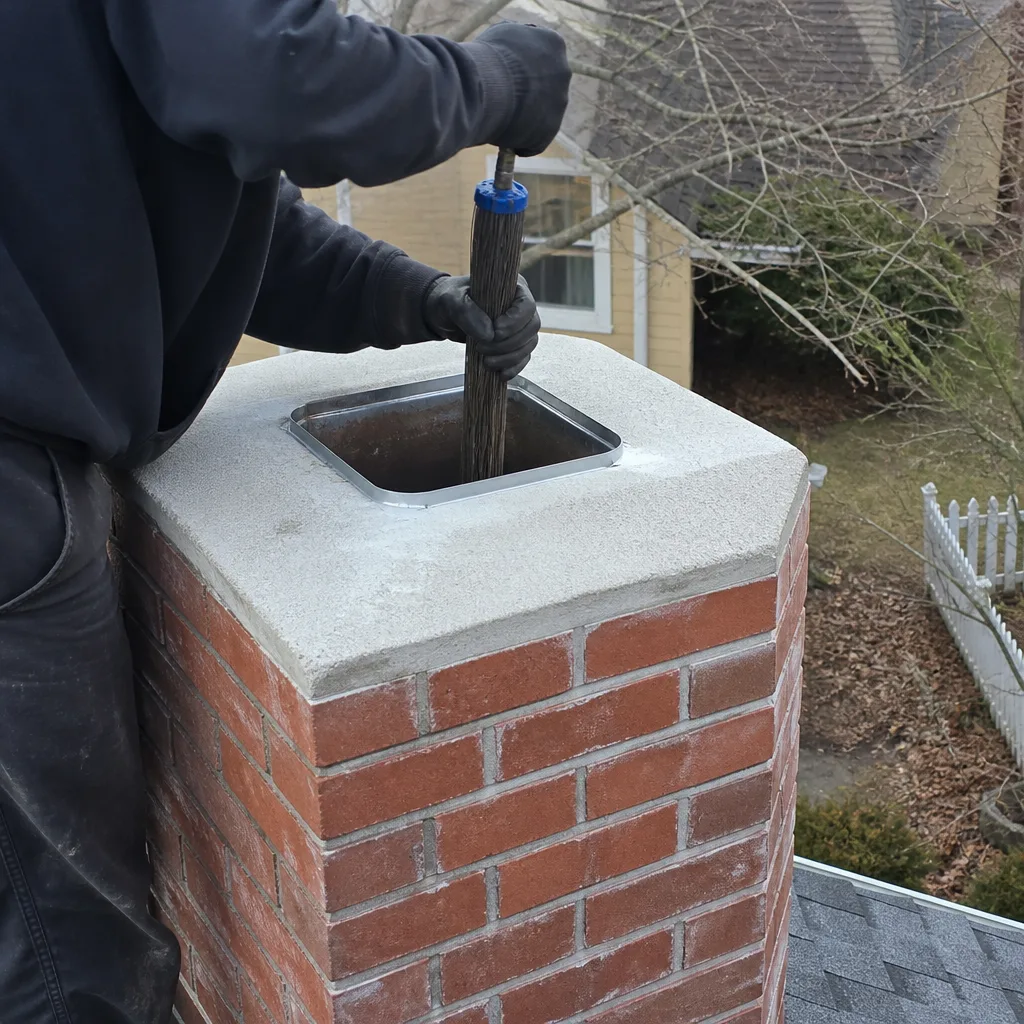
A proper cap covers the flue opening with minimum 5/8-inch mesh screen to exclude animals and contain sparks. The screen must not be clogged with creosote, which restricts draft and can force carbon monoxide back into the home. In Waltham, we replace dozens of screens each fall that squirrels have chewed through. Stainless steel caps from Famco and Copperfield, procured through our Haven network, carry lifetime warranties against corrosion and animal damage.
Brick and Mortar Joint Assessment
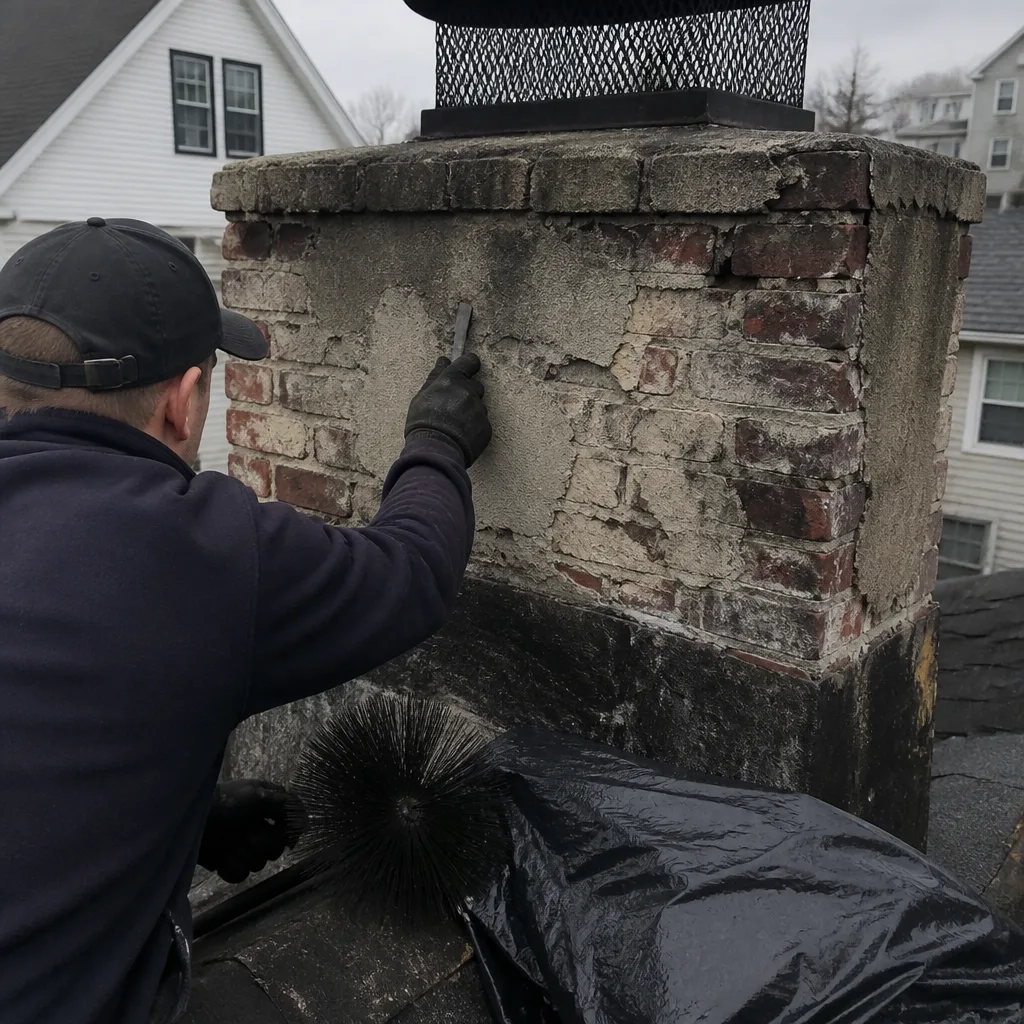
Mortar joint recession beyond 1/4 inch triggers tuckpointing evaluation. We measure with a joint raker or depth gauge, not by eye. Spalling brick faces, where the hard exterior “fire skin” flakes off exposing porous interior material, indicate moisture saturation and freeze-thaw damage. The threshold for action: spalling affecting more than 10 percent of visible brick surface, or any spalling at the crown level where water intrusion accelerates.
Chimney Cricket or Saddle
For chimneys wider than 30 inches where they meet the roof, code requires a cricket (a small peaked structure) to divert water around the chimney. Many Waltham homes built before 1980 lack crickets, and the resulting ponding rots roof decking and saturates chimney masonry. Installation is a roofing and masonry joint project, and we coordinate both trades under a single written scope and price.
Lane Three: What Only a Camera Confirms Inside the Flue
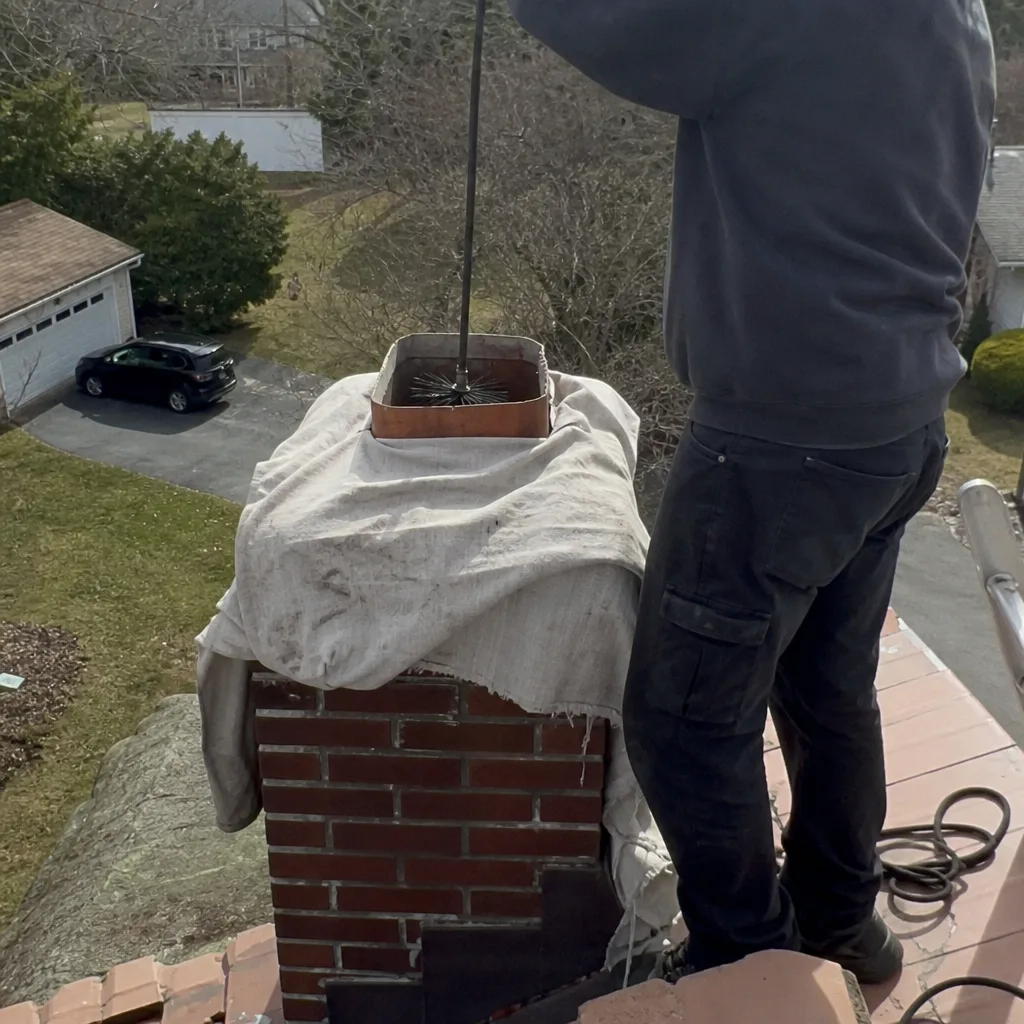
This is where generic checklists fail homeowners most dangerously. You cannot see flue liner condition, creosote accumulation patterns, or smoke chamber integrity from the firebox with a flashlight. NFPA 211 Level 2 inspection requires a camera scan. Chimney Cleaning & Sweep in Waltham from Level Two Chimney includes this as standard, not an upsell.
Creosote Deposit Classification and Thickness
Creosote forms in three classes. Class I is flaky soot, removable with standard brushes. Class II is crunchy, tar-like chips requiring mechanical removal. Class III is glazed, hardened creosote, often described as “dripping candle wax” that has re-solidified. Class III requires chemical treatment or rotary removal and presents the highest fire risk. The 1/8-inch thickness threshold triggers mandatory cleaning regardless of class. We measure at multiple points in the flue, document with camera stills, and note the location of heaviest accumulation. In Waltham, we see Class III buildup most often in homes where homeowners burn unseasoned wood or restrict combustion air to extend burn time.
Flue Liner Condition
Clay tile liners show cracks, spalling, or missing tiles. Stainless steel liners show seam separation, corrosion, or improper sizing. We measure liner interior dimensions against appliance manufacturer specifications. An undersized liner causes poor draft and creosote accumulation; an oversized liner cools flue gases too quickly, causing the same problem. The camera reveals what no flashlight can: hairline cracks in tile that open when heated, gaps at tile joints, or corrosion pitting in steel that will perforate within seasons.
Smoke Chamber Integrity
The smoke chamber is the area above the damper and below the flue liner, typically sloped to funnel gases into the flue. Building code since 1967 requires parging (smoothing) of corbeled brick or stepped construction to eliminate ledges where creosote accumulates. Unparged smoke chambers in pre-1967 Waltham homes are common. We document the condition of existing parging, measure ledge depth, and note any gaps exposing combustible framing. Chimney Repair in Waltham addresses smoke chamber parging with Chamber-Tech 2000 or similar listed products.
Obstructions and Nesting Material
The camera identifies partial blockages from collapsed liner sections, animal nests, or construction debris that a brush might push deeper. We once extracted a complete squirrel nest, compacted to 40 percent flue blockage, from a Waltham chimney where the homeowner had burned “around it” for two seasons. Carbon monoxide risk increases exponentially with partial obstruction.
Waltham-Specific Masonry Concerns: Highlands and South Side
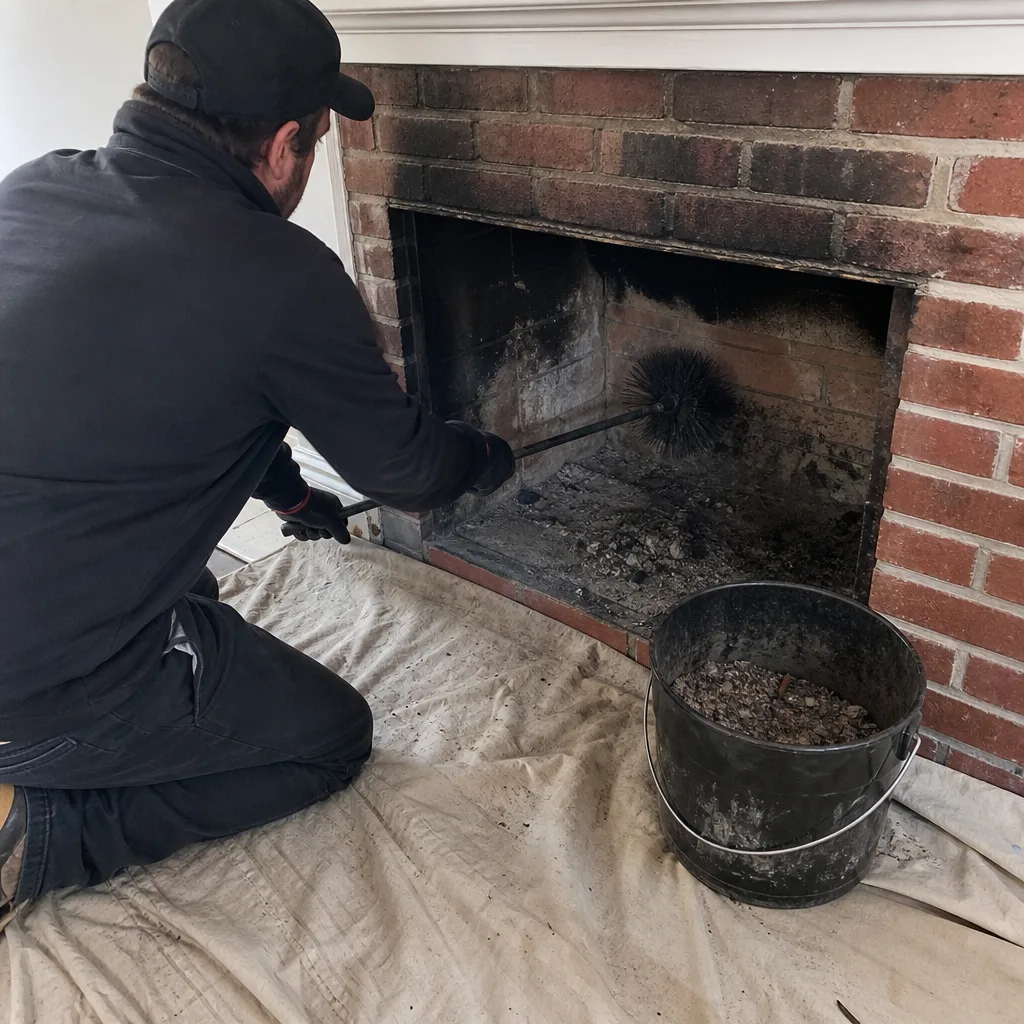
Waltham’s neighborhood geography creates distinct chimney deterioration patterns that generic checklists ignore.
Homes in the Highlands and South Side neighborhoods feature exterior chimneys on gable ends, fully exposed to prevailing northwest winds and temperature swings. An exterior chimney in Waltham experiences more freeze-thaw cycles per winter than a chimney centered in the building envelope. The result is accelerated spalling, mortar deterioration, and crown cracking. We recommend a spring spalling check for these homes, conducted from ground level with binoculars and documented with dated photos for year-over-year comparison.
The clay soils in parts of Waltham also create foundation movement that telegraphs to chimneys. A chimney that leans even slightly, or shows stair-step cracking in the masonry, requires structural evaluation before any sweep or repair work. We’ve referred Waltham homeowners to structural engineers when chimney movement indicated foundation settlement rather than simple masonry repair.
For homes near the Charles River floodplain, we check for historical water intrusion at the chimney base. Tide marks on basement chimney breasts, efflorescence (white mineral deposits), or rusted cleanout doors indicate past flooding that compromises the chimney’s base support and accelerates liner corrosion.
The Five Items Your Massachusetts Insurance Documentation Needs
After a chimney fire or carbon monoxide incident, your insurer will request documentation. A verbal assurance from a sweep means nothing. These five items must appear in writing for your claim to proceed smoothly:
- Dated photo record of flue interior condition - Clause 4 of the Haven Standard requires this on every job we perform. Insurers use it to establish pre-loss condition and determine whether maintenance was neglected.
- Written scope of work with technician signature - What was done, what was found, and what was recommended. Not a checkbox form; a narrative report with specific measurements.
- Appliance and liner manufacturer specifications cited - Demonstrates that installation or repair work met listed requirements. Generic “to code” language is insufficient.
- Clear statement of recommended repairs and timeline - Insurers deny claims when homeowners were advised of hazardous conditions and deferred action. The written timeline protects you.
- Company license and insurance verification - Massachusetts requires home improvement contractor registration. Our license number appears on every page and every document we produce.
We provide all five items as standard on every Level Two Chimney Waltham home visit. No additional fee, no “report upgrade.”
Done vs. Documented: Why the Distinction Matters
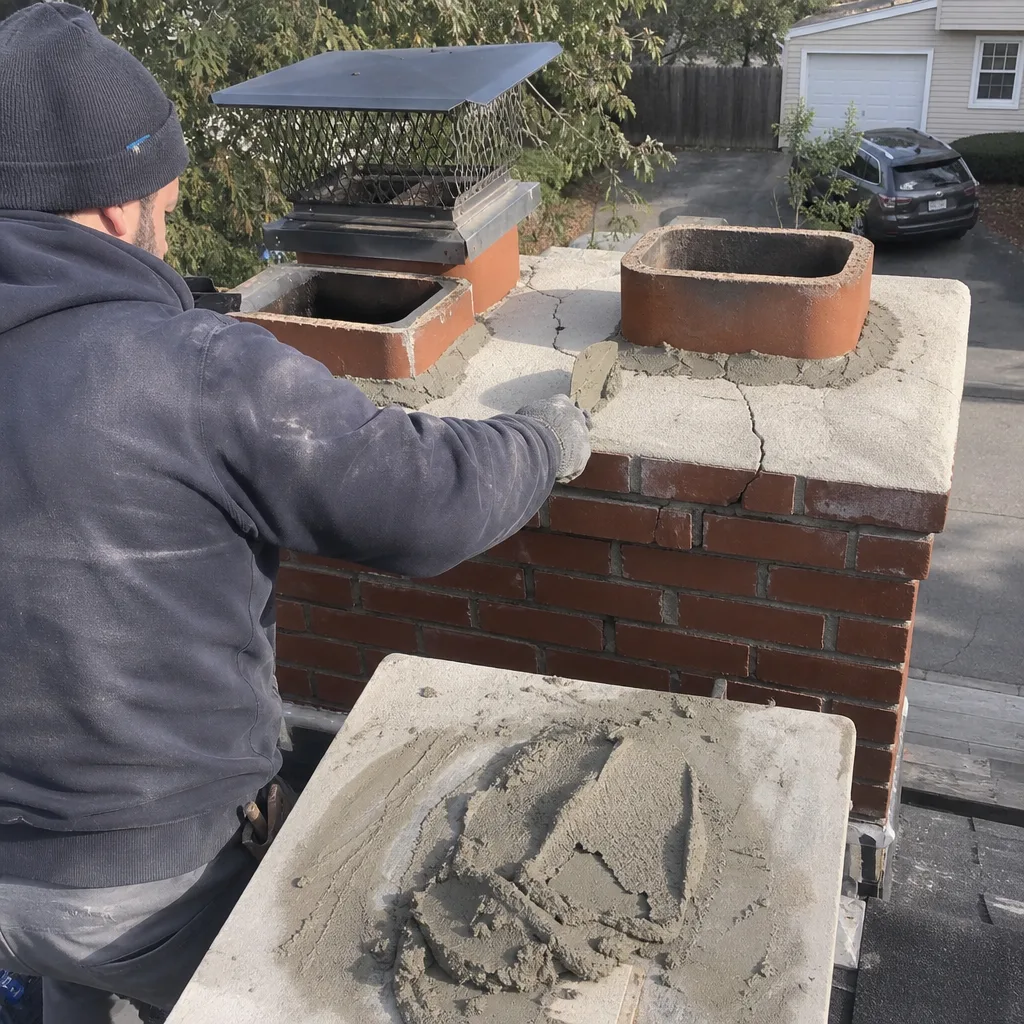
A sweep who brushes your flue and leaves has performed a service. A sweep who brushes your flue, photographs the results, and provides a written report has created a document with legal and financial value. The distinction matters in three specific situations:
- Home sale: Massachusetts disclosure law requires sellers to report known defects. A documented clean bill of health from a camera inspection protects against post-sale claims.
- Insurance claims: As noted above, documentation determines claim acceptance or denial.
- Warranty disputes: Manufacturer warranties on inserts, stoves, and liners require proof of annual professional maintenance. A receipt for “chimney sweep, $189” does not satisfy this requirement. A report with photos, measurements, and technician credentials does.
Our Haven Standard practice since 2009 means every one of the 38,000+ chimneys we’ve serviced carries a documented record. When a Waltham homeowner calls us for a copy from five years ago, we produce it. That archive became Clause 4 of the Haven Standard because we saw how often documentation saved homeowners from dispute, denial, or liability.
A Realistic Maintenance Schedule for Waltham Homes
Frequency depends on fuel type, burning volume, and chimney construction. These are minimums, not maximums.
| Scenario | Minimum Inspection Frequency | Cleaning Trigger |
|---|---|---|
| Wood-burning fireplace, occasional use (1-2 fires/week) | Annual Level 2 inspection | 1/8 inch creosote or annually, whichever comes first |
| Wood-burning fireplace, primary heat source | Mid-season and end-of-season inspection | 1/8 inch creosote or every cord of wood burned |
| Gas fireplace, vented | Every 2 years | Debris or insect obstruction found |
| Gas fireplace, vent-free | Annual service by gas technician | Odor, sooting, or CO detector activation |
| Pellet stove | Annual, before heating season | Fly ash accumulation per manufacturer spec |
| Oil or gas furnace with masonry chimney | Annual | Soot or corrosion debris exceeding 1/4 inch |
For Waltham’s exterior chimneys in the Highlands and South Side, add the spring spalling check described above. It’s a 10-minute ground-level observation that can catch crown or mortar issues before summer humidity accelerates deterioration.
What Chimney Maintenance Costs in Waltham
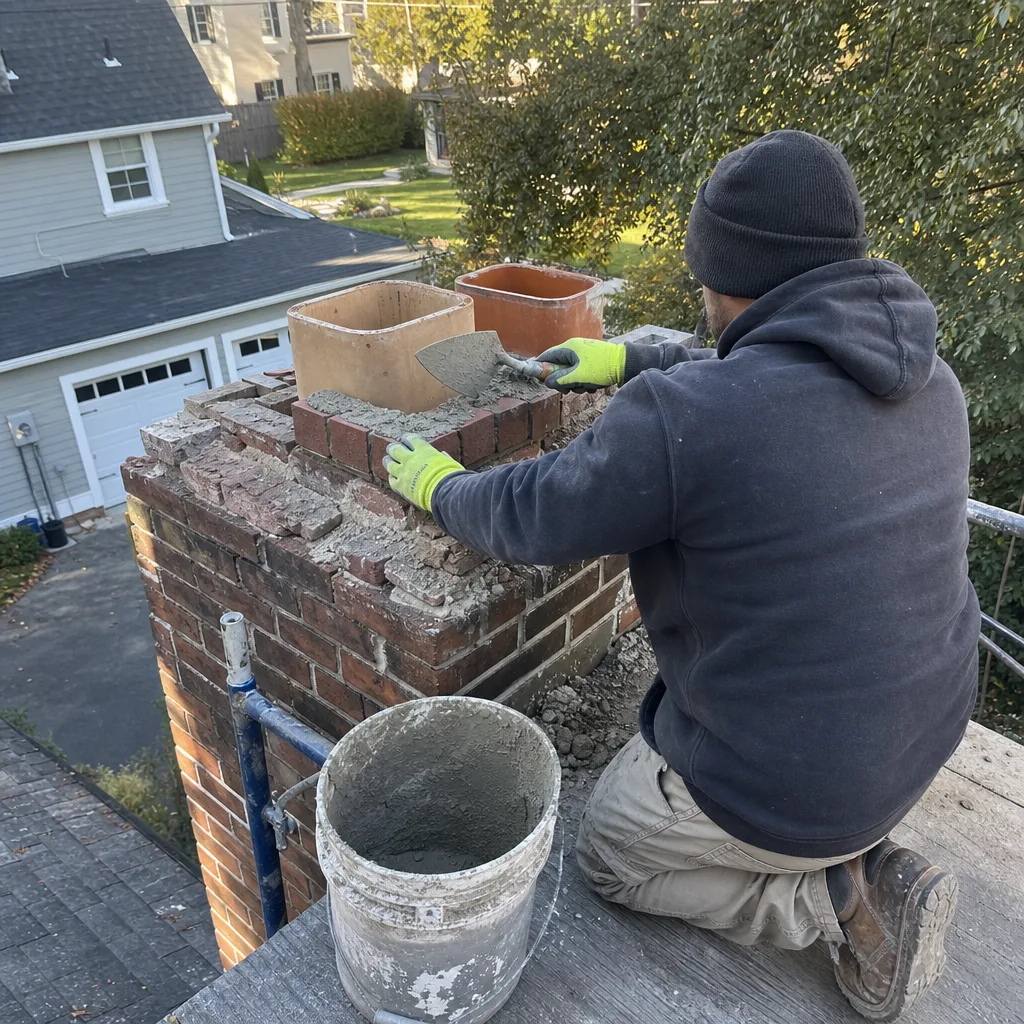
We publish ranges because “call for a quote” wastes your time and ours. Every job still receives a written, itemized price before work begins, per Haven Standard Clause 1.
| Service | Typical Range in Waltham |
|---|---|
| NFPA 211 Level 2 inspection with camera scan and photo record | $249-$349 |
| Chimney sweep and cleaning (Class I creosote) | $189-$289 |
| Chimney sweep with Class III creosote removal | $389-$589 |
| Crown sealing (minor cracks) | $249-$449 |
| Crown rebuild or pour | $1,200-$2,400 |
| Tuckpointing (per square foot) | $12-$22 |
| Stainless steel cap with screen | $289-$489 installed |
| Smoke chamber parging | $1,400-$2,800 |
These ranges reflect Waltham’s labor market and material costs through our Haven buying network with DuraFlex, HeatShield, Gelco, Olympia Chimney, Famco, and Copperfield. Your written price may fall outside these ranges for unusual access conditions, extensive repairs, or after-hours emergency service. The written price is the price you pay. No exceptions, no surprises.
We also offer a Free Second Opinion on any competitor’s written estimate. Bring us their scope and price; we’ll review it against what we find and tell you where the gaps are.
Common Mistakes to Avoid
- Using a flashlight to “inspect” your own flue. You’re looking at the first 18 inches of a 20-foot passage. The dangerous conditions are above your line of sight, and disturbing loose creosote without proper containment spreads carcinogenic material through your home.
- Burning unseasoned wood because it’s cheaper. Wood with moisture content above 20 percent produces Class III creosote at triple the rate of seasoned hardwood. The savings per cord evaporate in one accelerated cleaning.
- Assuming gas fireplaces need no maintenance. Vented gas fireplaces accumulate debris, suffer corrosion from condensing flue gases, and develop valve and burner issues. The “clean gas” marketing has created a dangerous maintenance gap in Waltham homes.
- Accepting a sweep without photo documentation. Without dated, geotagged photos of flue condition, you have no proof of maintenance for insurance, warranty, or resale purposes. We made this standard in 2009; it became Haven Standard Clause 4.
- Ignoring spring spalling on exterior chimneys. That flaking brick face is not cosmetic. It’s progressive moisture damage that accelerates exponentially. Early tuckpointing preserves the chimney; delayed action requires partial rebuild.
- Hiring based on lowest price without written scope. The “cheap sweep” who brushes visible soot and leaves has performed a fraction of the required service. Our written price includes the full scope before anyone enters your home.
- Deferring recommended repairs because “it’s still working.” Chimneys don’t fail gracefully. Liner collapse, crown failure, or blockages create sudden, hazardous conditions. The camera findings in your written report include a timeline for a reason.
When to Call a Professional
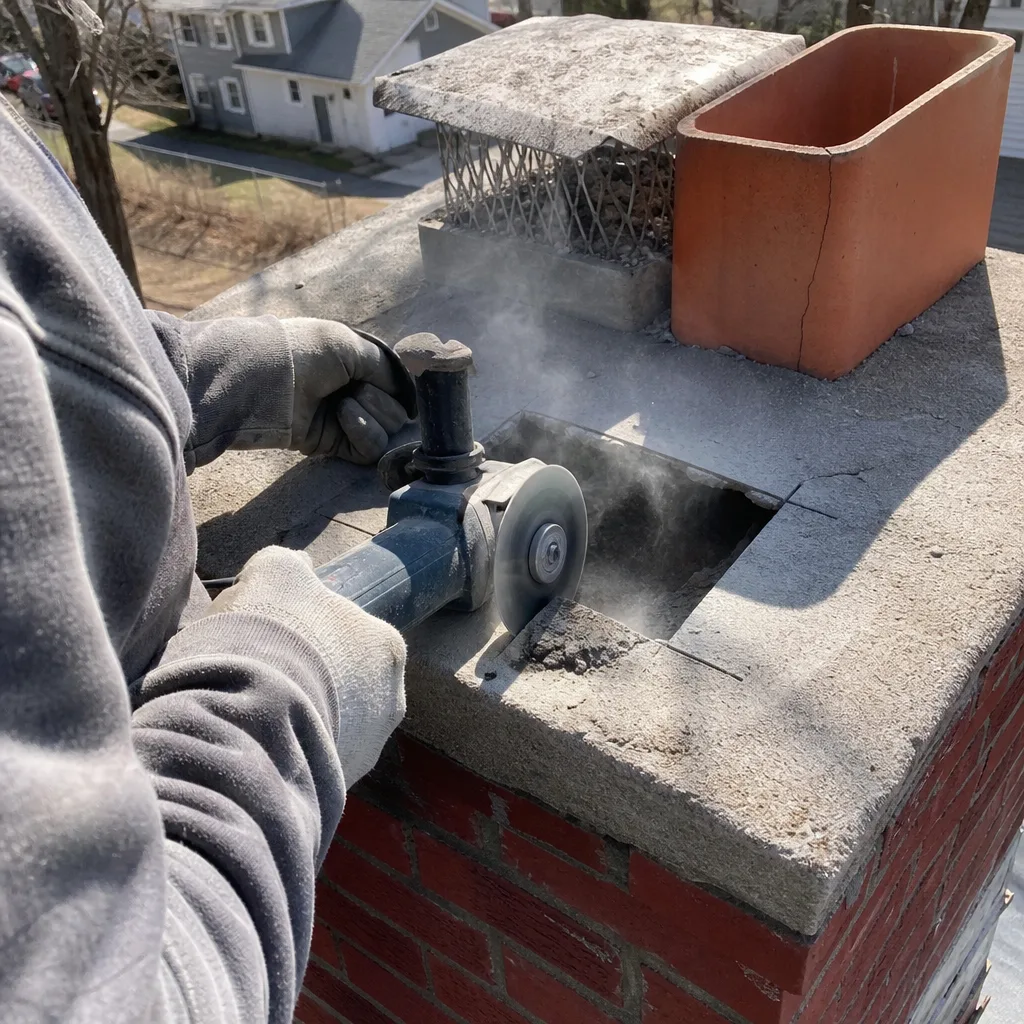
Call a certified chimney professional when you observe any of the following, detailed further in our Chimney Cleaning Warning Signs: A Waltham Homeowner’s Reference Guide: smoke entering the room during normal operation, visible cracks in firebrick or refractory panels, a stuck or damaged damper, water stains on ceiling or walls near the chimney, a strong odor from the fireplace in summer months, or any activation of your carbon monoxide detector. Do not attempt roof-level inspection yourself. Waltham’s slate roofs, steep pitches, and winter ice conditions create genuine fall hazards.
Level Two Chimney Waltham offers free estimates in Waltham. Our background-checked, uniformed technicians arrive with license verification, perform NFPA 211 Level 2 camera inspections, and provide written prices before any work begins. Call (781) 649-9326 to schedule. Live phone support is available 24 hours a day, 7 days a week.
Frequently Asked Questions
A standard chimney sweep in Waltham typically runs $189-$289 for Class I creosote removal, while Class III glazed creosote removal ranges $389-$589. Every job includes an NFPA 211 Level 2 camera inspection and documented photo record. Call (781) 649-9326 for a written estimate specific to your chimney’s condition.
Annual inspection is the minimum for any wood-burning system. Cleaning frequency depends on creosote accumulation, which we measure during inspection. The 1/8-inch threshold triggers mandatory cleaning. Homes in Waltham’s Highlands and South Side with exterior chimneys may need more frequent attention due to accelerated freeze-thaw deterioration. Call (781) 649-9326 to schedule an inspection that determines your specific timeline.
You need a new liner only if camera inspection confirms the existing liner is cracked, perforated, improperly sized, or missing. We show you the camera footage and explain the specific defect before recommending replacement. Clay tile liners can last 50+ years if properly maintained; stainless steel liners carry lifetime warranties when correctly installed. No liner replacement is sold without photo evidence you can review yourself. Call (781) 649-9326 for a free second opinion on any liner replacement quote.
Skipped maintenance leads to creosote accumulation, which causes chimney fires (over 25,000 annually in the U.S.), and liner deterioration, which allows carbon monoxide intrusion into living spaces. In Waltham’s older housing stock, deferred maintenance also means progressive masonry damage that costs significantly more to repair than to prevent. The documented photo record from annual inspection protects your insurance coverage if an incident does occur. Call (781) 649-9326 to schedule before burning season.
A Level 1 inspection is a visual examination of readily accessible portions of the chimney, appropriate for continued use under unchanged conditions. A Level 2 inspection adds a camera scan of the flue interior, accessible areas in attics and basements, and inspection of the chimney exterior, required for home sales, new appliance installation, or after any operational change or event. Level Two Chimney performs Level 2 as our standard on every visit, a practice we established in 2009 and codified as Haven Standard Clause 4.
You can operate the fireplace safely with a worn damper seal, but you’ll lose heated air up the flue continuously, costing approximately $340 per heating season in Waltham’s climate. The seal replacement is a minor repair that pays for itself in one season. More critically, a damper that won’t fully open creates smoke and carbon monoxide hazards. We inspect damper operation and seal condition during every Level 2 inspection. Call (781) 649-9326 to schedule.
The Bottom Line
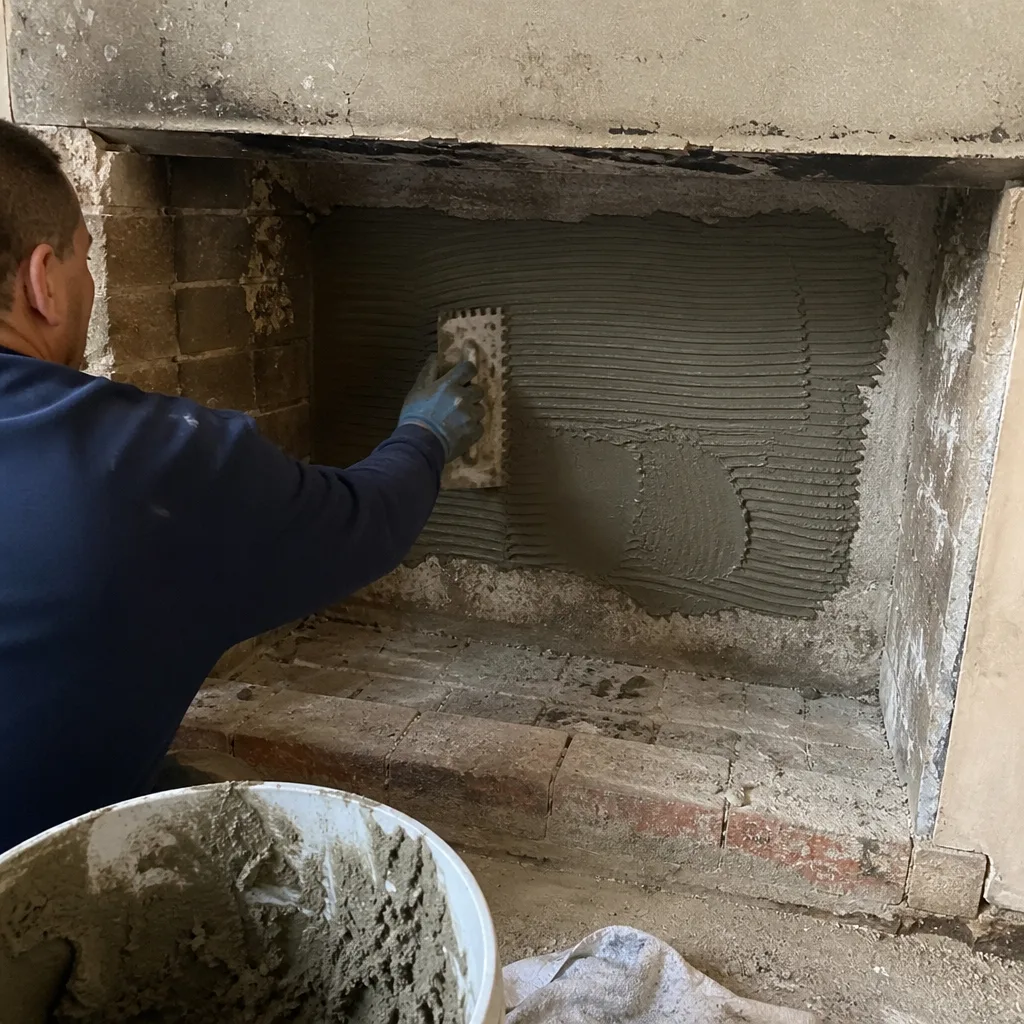
A useful chimney checklist separates what you can verify from your living room (damper seal, firebrick, hearth clearance) from what requires professional assessment at height (crown, flashing, cap) and what demands camera technology inside the flue (creosote class, liner condition, smoke chamber integrity); see our more guides & resources for additional maintenance topics. The 1/8-inch creosote threshold and 1/4-inch mortar recession threshold give you concrete decision points. For Waltham’s exterior chimneys, especially in the Highlands and South Side, add an annual spring spalling check. And remember: performed work without documentation leaves you exposed for insurance, resale, and warranty purposes. The five documentation items we provide on every visit exist because we’ve seen what happens when they’re missing.
Fireplace Services in Waltham from Level Two Chimney include the full range of inspection, cleaning, repair, and documentation services described in this guide. Every job carries our 365-Day Done Right Promise, a written price before work starts, and a documented photo record under Haven Standard Clause 4.
Written by Corrine Halstead, Owner at Level Two Chimney Waltham, serving Waltham since 2009.