
Last updated September 22, 2026
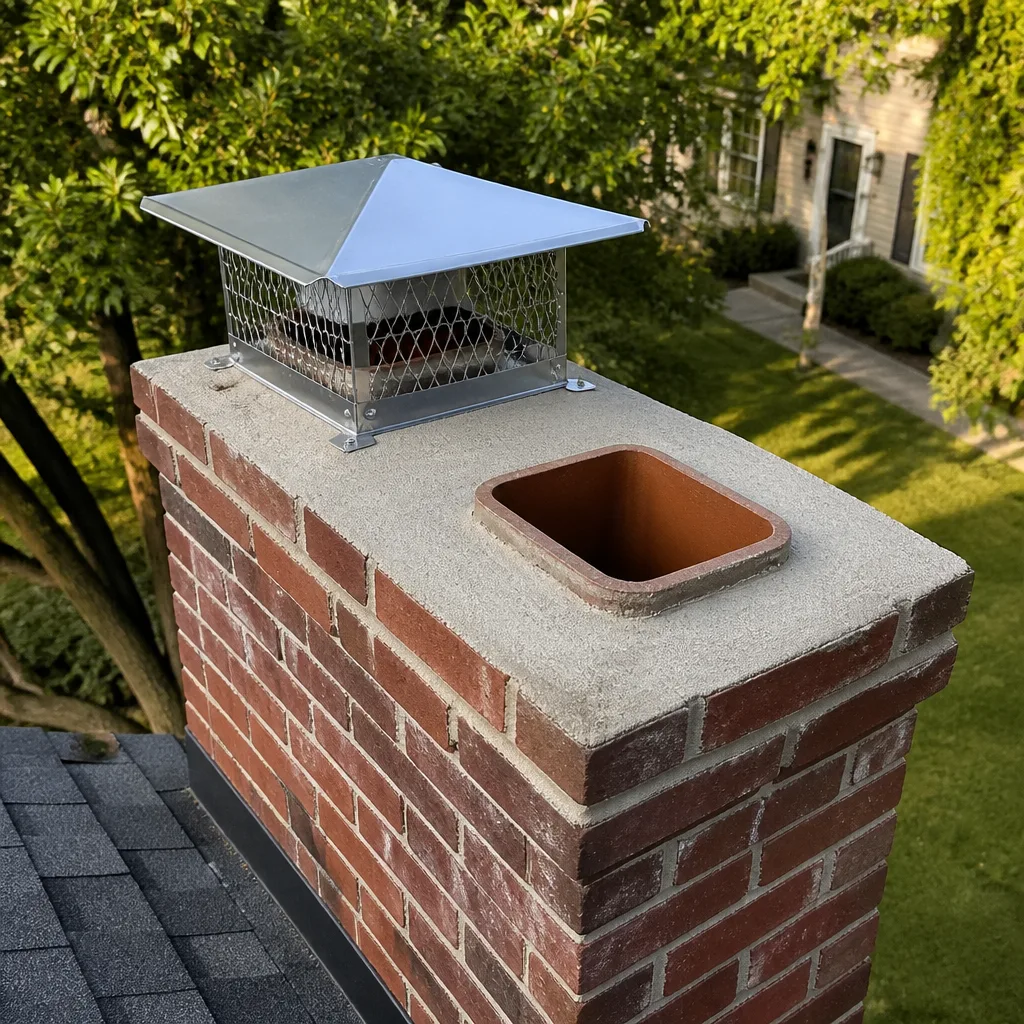
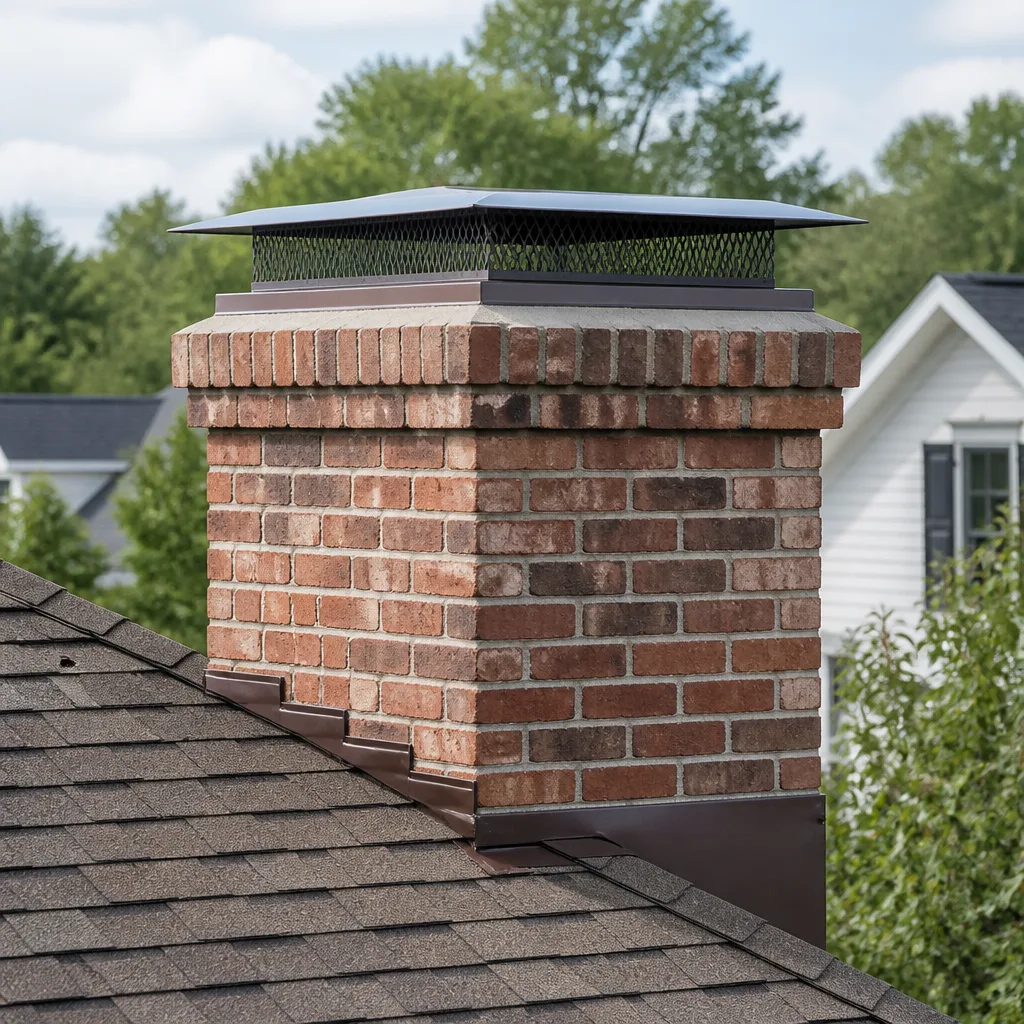
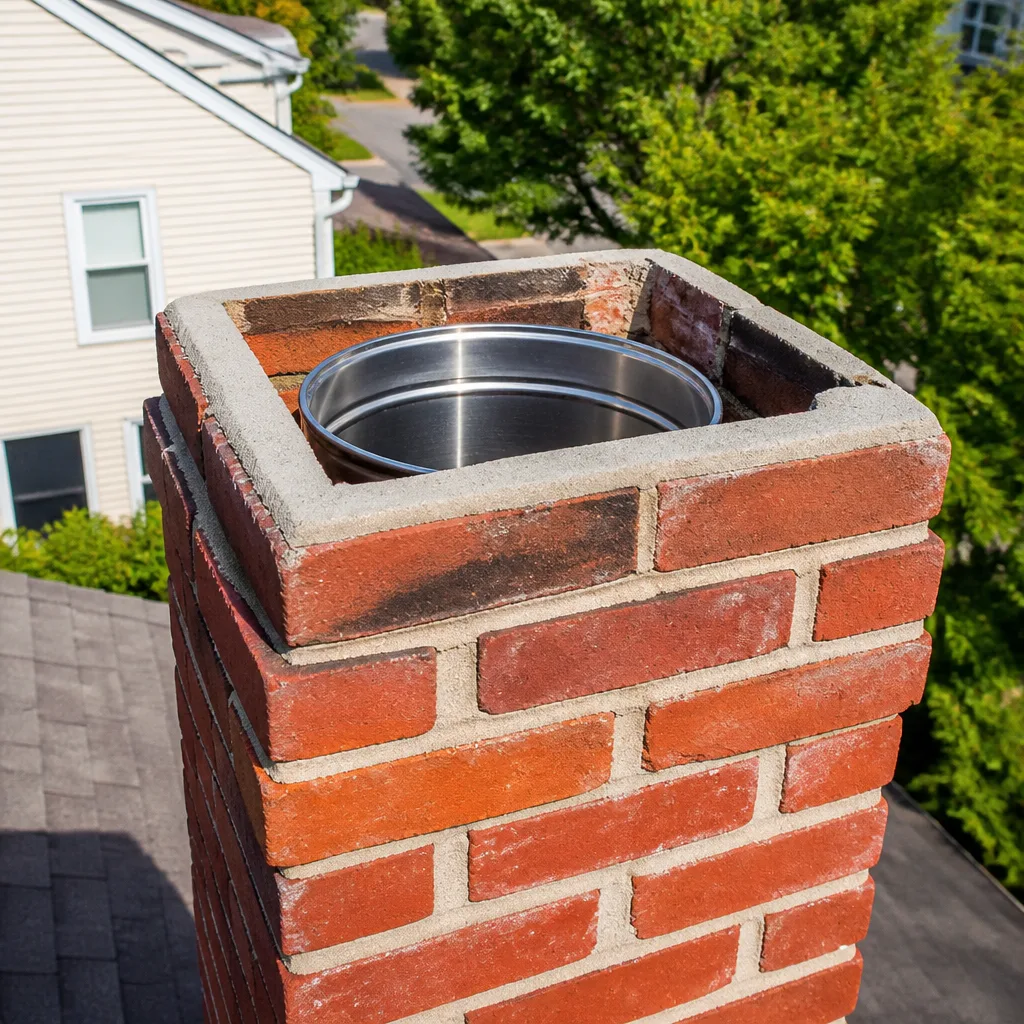
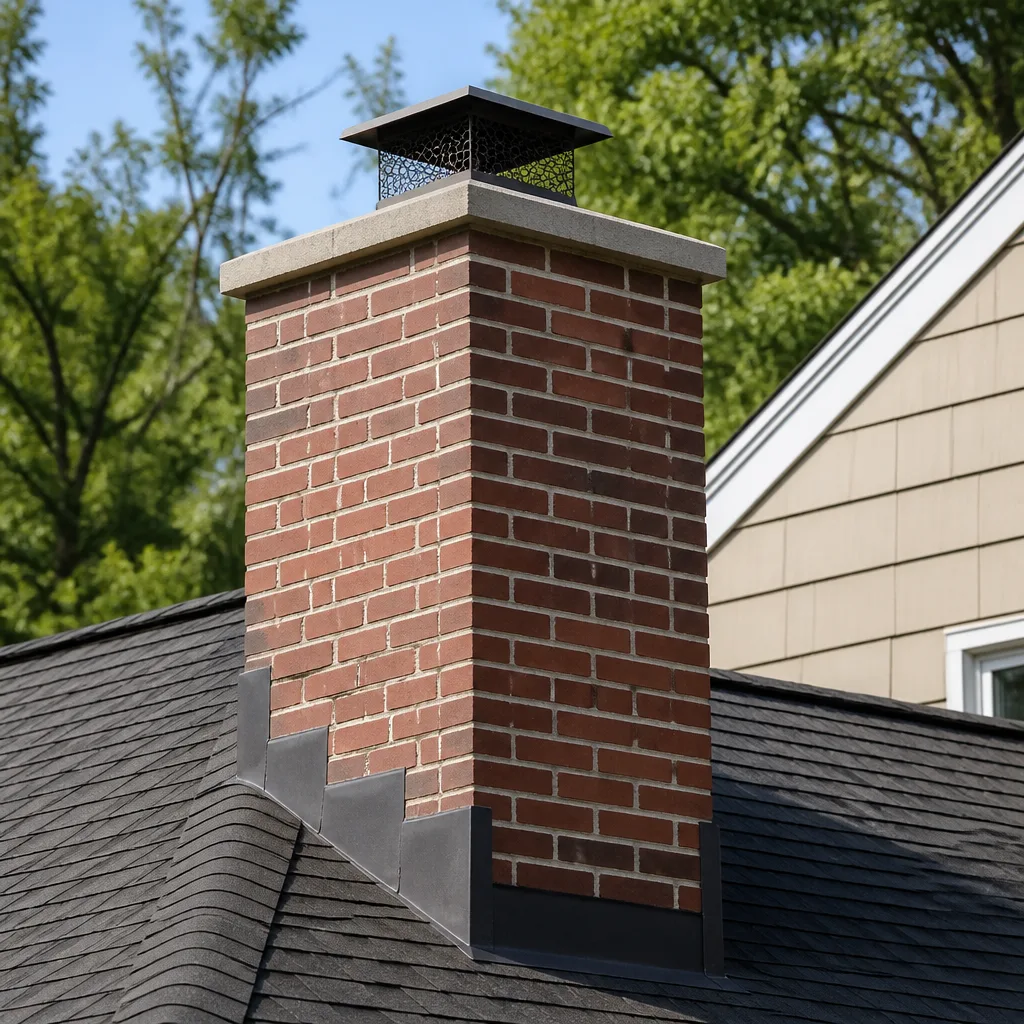
Level 1 sweep and inspection to the NFPA 211 annual standard - flue, crown, cap, and flashing checked and photographed
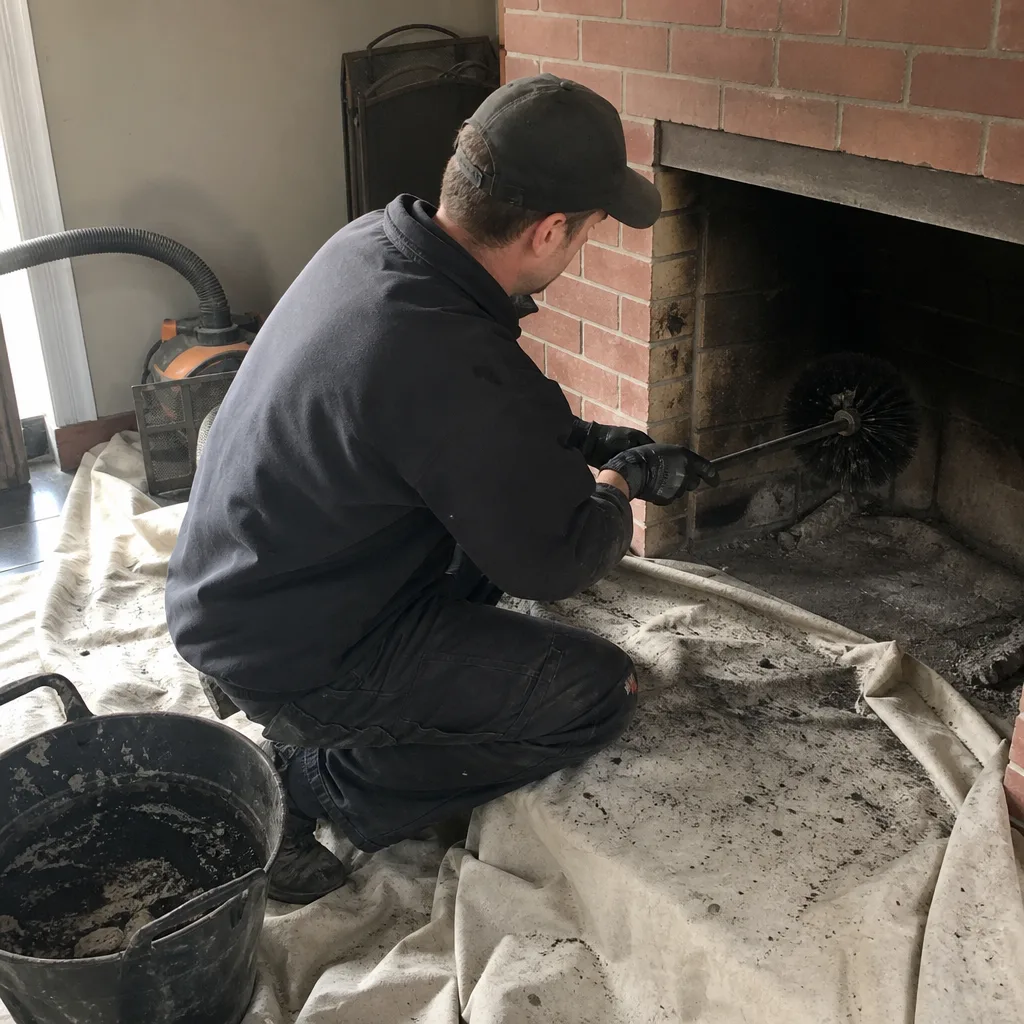
Chimney sweep logs do not sweep chimneys. They loosen some creosote - which then falls where a brush and vacuum still have to collect it.
 Before
 After
After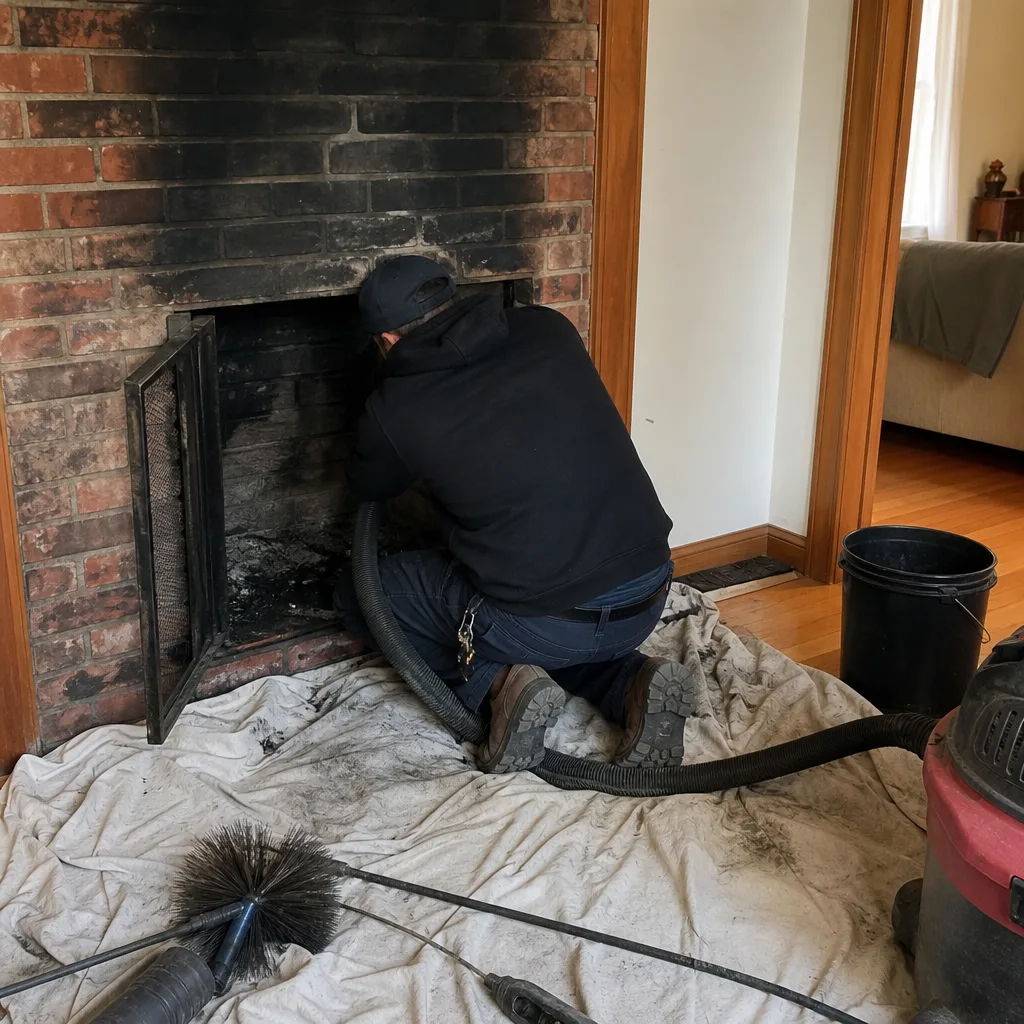 Before
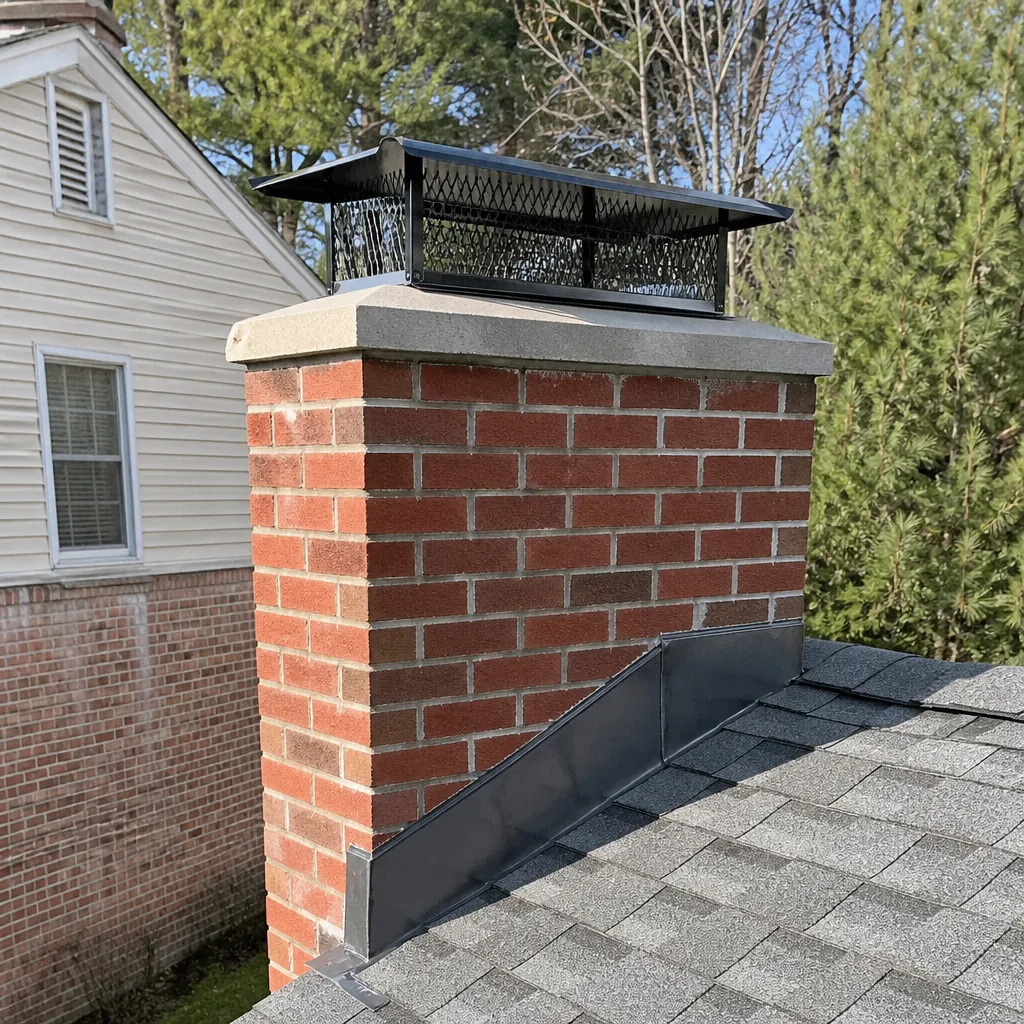 After
After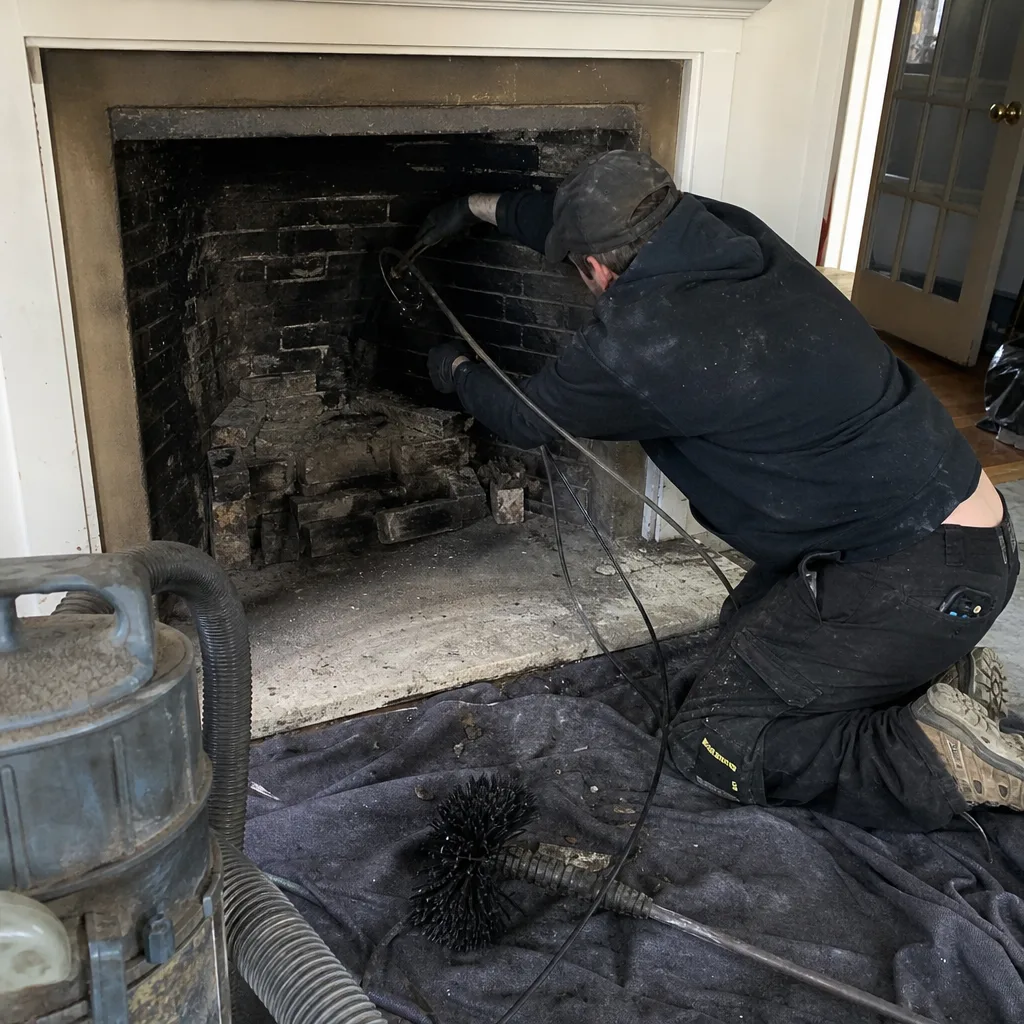 Before
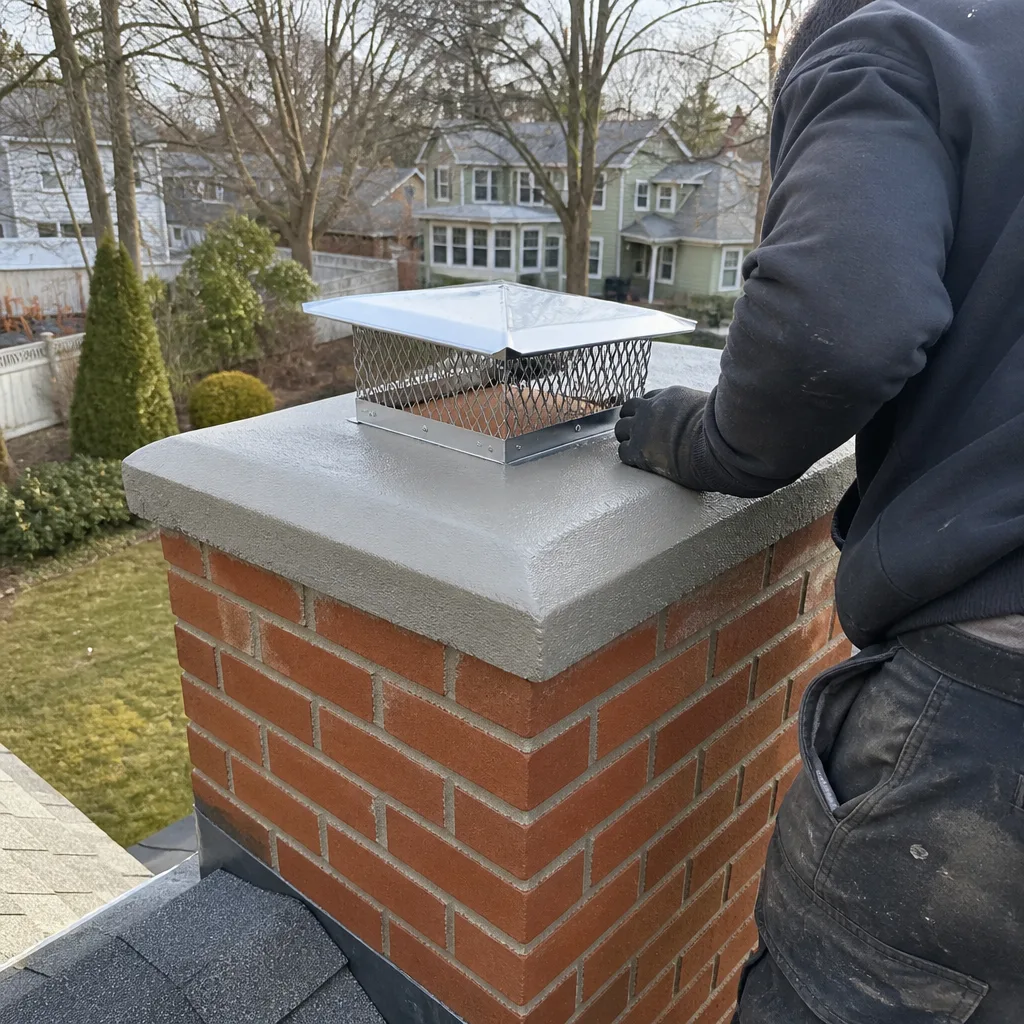 After
AfterChimney Cleaning Warning Signs: A Waltham Homeowner’s Reference Guide
The warning sign Waltham homeowners most frequently miss is a white calcium stain on the exterior brick face. It looks like a cosmetic blemish, but it’s efflorescence, a diagnostic signal that water is moving through the masonry. In our experience across Waltham’s older housing stock, this condition typically precedes flue liner deterioration by one to three heating seasons. Most chimney warning guides list symptoms without telling you which ones you can spot yourself versus which ones only appear on a camera scan. For DIY vs Professional Chimney Cleaning: The Waltham Homeowner’s Decision Guide. That gap sends homeowners into false security or unnecessary panic. This guide assigns each sign to who can find it, what it costs if ignored, and whether you need same-week action or can wait for a scheduled appointment.
Quick Answer
The most critical chimney warning signs visible to Waltham homeowners are smoke rolling back into the room, persistent tar-like odors, white efflorescence on exterior brick, and rust streaks on the chimney chase. These indicate active safety hazards or water intrusion that will damage the liner. A proper NFPA 211 Level 2 inspection with camera scan is the only way to detect cracked flue liners, Stage 3 creosote buildup, and separated offset joints before they cause a chimney fire or carbon monoxide leak. See The Complete Guide to Chimney Cleaning in Waltham for a full breakdown of what this inspection covers.
Table of Contents
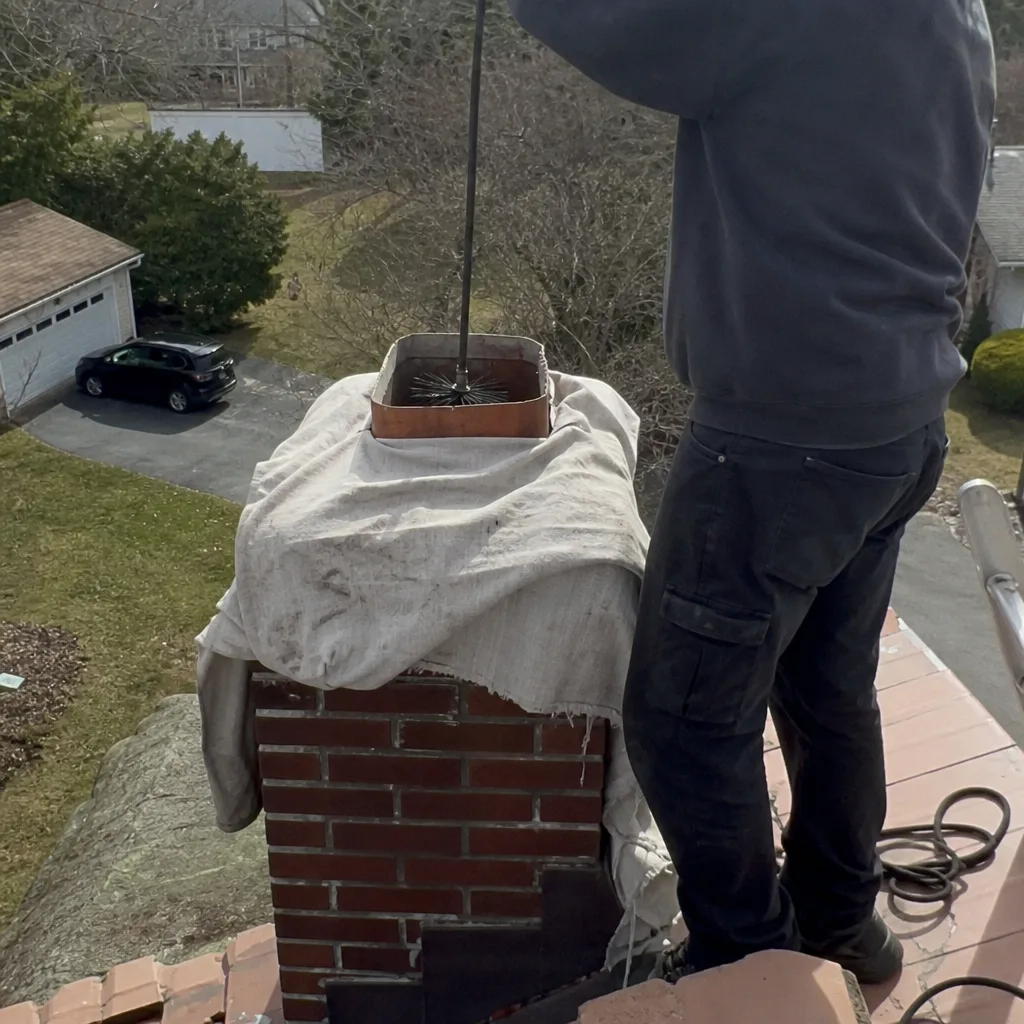
- Warning Signs You Can See at the Firebox
- Warning Signs Visible from Your Yard
- Warning Signs a Technician Finds from the Roof
- Warning Signs Only a Camera Scan Can Detect
- The Smell Guide: Olfactory Warning Signs Most Guides Miss
- Call Now, Schedule Soon, or Note for Spring: A Triage Framework
- Waltham-Specific Warning Patterns
- What Each Sign Costs If Ignored
 Before
 After
AfterWarning Signs You Can See at the Firebox
Your firebox is where symptoms announce themselves most directly. These are the signs you can detect without tools, without climbing, and without any special training.
Smoke Rollout During Firing
Smoke entering the room while the fire is active, or immediately after lighting, indicates a drafting failure. The cause might be a blocked flue, a cold chimney column on a zero-degree Waltham morning, or a damaged liner creating turbulence. In homes near the Charles River where wind patterns shift with the water temperature, we see more draft complaints than in inland neighborhoods.
What to check first: open the damper fully, warm the flue with a rolled newspaper torch before lighting the main fire, and confirm no recent changes to window or exhaust fan usage. If rollout persists after these steps, the flue needs inspection. Continuous rollout can deposit creosote on interior surfaces and, in severe cases, introduce carbon monoxide into living space.
Visible Debris in the Firebox
Bits of tile, concrete chunks, or sandy material in the firebox mean the flue liner is deteriorating. Clay tile liners shed pieces as they crack from thermal cycling. In Waltham’s pre-1950 housing stock, particularly the two-family conversions on Trapelo Road and the capes near Bentley University, original clay liners are reaching end of service life after 70 to 90 years.
Never burn with visible liner debris present. Each missing piece exposes surrounding masonry to direct flame and heat. A single cracked tile can be repaired with a stainless steel liner insert. Multiple cracked courses or a collapsed section typically require full liner replacement.
Creosote Dripping or Oozing from the Damper Area
Black, shiny, tar-like material accumulating above the damper or dripping onto the hearth indicates Stage 2 or Stage 3 creosote. Stage 2 is liquid enough to drip; Stage 3 has hardened into a glazed, enamel-like coating. Both are significantly more flammable than the powdery Stage 1 creosote that a standard brush removes easily.
Stage 2 creosote ignites at approximately 451 degrees Fahrenheit, roughly the ignition temperature of paper. A hot fire with restricted airflow, common when homeowners damper down for overnight burn, can push flue temperatures into this range. Stage 3 glazed creosote requires chemical treatment or rotary removal; brushing alone will not dislodge it.
Water Stains on the Firebox Walls or Hearth
Rust-colored staining on firebox masonry indicates water entering from above, traveling down the flue, and evaporating at the firebox level. The water carries dissolved minerals and rust from the damper assembly, leaving characteristic orange-brown deposits. This is never normal and never seasonal condensation.
In Waltham, we trace this pattern most often to failed chimney crowns in homes with exterior chimneys exposed to prevailing northwest winds. The crown crack allows water entry; the water finds the path of least resistance down the flue. Left unaddressed, the freeze-thaw cycle destroys the firebox brick from the inside out.
- Smoke rollout: Draft failure, potential CO risk. Inspect within one week.
- Liner debris in firebox: Active liner failure. Stop burning immediately.
- Creosote drips: Stage 2/3 buildup. Schedule sweep before next burn.
- Water stains: Crown or flashing failure. Schedule inspection within two weeks.
Warning Signs Visible from Your Yard
Exterior inspection requires no ladder and no special equipment. Walk your property line and look at the chimney from multiple angles, particularly after rain or during the melt phase of a Waltham winter.
Efflorescence: The White Stain Waltham Homeowners Miss
Efflorescence appears as white, powdery, or crystalline deposits on brick faces. It’s calcium carbonate and other soluble salts brought to the surface by water moving through the masonry matrix. The water evaporates; the salts remain.
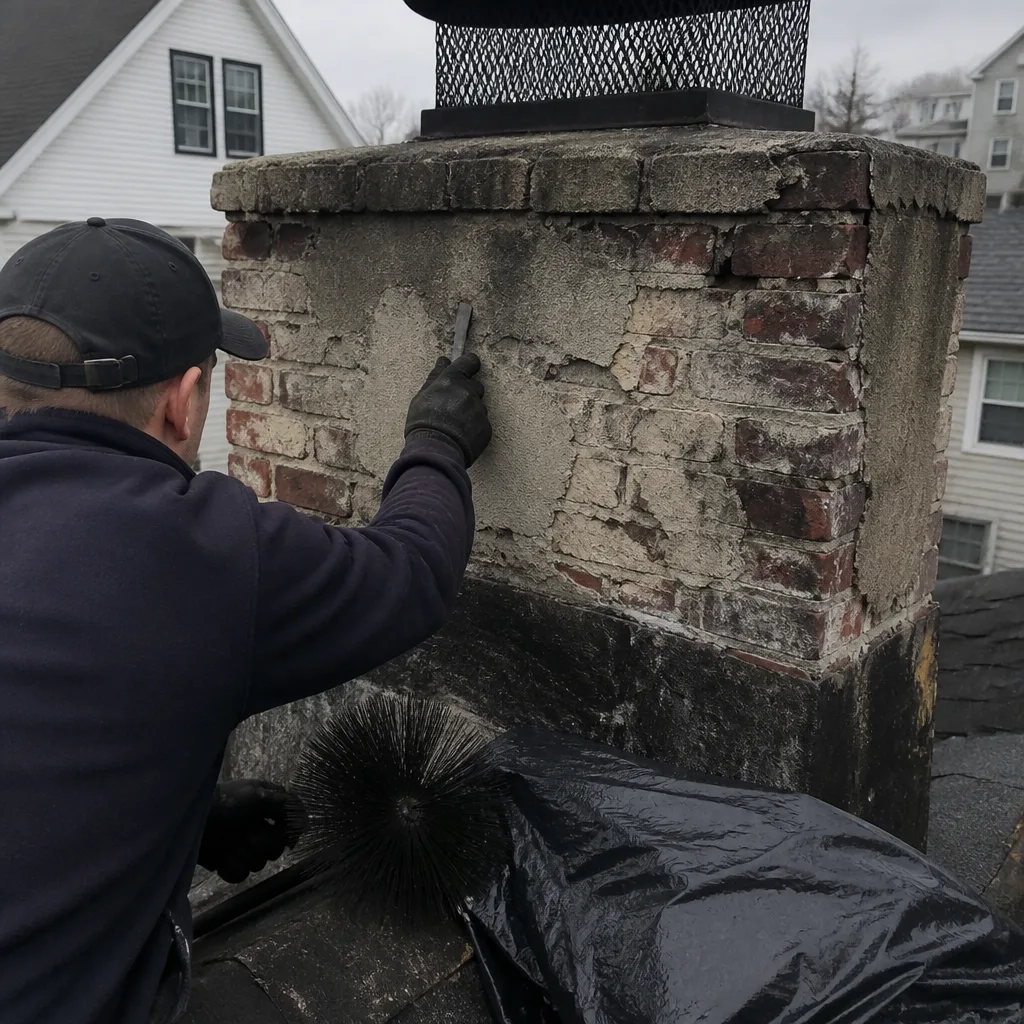
This is not a cosmetic problem. It is evidence of water saturation in the masonry structure. In Waltham’s freeze-thaw climate, saturated brick experiences spalling, the surface flaking and popping that exposes porous interior brick to accelerated damage. We’ve documented efflorescence on River Street corridor homes that preceded liner deterioration by two heating seasons. The water that moves through brick also moves through the mortar joints between flue tiles.
Efflorescence that reappears after brushing indicates an active water source, not a historical one. The source is typically crown cracks, failed cap seal, or deteriorated mortar joints in the chimney shoulder.
Spalling Brick Faces
Spalling is the flaking, popping, or crumbling of the brick surface, often leaving a concave depression. It occurs when water-saturated brick freezes; the ice expansion exceeds the brick’s tensile strength. Waltham’s January temperature swings, with daytime thirties and nighttime single digits, create ideal conditions for this damage.
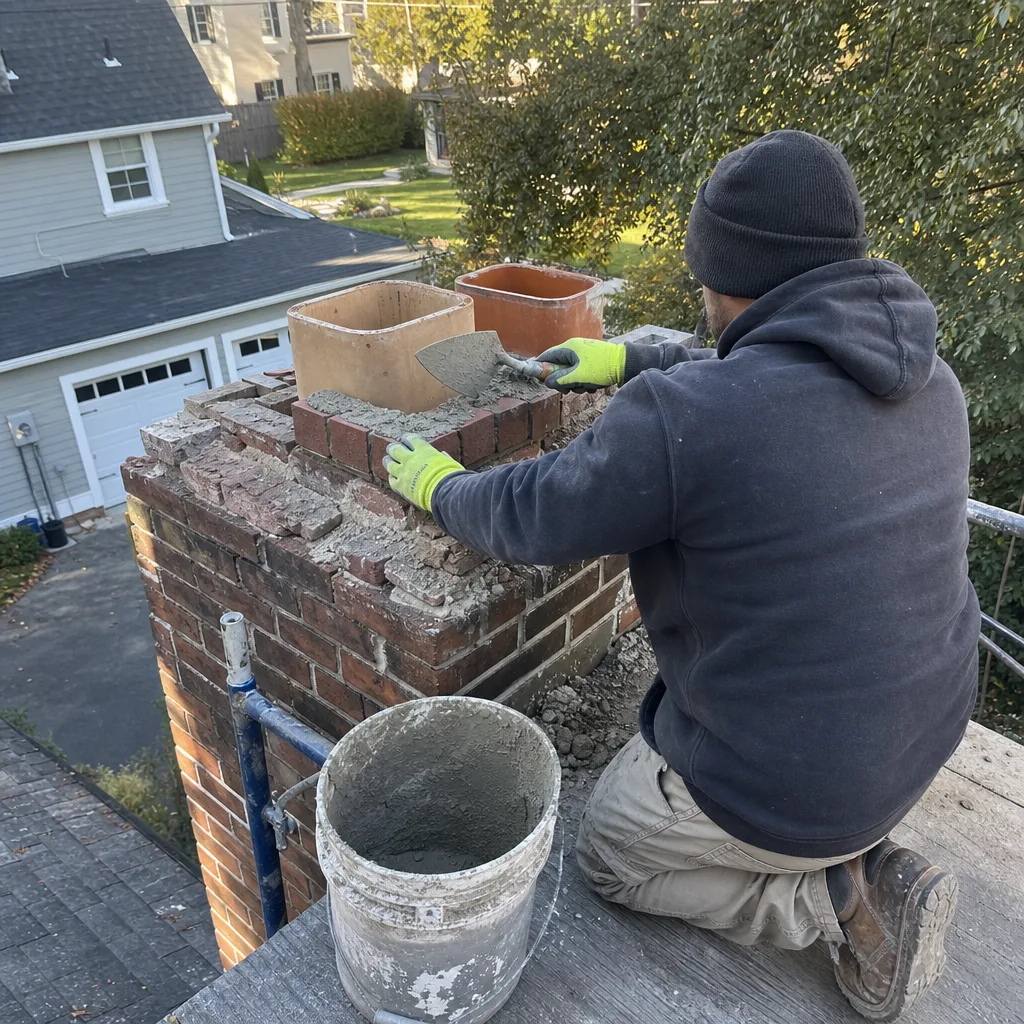
Spalling that exposes the inner brick structure requires tuckpointing or partial rebuild. Isolated surface flaking on a few bricks can be monitored. Widespread spalling on the chimney above the roofline indicates the masonry is no longer protecting the interior structure and will accelerate until addressed.
Missing or Damaged Chimney Cap
The cap is the metal cover that shelters the flue opening. Its absence allows direct water entry, animal intrusion, and debris accumulation. From the ground, look for a cap that appears tilted, rust-streaked, or absent entirely.
A missing cap in Waltham means squirrels, raccoons, and starlings can enter. We remove nests from uncapped chimneys throughout spring and early summer. A cap also prevents rain from falling directly down the flue, which accelerates liner corrosion in gas appliances and creosote acidification in wood-burning systems.
Rusted or Stained Chase Cover
Prefabricated fireplaces use a chase cover, a metal top that seals the chimney chase. Rust streaks running down the siding or chase structure indicate the cover is failing. Water pools on a rusted cover, accelerates the rust, and eventually breaches the seal.
Chase covers are often installed with inadequate pitch, so water ponds rather than drains. In Waltham’s snow-load climate, the weight of accumulated snow and ice exacerbates this pooling. A rusted chase cover should be replaced with a properly pitched stainless steel or copper cover, not another galvanized steel unit that will fail in five to seven years.
- Efflorescence: Active water intrusion. Schedule inspection within two weeks.
- Spalling brick: Freeze-thaw damage in progress. Tuckpoint or rebuild before next winter.
- Missing cap: Immediate water and animal risk. Cap installation is same-day work.
- Rusted chase cover: Replace before next heating season to prevent chase rot.
Warning Signs a Technician Finds from the Roof
These conditions require ladder access and trained observation. They are not visible from the ground, and they are not detectable from inside the home. This is why NFPA 211 requires exterior inspection as part of a Level 2 evaluation.
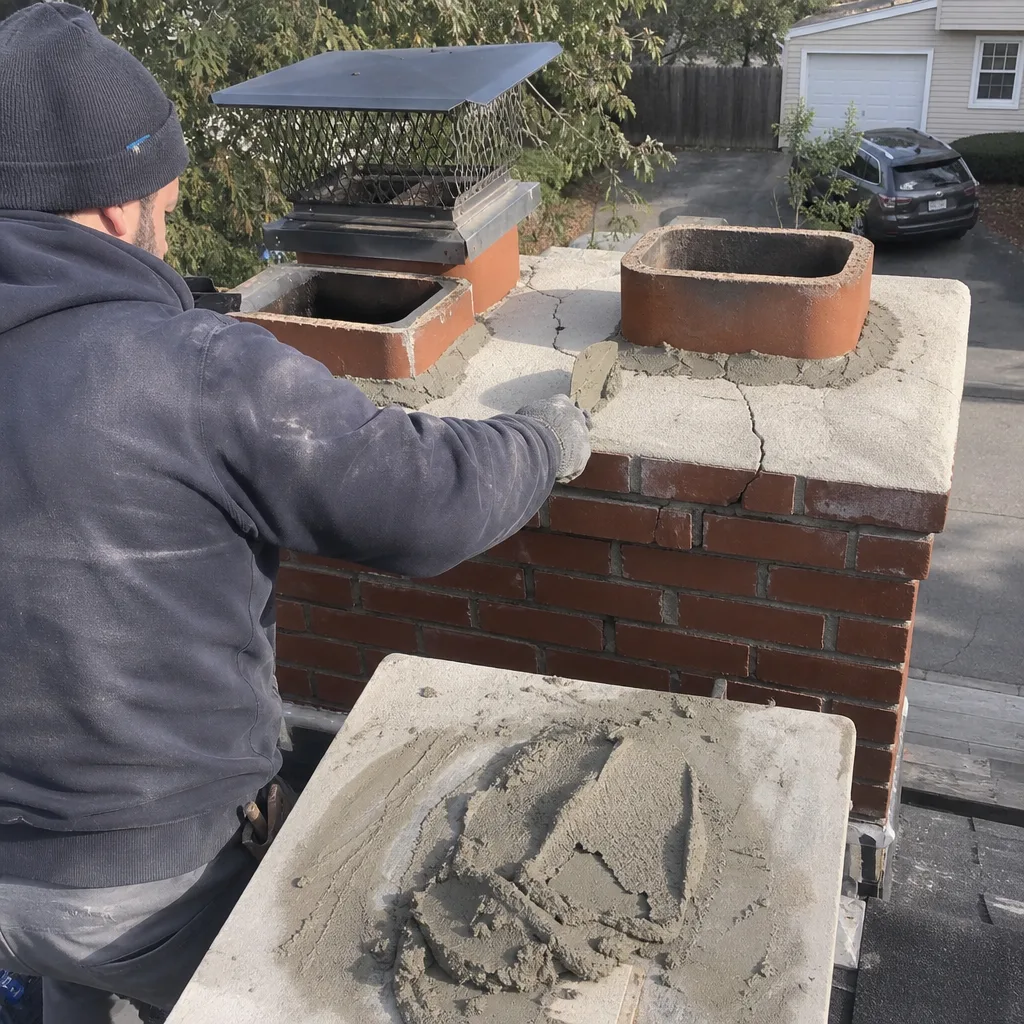
Crown Cracking and Deterioration
The crown is the concrete slab that tops a masonry chimney, sealing the space between the outer brick and the flue liner. Proper crowns have a minimum two-inch overhang and a drip edge that directs water away from the brick face.
Hairline cracks in the crown surface allow water to penetrate the concrete matrix. In Waltham’s climate, water in these cracks freezes, expands, and widens the cracks. We’ve removed crowns that separated into multiple pieces, allowing unrestricted water flow down the chimney’s interior walls. A cracked crown can be sealed with CrownSeal or similar flexible coating if the structural integrity remains. A crown with through-cracks or displacement requires replacement.
Flashing Gaps and Separation
Flashing is the metal interface between the chimney and roof plane. Step flashing interweaves with shingles on the chimney sides; counterflashing caps the step flashing and embeds in the mortar joints. Separation at either layer allows water to bypass the roofing system entirely.
In Waltham’s older neighborhoods, particularly the Victorian and early Craftsman homes near Main Street and the Pigeon Hill area, chimney flashing was often installed without kickout diverters or with inadequate overlap. Snow accumulation against the chimney shoulder melts, refreezes at the flashing edge, and lifts the metal away from the masonry. This creates a gap that admits water during every subsequent rain.
Flashing repair requires removal of surrounding shingles, reworking the metal, and reinstalling the roofing. Caulk or tar applied from the surface is a temporary measure that traps moisture and accelerates decay.
Mortar Joint Erosion
Repointing needs are assessed by probing mortar joints with a blunt tool. Joints that yield powder or separate from the brick require tuckpointing. Joints that have receded more than one-half inch from the brick face have lost their water-shedding ability.
Waltham’s atmospheric conditions, including road salt aerosol from Route 2 and I-95, accelerate mortar deterioration on chimneys within a few hundred yards of major roadways. The salt hygroscopically attracts moisture, keeping the masonry wetter longer and increasing freeze-thaw cycles.
Chimney Lean or Structural Settlement
A chimney that departs from plumb by more than one inch in ten feet indicates foundation settlement, deteriorated footing, or compromised structural connection to the building. This is not a maintenance item; it’s a structural concern requiring engineering evaluation.
We document lean with photographs and measurements, then recommend a structural engineer for assessment. Continued operation of a leaning chimney risks catastrophic collapse, particularly during seismic events or high wind loading.
Warning Signs Only a Camera Scan Can Detect
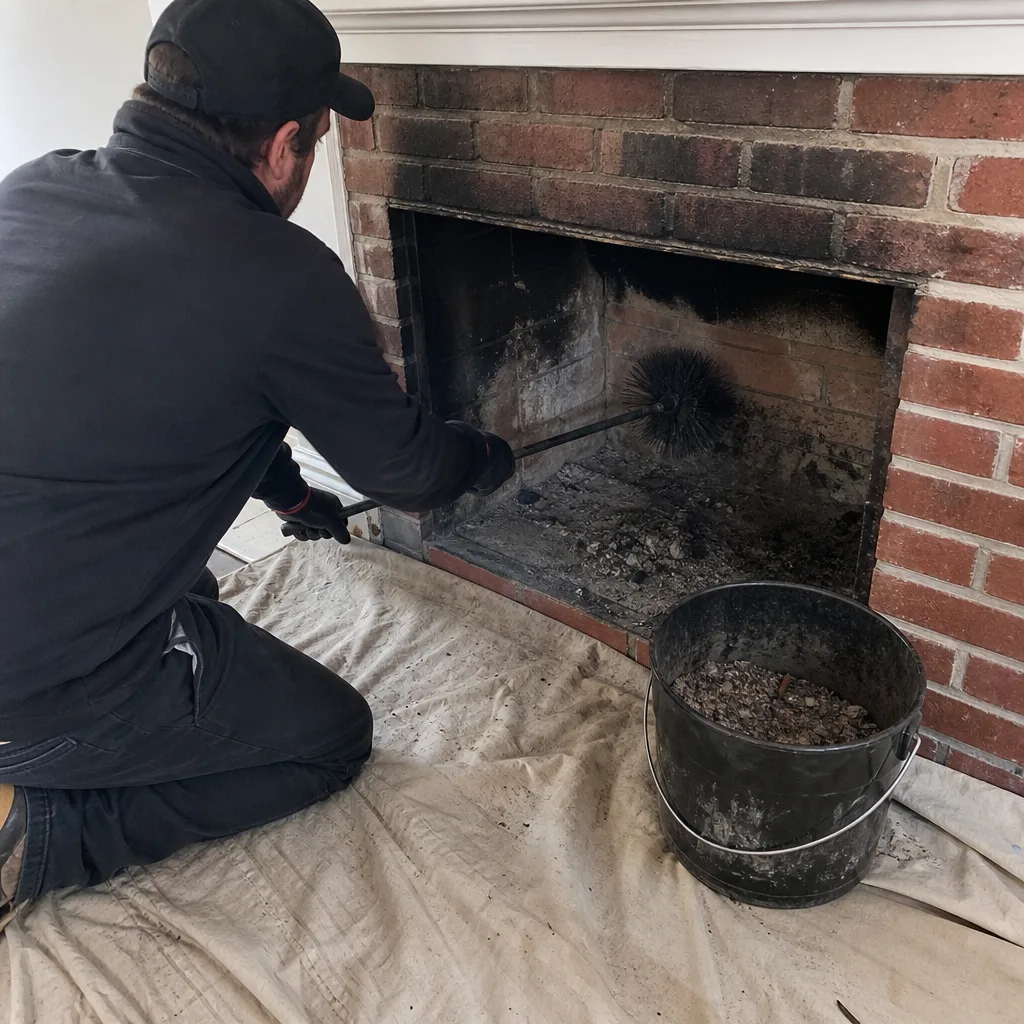
This is where Chimney Cleaning & Sweep in Waltham intersects with genuine safety assurance. NFPA 211 Level 2 requires a visual inspection of all accessible interior surfaces. For most chimneys, that means a camera scan. The conditions below are invisible to any other method.
Flue Liner Cracks and Gaps
Clay tile liners crack from thermal shock, foundation settlement, or lightning strike. A crack running the length of a tile, or a missing corner, allows combustion gases to enter the chimney’s interior structure. In a shared chimney wall scenario, common in Waltham’s two-family and three-family housing, these gases can migrate to adjacent living units.
Camera scan reveals crack pattern, location, and extent. A single hairline crack in a non-load-bearing tile may be monitorable. Multiple cracks, displaced tiles, or gaps at tile joints require liner replacement with a stainless steel system, typically DuraFlex or Olympia Chimney components depending on appliance type and flue dimension.
Stage 2 and Stage 3 Creosote Accumulation
Stage 1 creosote is sooty, dusty, and brush-removable. Stage 2 is shiny, tar-like, and adherent. Stage 3 is glazed, hardened, and requires chemical treatment or rotary mechanical removal. Camera inspection determines the stage and distribution.
Stage 3 creosote can reach one-quarter to three-quarters inch thickness in severe cases. Its ignition temperature is lower than Stage 1, and it burns with sufficient intensity to damage liners and surrounding structure. A chimney fire in a Stage 3-lined flue can reach 2,000 degrees Fahrenheit, exceeding the rating of clay tile and many metal liners.
We document creosote stage with camera stills included in every report under Level Two Chimney Waltham home service standards. The photo record becomes Clause 4 of the Haven Standard documentation.
Offset Joint Separation
Clay tile liners are installed in sections, with each section overlapping the one below. In chimneys with offsets, bends required to navigate framing or roof geometry, the joint geometry becomes complex. Separation at an offset joint creates a direct path for gases and sparks into the chimney structure.
Offset joints are particularly vulnerable in Waltham’s older homes where original construction used site-fabricated offsets rather than manufactured offset components. Camera scan with articulating head is the only method that visualizes these joints completely.
Smoke Chamber Parging Loss
The smoke chamber is the area above the damper and below the flue liner, where fireplace gases collect before entering the narrow flue. NFPA 211 requires smoke chamber walls to be parged smooth, with no corbelling exceeding specified dimensions. Rough or deteriorated smoke chamber surfaces create turbulence that reduces draft and allows creosote accumulation.
Camera inspection from below, combined with light source positioning, reveals parging condition. HeatShield cerfractory foam is one approved method for resurfacing deteriorated smoke chambers without full reconstruction.
- Camera scan identifies liner cracks invisible from top or bottom.
- Creosote stage is documented with photographic evidence.
- Offset joint geometry is visualized and measured.
- Smoke chamber condition is assessed for draft efficiency and code compliance.
- All findings become part of the documented photo record delivered to the homeowner.
The Smell Guide: Olfactory Warning Signs Most Guides Miss
Smell is an underutilized diagnostic tool. Most chimney guides ignore it entirely. Specific odors indicate specific conditions, and recognizing them allows earlier intervention.
Asphalt or Tar Odor
A sharp, chemical, road-tar smell when the fireplace is not in use indicates Stage 2 creosote. The volatile compounds in liquid creosote off-gas at room temperature, particularly when humidity rises. In Waltham’s humid summer months, we receive calls from homeowners who notice this smell for the first time when air conditioning creates negative pressure that draws air down the flue.
The odor intensifies when the chimney warms in sun. If you smell asphalt from your fireplace in July, you have active creosote that will be a fire hazard by October.
Ammonia or Urine Odor
Sharp ammonia indicates animal presence, typically raccoons or bats. The smell is most pronounced in morning and evening when animals are active. Raccoon latrines in chimneys create concentrated ammonia that can be detected from the firebox.
Animal intrusion requires removal, then cap installation to prevent recurrence. In Massachusetts, certain species have protected seasons; removal timing may be regulated. We coordinate with licensed wildlife operators when necessary.
Musty or Mildew Odor Distinct from Smoke
A damp, earthy smell that is not wood smoke indicates moisture-damaged masonry or accumulated organic debris. This differs from the sharp ammonia of animal waste and the chemical note of creosote. Water-damaged mortar and brick support mold growth in the chimney’s interior structure.
In Waltham’s River Street corridor, where groundwater levels are higher and many basements experience seasonal dampness, chimney moisture problems correlate with broader foundation moisture patterns. The chimney smell is often the first noticeable symptom.
Sulfur or Rotten Egg Odor
Natural gas is odorized with mercaptan compounds that smell like sulfur or rotten eggs. If you detect this from a gas fireplace or furnace chimney, exit the building and call the gas utility from outside. Do not operate electrical switches or create ignition sources.
This is not a chimney maintenance issue; it’s an emergency. The chimney may be involved if a damaged liner is allowing combustion products to escape into the structure, but the immediate concern is gas leak or incomplete combustion.
| Odor | Source | Action Required |
|---|---|---|
| Asphalt/tar | Stage 2 creosote | Schedule sweep before next burn |
| Ammonia/urine | Animal intrusion | Inspection and removal; cap installation |
| Musty/mildew | Moisture-damaged masonry | Find water source; repair crown, cap, or flashing |
| Sulfur/rotten eggs | Gas leak or incomplete combustion | Exit building; call gas utility immediately |
Call Now, Schedule Soon, or Note for Spring: A Triage Framework
Not every warning sign demands emergency response. Misjudging urgency wastes money on after-hours calls, but underestimating risk creates safety hazards. This framework assigns each sign to a response timeline based on failure mode and consequence.
Call Now: Same-Week Action Required
- Smoke rollout during normal operation, particularly with headache, nausea, or dizziness in occupants. Potential carbon monoxide exposure.
- Visible flame or glowing material in the chimney structure outside the flue. Active chimney fire or structural fire.
- Sulfur odor from gas appliance chimney. Gas leak or incomplete combustion.
- Bricks or stones falling from the chimney structure. Structural failure in progress.
- Water actively dripping into the firebox during rain. Unrestricted water entry threatening liner and structure.
Schedule Soon: Within Two to Four Weeks
- Stage 2 or 3 creosote identified by odor or previous inspection. Fire hazard escalating with each burn.
- Efflorescence or spalling brick on exterior. Water damage progressing through freeze-thaw cycles.
- Missing chimney cap. Animal and water risk, but no active emergency if no burning is occurring.
- Rusted chase cover with no active interior leak. Replace before next heating season.
- Liner debris in firebox. Stop burning; schedule inspection to determine liner condition.
Note for Spring: Address During Off-Season
- Minor mortar joint erosion with no active water intrusion. Tuckpointing is weather-dependent and best scheduled April through October.
- Crown hairline cracks with no interior water evidence. Seal during dry weather for best adhesion.
- Smoke chamber roughness with adequate draft function. Resurfacing is elective maintenance.
- Previous inspection finding with stable condition, no change in operation. Annual follow-up sufficient.
The off-season advantage: masonry work requires temperatures above 40 degrees Fahrenheit for proper curing. Spring scheduling in Waltham typically offers better availability and avoids the October-November rush when every homeowner simultaneously remembers their chimney exists.
Waltham-Specific Warning Patterns
Local geography, housing stock, and climate create patterns that generic guides miss. Our 38,000-plus inspections since 2009 include substantial Waltham data.
Interior Ceiling Stains Near Chimney Stack
In older Waltham homes on Trapelo Road and River Street corridors, we see a characteristic staining pattern: yellow-brown discoloration on interior ceilings at the chimney penetration, often in second-floor bedrooms. This indicates chronic flashing failure combined with roofline geometry that channels water directly to the chimney shoulder.
These homes typically have low-slope roof sections or complex valleys that accumulate snow and ice. The melt water finds the flashing gap, travels along the chimney structure, and evaporates at the interior ceiling plane. The stain is often the only visible symptom; the underlying sheathing and framing may be significantly damaged.
Repair requires not just flashing rework but often ice dam prevention measures and improved attic ventilation. We coordinate with roofing contractors when the scope extends beyond chimney-specific work.
Prefabricated Fireplace Chase Deterioration
Waltham’s 1970s and 1980s construction, particularly the split-level and raised-ranch clusters near Brandeis University and the industrial park conversions, used prefabricated metal fireplaces with wooden chases. These chases are now 40 to 50 years old. The chase covers have rusted, the siding has absorbed moisture, and the internal structures are often compromised.
Warning signs: soft or discolored siding near the chase top, interior water stains on the chase wall, or rust particles in the firebox. These indicate the chase structure itself is failing, not just the cover. Repair may require chase reconstruction with proper clearances and weatherproofing.
Multiple-Flue Shared Structures
Waltham’s two-family and three-family housing often uses a single chimney structure with multiple flues. One flue may serve a basement furnace; another serves a first-floor fireplace; a third serves a second-floor unit. Liner failure in one flue can affect adjacent flues through shared masonry walls.
Camera scan of all flues in a shared structure is essential, even if only one appliance shows symptoms. We’ve documented liner cracks that allowed furnace exhaust to migrate into an adjacent fireplace flue, creating a carbon monoxide pathway into a sleeping area.
Wind-Related Draft Problems
Waltham’s topography, with the Charles River valley and surrounding elevation changes, creates localized wind patterns that affect chimney draft. Homes on south-facing slopes above the river experience downdrafts during northwest wind events that override normal chimney buoyancy.
Symptoms: smoke rollout only during specific wind conditions, odor complaints on windy days, or pilot light outages in gas appliances. Solutions include chimney cap with wind directional design, extended flue termination, or in severe cases, mechanical draft assistance.
What Each Sign Costs If Ignored
Deferred maintenance has predictable costs. These ranges reflect Waltham market conditions and our experience with comparable jobs.
| Warning Sign | Addressed Promptly | Ignored 1-2 Years | Ignored 3+ Years |
|---|---|---|---|
| Efflorescence | $800-$1,500 crown repair/seal | $2,500-$4,500 tuckpointing | $6,000-$12,000 partial rebuild |
| Stage 2 creosote | $250-$400 sweep with chemical treatment | $400-$700 rotary removal | $1,500-$3,000 plus liner damage from chimney fire |
| Cracked clay liner | $2,000-$3,500 stainless steel insert | $3,500-$5,500 with smoke chamber repair | $8,000-$15,000 full rebuild with new liner |
| Missing cap | $300-$600 cap installation | $500-$1,200 plus animal removal | $1,500-$3,000 with liner damage from water/debris |
| Flashing gap | $800-$1,500 flashing repair | $2,000-$4,000 with sheathing repair | $5,000-$10,000 with structural framing repair |
| Rusted chase cover | $600-$1,200 replacement | $1,500-$3,000 chase siding repair | $4,000-$8,000 chase reconstruction |
These ranges are based on Waltham-area material and labor costs. Every job receives a written price before work starts under Haven Standard Clause 1. We also offer a Free Second Opinion on any competitor’s written estimate.
The pattern is consistent: early intervention addresses the specific failure. Delay allows secondary damage that multiplies cost and may compromise safety systems. A $300 cap prevents the $3,000 liner replacement. The $1,200 crown seal prevents the $12,000 rebuild.
Common Mistakes to Avoid
- Assuming no burn means no problem. Gas appliances, water heaters, and furnaces vent through chimneys year-round. A liner crack during summer is a carbon monoxide risk during the first heating cycle in October.
- Treating efflorescence with exterior sealant. Waterproofing coatings trap water inside the masonry, accelerating freeze-thaw damage. The correct response is finding and eliminating the water source.
- Using the fireplace as a diagnostic tool. “Let’s see if it drafts better with a hotter fire” is a dangerous experiment. If draft failure is suspected, inspect before burning.
- Accepting a flashlight inspection as sufficient. NFPA 211 Level 2 requires camera scan for good reason. We’ve found cracked liners in chimneys that passed flashlight inspections days before.
- Ignoring seasonal odor changes. The asphalt smell that appears in July is the same creosote that will ignite in November. Humidity and pressure changes reveal what winter burning conceals.
- Assuming new home means clear chimney. Waltham’s 2015-2025 construction includes homes with prefabricated fireplaces installed with improper clearances or missing chimney caps. Age of house does not equal condition of chimney.
- Waiting for the October rush. Chimney service availability compresses dramatically after Labor Day. Spring and summer scheduling offers better access and proper curing conditions for masonry work.
When to Call a Professional
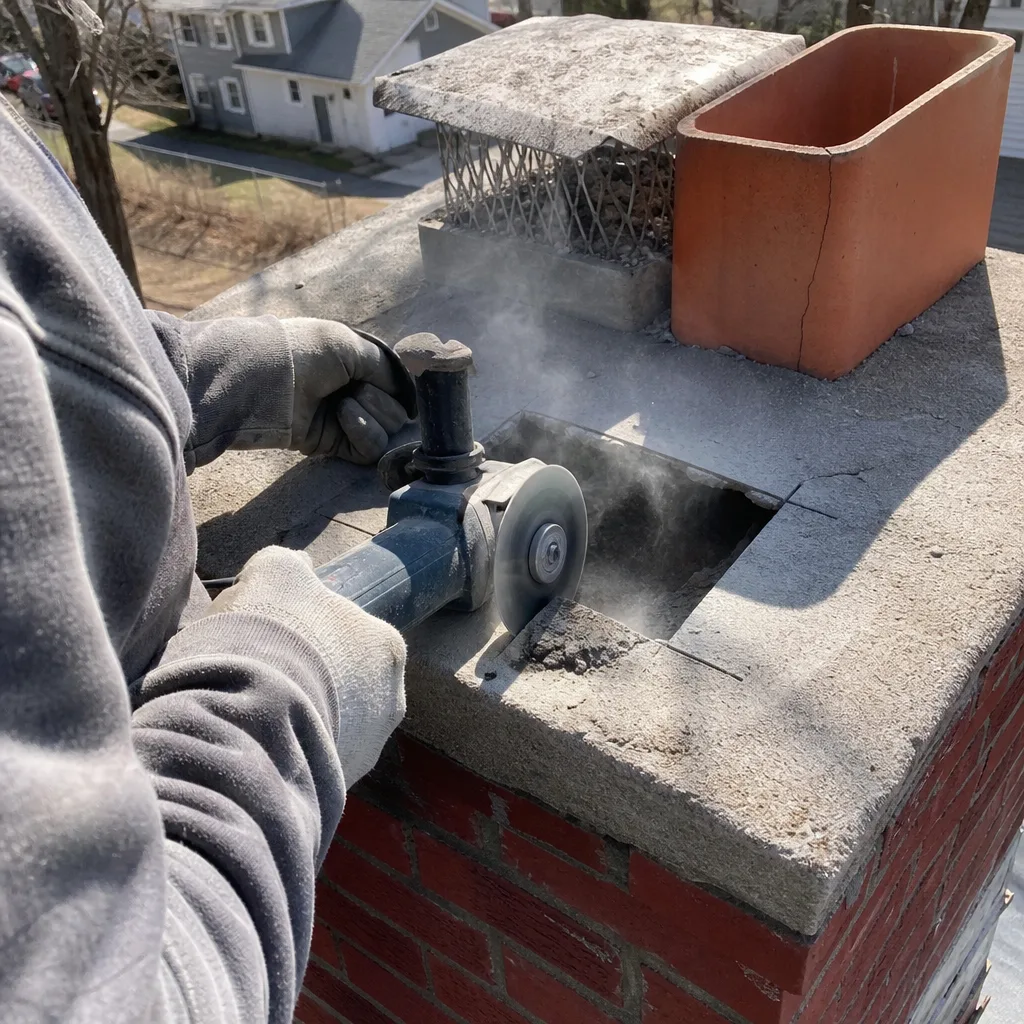
Call a certified chimney professional when any warning sign in the “Call Now” or “Schedule Soon” categories appears, when you cannot confidently assign a sign to a category, or when it’s been more than 12 months since your last NFPA 211 Level 2 inspection with camera documentation.
In Waltham, Chimney Repair in Waltham and full inspection services are available through Level Two Chimney Waltham. Every visit includes a camera-scan inspection, documented photo record, and written price before any work begins. The 365-Day Done Right Promise applies to every job.
Level Two Chimney Waltham offers free estimates in Waltham. Call (781) 649-9326 to schedule. Live phone support is available 24 hours a day, 7 days a week. You’ll speak with a person, not a voicemail system.
Frequently Asked Questions
A standard chimney sweep in Waltham typically ranges from $250 to $400 for a fireplace flue, with gas appliance flue inspections starting lower. The price includes NFPA 211 Level 2 camera inspection and documented photo record. Level Two Chimney Waltham delivers a written price before any work starts under Haven Standard Clause 1. Call (781) 649-9326 for an exact quote; estimates are free.
You need a new liner when camera inspection documents cracks, gaps, or deterioration that compromise containment of combustion gases. We never recommend liner replacement without photo evidence you can see for yourself. In some cases, a single cracked tile can be repaired; in others, full stainless steel replacement is necessary. The decision depends on crack pattern, flue configuration, and appliance type. If a competitor recommends replacement without showing you camera evidence, bring us their written estimate for a Free Second Opinion.
NFPA 211 recommends annual inspection for all chimneys, with cleaning frequency determined by creosote accumulation. Wood-burning fireplaces used as primary heat source may need sweeping after every cord of wood burned. Occasional use fireplaces often suffice with annual inspection and cleaning as needed. Waltham’s hardwood availability, primarily oak and maple, produces less creosote than softwood but still requires annual assessment. Gas appliance flues need inspection for liner integrity and debris obstruction, though they typically generate minimal deposit.
The most common consequence is creosote accumulation leading to chimney fire, with risk increasing non-linearly as Stage 2 and 3 deposits develop. Less dramatic but more frequent is gradual liner deterioration that allows carbon monoxide migration into living space. Water intrusion destroys masonry from the inside, converting a $1,500 crown repair into a $12,000 rebuild. Animal intrusion blocks flues, causing draft failure or fire hazard. Each of these is preventable with scheduled inspection and prompt response to warning signs.
A flashlight inspection from the firebox or cleanout can reveal obvious debris, animal presence, or major liner damage. It cannot assess the full flue length, visualize offset joints, or determine creosote stage with confidence. NFPA 211 Level 2 requires camera scan for good reason; we’ve documented conditions invisible to flashlight that presented immediate safety hazards. Use self-inspection for preliminary awareness, not as a substitute for professional evaluation.
Summer humidity activates creosote volatiles and moisture-damaged masonry. Air conditioning creates negative pressure that draws chimney air into the house rather than allowing natural updraft. Higher outdoor temperatures reduce chimney buoyancy, so odors that would rise and dissipate in winter linger in the flue. The smell is diagnostic information, not just a nuisance. If your Waltham chimney smells like asphalt in July, you have Stage 2 creosote that needs removal before the heating season.
A sweep removes deposits and obstructions from the flue. An inspection evaluates the entire system condition, including structure, liner, clearances, and connections. Level Two Chimney Waltham combines both: every sweep includes NFPA 211 Level 2 camera inspection, and every inspection includes cleaning as needed. The documented photo record, required under Haven Standard Clause 4, captures conditions before and after service. You receive the photos, the written scope, and the written warranty as a complete record.
The Bottom Line
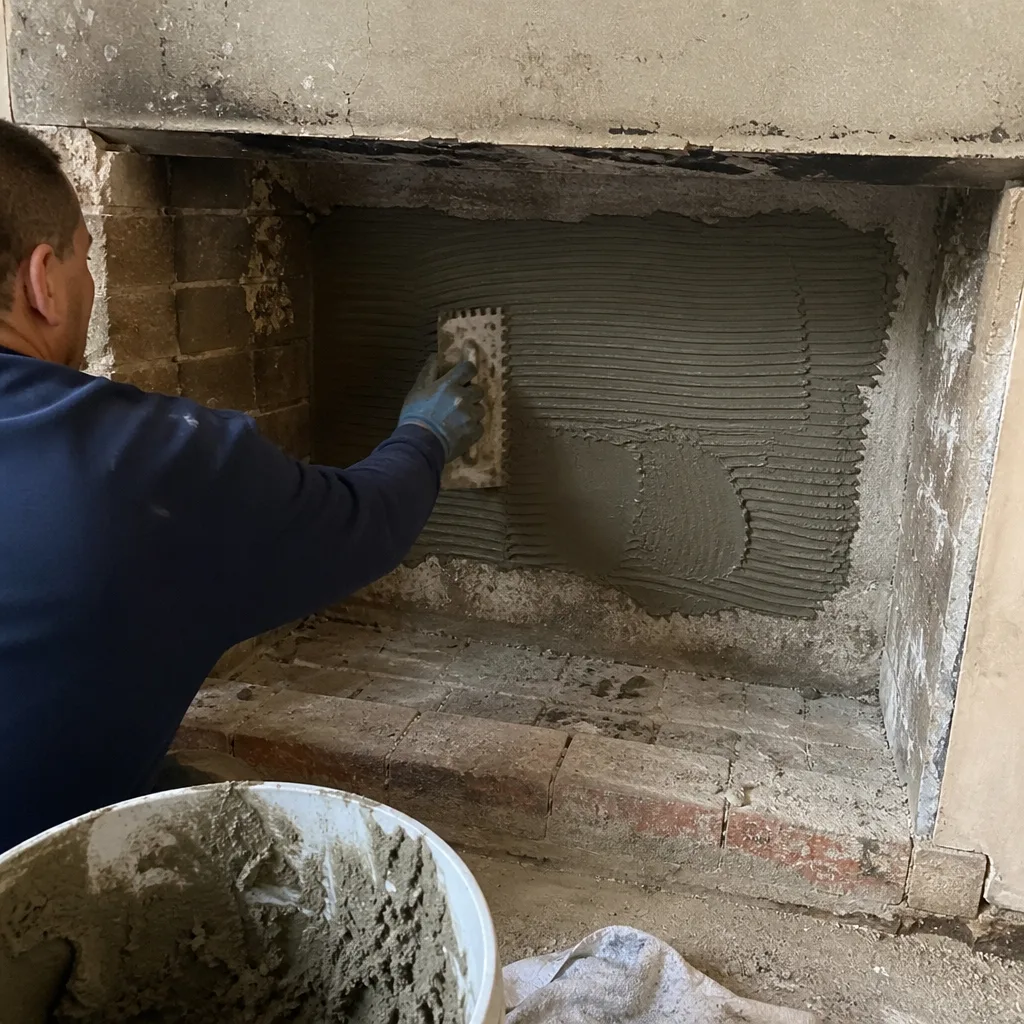
Chimney warning signs sort into three categories: what you can see from your firebox, what you can spot from your yard, and what only a camera scan reveals. The most dangerous conditions, cracked liners and advanced creosote, fall in the third category. This is why annual NFPA 211 Level 2 inspection is not optional maintenance but essential safety practice, particularly in Waltham’s older housing stock and freeze-thaw climate.
Assign each sign to its urgency tier. Address “Call Now” conditions immediately. Schedule “Schedule Soon” items within weeks. Plan “Note for Spring” work during the off-season. The cost of prompt action is always a fraction of deferred repair.
Level Two Chimney Waltham has inspected and cleaned more than 38,000 chimneys since 2009, every one with a written price before work started and a documented photo record on completion. Materials come from DuraFlex, HeatShield, Gelco, Olympia Chimney, and other qualified manufacturers through Haven’s buying network. The 365-Day Done Right Promise applies to every job.
Written by Corrine Halstead, Owner at Level Two Chimney Waltham, serving Waltham since 2009.